Calacatta Viola marble: how to choose, use and care for it
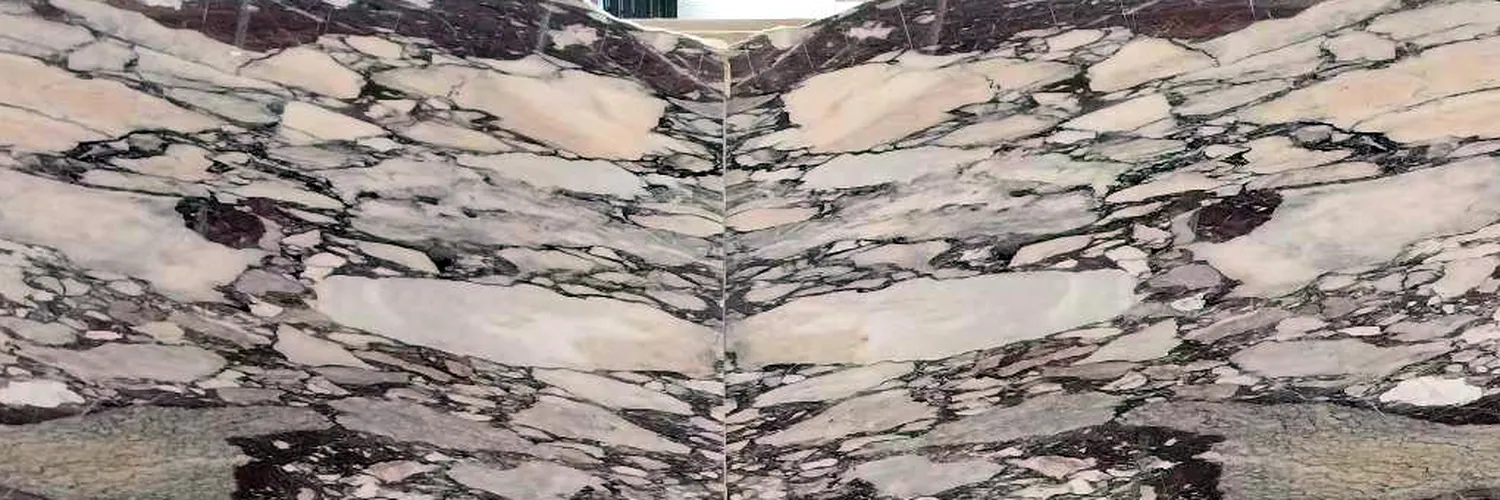
Calacatta Viola is an Italian marble with a white background and burgundy and violet veins and fragments. It is a stone people fall for, but one worth buying with a clear head: the slab, the layout and where it goes decide the result.
Why it is so popular
For years, interior design moved between grey-veined whites and neutrals. Calacatta Viola breaks away from that without losing its elegance. There are a few reasons:
- Colour is back. Wine, plum and burgundy tones have moved into upholstery, paint and tiles. Viola is the stone version of that trend.
- It suits both classic and contemporary. The white background keeps it bright, and the breccia-like veining gives it a sense of history that works well with modern furniture.
- It photographs beautifully. A book-matched wall is an image people remember, and that counts for a lot in hotels, restaurants and shops.
How to choose the slab
How much violet you want
Look at the whole slab, from a distance and up close. A slab with plenty of white brightens a small bathroom. A heavily veined slab takes all the attention: perfect for a single feature wall, but in a room with lots of stone it can feel heavy. A useful rule of thumb: the larger the surface, the more white you want in the slab.
What the veining does
- Scale: large fragments look superb on a wall; on a small piece such as a vanity top they can get cut off and lose their impact.
- Direction: check whether the veins run diagonally, horizontally or in scattered patches. It changes how the stone reads once installed.
- Where the best part falls: mark the most striking area on the photo and make sure it will be on show, not lost in a sink cut-out or behind a cabinet.
The condition of the slab
Ask whether the slab has fissures, whether it is resined or meshed on the back, and how the surface has been finished. Ask for photos in daylight and a video with the camera moving: that shows the real shine and any flaws.
Book-matching on walls and islands
With Calacatta Viola, book-matching is almost a must on large pieces. You need consecutive slabs from the same block. We explain how in what is book-matching.
On walls
- Decide the centre line. The book-match joint usually lines up with the bath, the headboard, the fireplace or the basin. Off-centre, the symmetry is lost.
- Watch the cut-outs. Sockets, taps and niches interrupt the pattern. Place them on the drawing before anything is cut.
- Ask for a slab layout with the real slabs overlaid and, if possible, a dry lay. See large-format slabs and slab layout.
On islands
- Top and sides. If the island has waterfall ends, ideally the veining flows from the top down the sides without a break. More in waterfall countertop.
- Front panel. A book-matched island front shows off the stone without exposing it to daily wear on the worktop.
Where it works and where it doesn't
Where it works
- Bathrooms: walls, vanity tops, bath panels. See marble in the bathroom.
- Feature walls in living rooms, hallways and bedrooms. More ideas in interior stone wall cladding.
- Islands on the front and sides, and backsplashes (marble backsplash).
- Tables: dining, side or coffee tables. Read marble dining table.
- Hospitality: bars, reception desks, restaurant washrooms. See natural stone for hotels and retail.
Not the best choice
A hard-working kitchen countertop (worktop), where lemons are cut, wine gets spilled and you prep every day. Marble is sensitive to acids, and dull etch marks show on the white background. If you want Viola in the kitchen, put it where it is admired and keep a harder stone for the work zone.
What to pair it with
- Brass: brushed or aged brass warms up the burgundy. In a bathroom, choose matte-finish taps so they don't compete with the shine of polished marble.
- Wood: mid and dark tones balance the white. Very pale wood hands the spotlight entirely to the stone.
- Greens: green and violet are a bold pairing that works in hospitality. A dark green marble such as Verde Alpi on a small piece, or a wall painted deep green, makes Viola stand out even more.
- Whites: to calm it down, pair it with a plain white. A marble with almost no veining, such as Thassos White, on the floor or the rest of the bathroom, leaves Viola as the only patterned surface.
Care
- Seal it after installation and again when water stops beading. More in do you need to seal marble.
- Clean with pH-neutral soap and water. No vinegar, lemon, bleach, or acidic or limescale cleaners.
- Use coasters and placemats on tables and bars. If a dull mark appears, read marble etching.
Natural stone or porcelain imitation
The Calacatta Viola look is widely copied in large-format porcelain, including ranges that imitate book-matching. To tell them apart:
- Check the edge and the back. In stone, the veining continues on the edge, and the back may carry mesh or resin. Porcelain usually has the pattern on the surface only, with a plain back or factory markings.
- Look for repetition. If several pieces show the same pattern, it is printed.
- Ask for the paperwork. Natural stone for cladding comes with its technical data sheet and a declaration of performance as natural stone.
More clues in natural stone or imitation.
Calacatta Viola and related stones in our catalogue
All photos show real slabs:
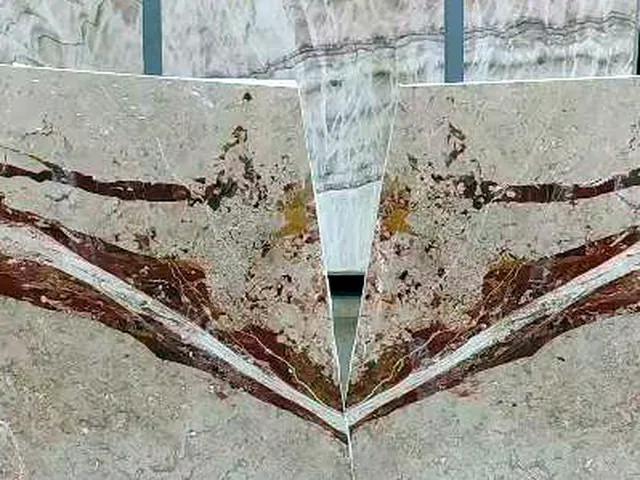
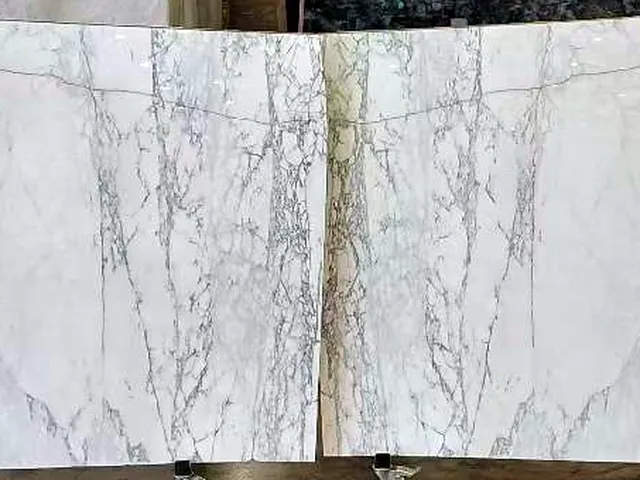
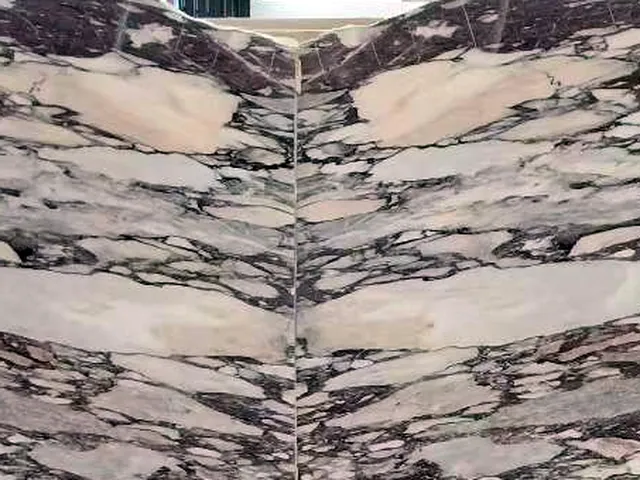
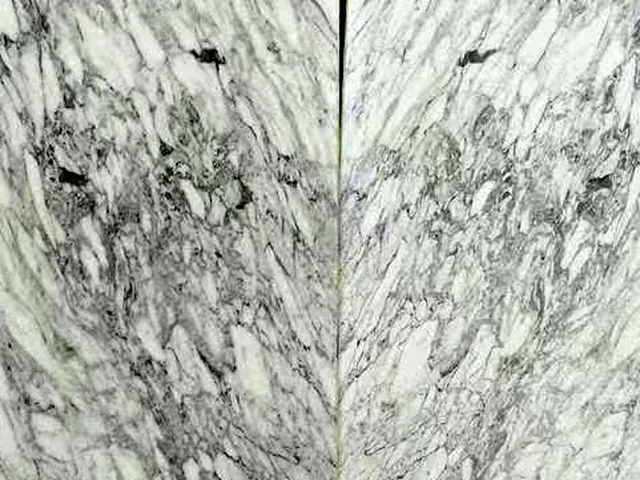

Every Calacatta Viola slab is different. Ask us for photos and videos of the slabs available; we will help you pick consecutive slabs and reserve the ones you choose. We ship worldwide.
Have a project in mind?
Ask us for a no-obligation quote: we will reply with an indicative price.