Marble backsplash: height, matching veins and care
The backsplash (or splashback, as it is called in the UK) is the stretch of wall between the countertop and the wall cabinets. Doing it in natural stone, ideally the same stone as the countertop, is one of the most beautiful ways to finish a kitchen. These are the decisions to make.
Three possible heights
A low upstand
A strip a few centimetres high along the back of the countertop. In the US the classic is the 4-inch (10 cm) backsplash; in the UK it is usually called an upstand. It protects the joint with the wall and uses little material, while the rest of the wall is painted or tiled. It is the most discreet option.
Up to the wall cabinets
The stone covers the whole band between countertop and cabinets, which is where most of the splashing happens. The backsplash reads as a continuation of the countertop.
Full height, up to the ceiling
With no wall cabinets, or with open shelves, the stone runs all the way up. This is the most dramatic option: the wall becomes the centrepiece of the kitchen. It calls for large slabs or several slabs from the same block, and the joints need to be planned in advance.
The same slab as the countertop
If the backsplash is cut from the same slab as the countertop, or from consecutive slabs from the same block, the veining flows from the counter up the wall without a break. That is what makes a stone kitchen look as if it were carved from a single piece.
- It is decided on the slab layout: where each piece sits within each slab and where the veining runs.
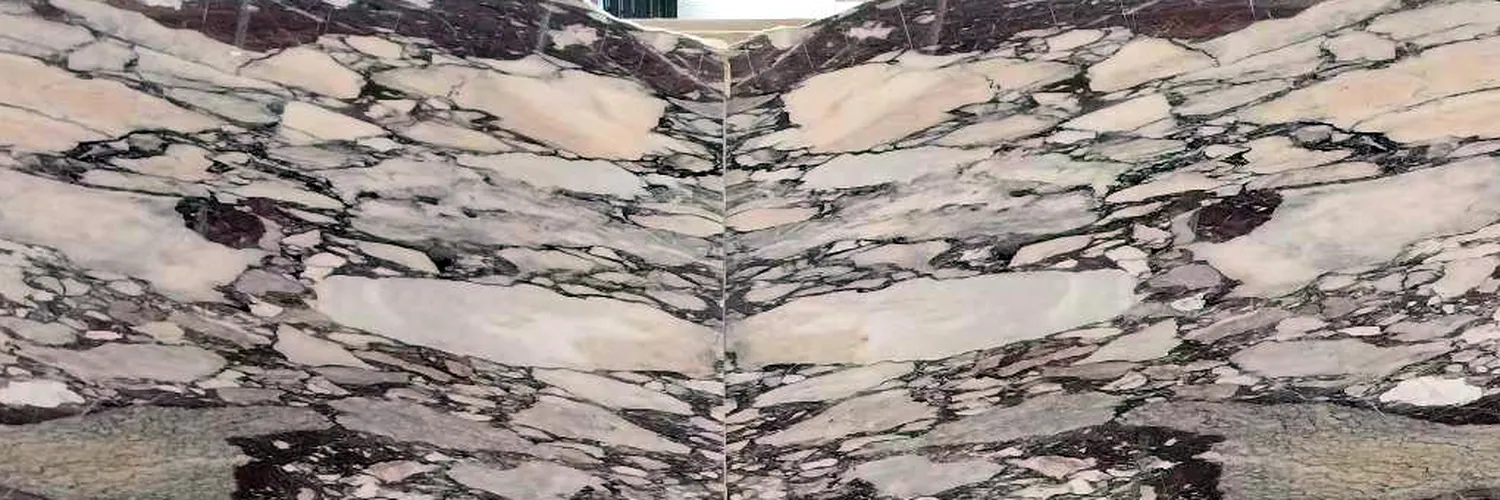
- Behind the cooktop it can be book-matched with two consecutive slabs, so the pattern is symmetrical right in the centre. See what is bookmatching.
- It uses more material: when the veining has to match, or with bookmatching, there is more waste.
You can also use a different stone. Because a backsplash takes very little wear, it is the best place for a delicate, heavily veined marble, while the countertop is in a harder stone. More on that in marble countertops: pros and cons.
Backsplashes are usually 2 cm (¾ in) thick, which weighs around 52–56 kg/m² (about 11 lb/ft²): the wall and the fixing system must be ready for that load. More detail in our guide to countertop thickness.
Outlets, windows and other cut-outs
- Decide where the outlets (sockets) go before measuring. The cut-outs are made in the workshop from the final measurements, which are taken once the cabinets and countertop are in place.
- A cut-out close to the edge of a piece or to a joint is a weak point. Your fabricator will tell you where they work best.
- If you want the veining uninterrupted, move the outlets to the underside of the wall cabinets, to a side wall or into the countertop, always within your local electrical code.
- Windows, range hood and ledges: anything that interrupts the backsplash goes on the drawings. A narrow ledge in the same stone behind the cooktop is handy for oil and salt, and looks great.
Behind the cooktop: heat and grease
This is the most demanding part of the backsplash.
- Heat: natural stone handles heat far better than resin-based materials, but keep to the clearances set by the cooktop or range manufacturer, especially with gas. Areas repaired with resin, common in stones with lots of crystal or heavy veining, are more sensitive to direct heat.
- Grease: oil splatter can stain a porous stone. Seal it with a product that repels both water and oil, and repeat the drop test with oil as well as water. Step by step in do you need to seal marble.
- Acids: tomato, lemon and vinegar leave dull etch marks on marble. Wipe them off straight away.
Finishes and care
- Polished: absorbs less and is easier to wipe clean. The usual choice behind the cooktop.
- Honed or leathered: hide marks better but hold on to grease more. They need good sealing.
- Cleaning: water and a pH-neutral soap. Avoid strong degreasers, bleach and ammonia, which strip the sealer. More tips in how to clean marble.
Stones that work well
- Boldly veined marbles. The backsplash is the perfect place for a marble with character. Calacatta Viola has a white background with burgundy and violet veins; book-matched, its slabs create striking symmetrical patterns. Calacatta, Statuario, Arabescato and Breccia Pontificia, which draws a strong V when book-matched, also work beautifully.
- Quartzites, especially when the countertop is the same stone: Blue Roma, Macchia Vecchia or Taj Mahal.
- Serpentine-type green marbles such as Verde Alpi. They are sensitive to moisture during installation, so reactive adhesives (epoxy or polyurethane) are generally recommended over water-based or cement-based ones. Mention it to your installer.
- Backlit onyx, away from the cooktop: onyx is soft and sensitive to acids, but a backsplash lit from behind is hard to beat. See how it is done in backlit onyx.
Backsplash stones in our catalogue
Every photo shows a real slab:
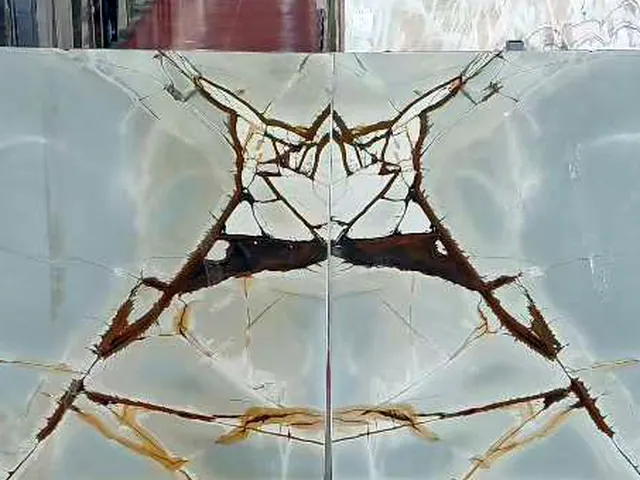
Blue Roma
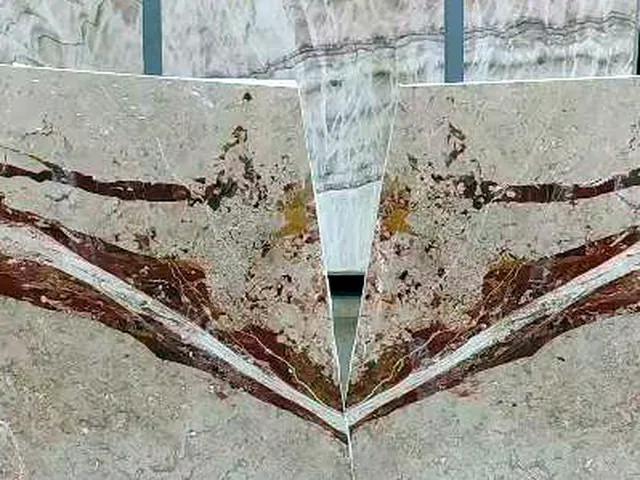
Breccia Pontificia
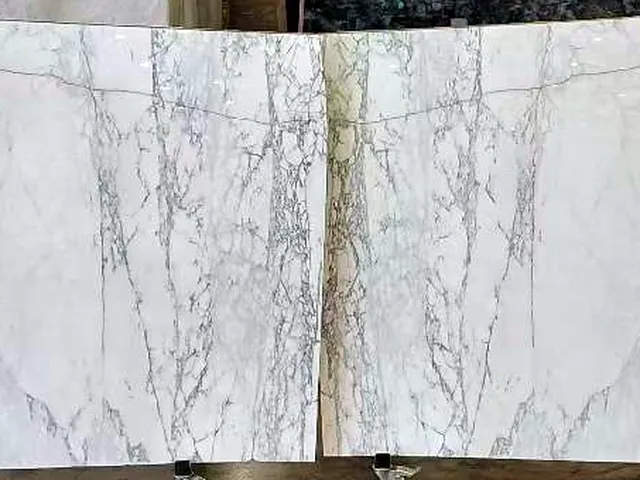
Calacatta
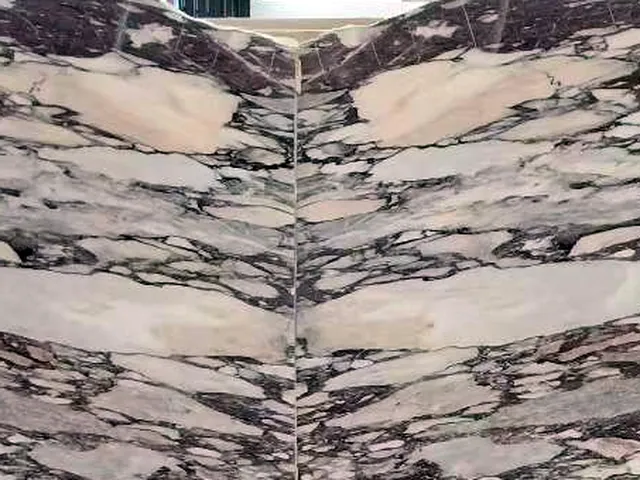
Calacatta Viola
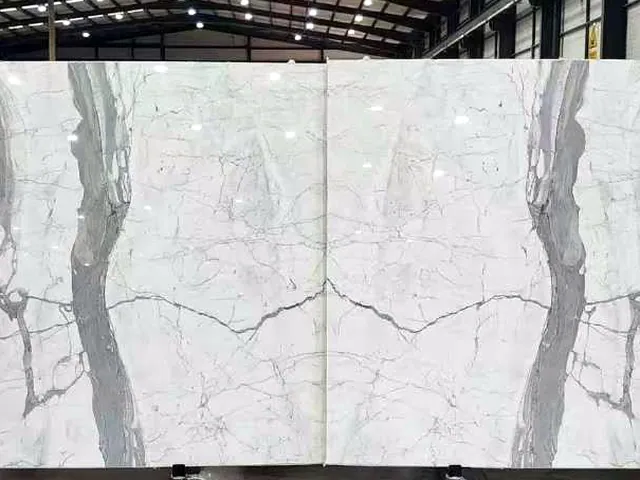
Statuario
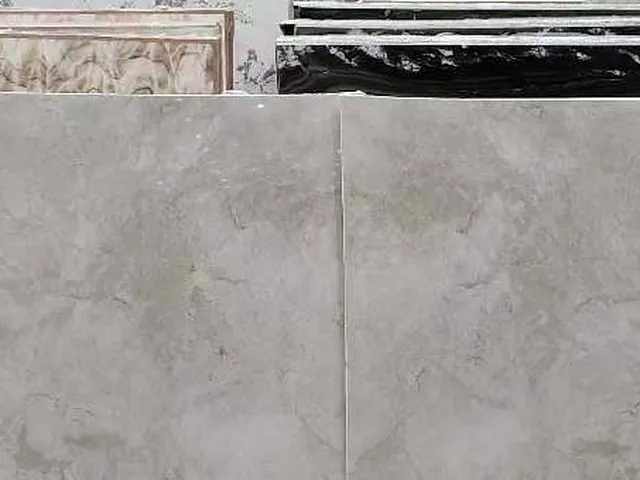
Taj Mahal
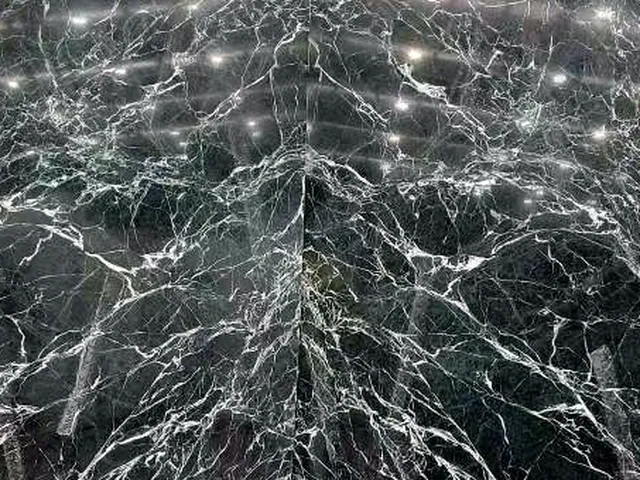
Verde Alpi
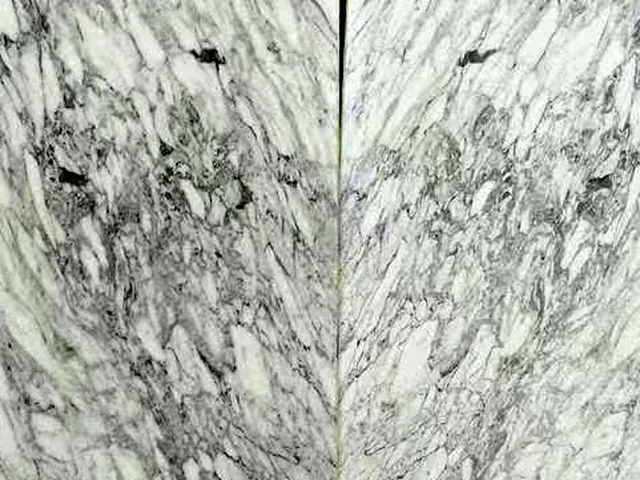
Arabescato
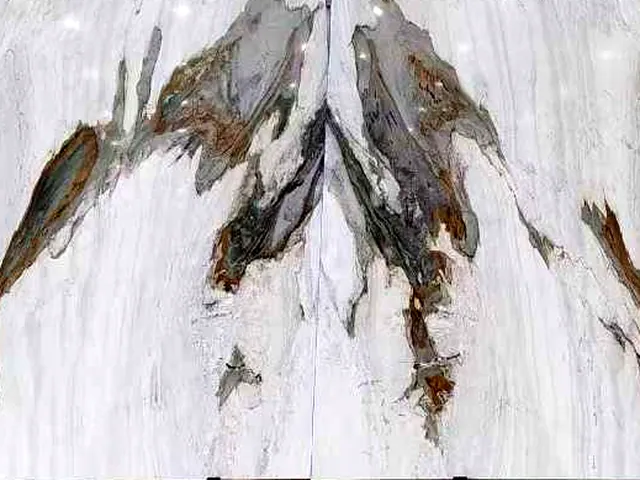
Macchia Vecchia
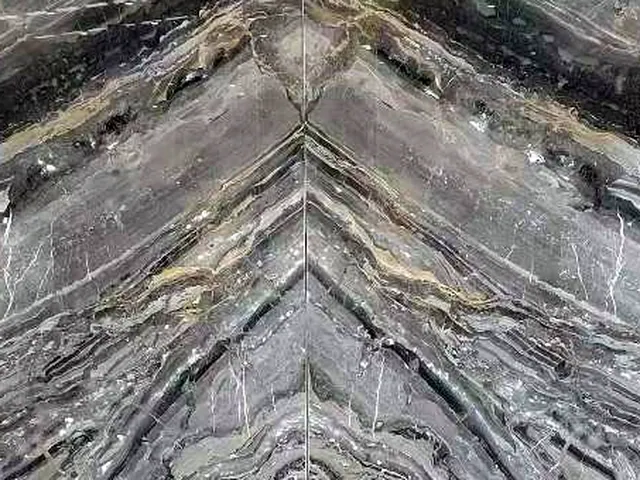
Orobico Grey
Our design ideas include kitchens with a full-height backsplash and the same stone on the countertop and island. Want the veining to flow from the counter up the wall? Send us your kitchen dimensions and we will send you photos and videos of real slabs from the same block. We can reserve them and we ship worldwide. Get a quote.
Have a project in mind?
Ask us for a no-obligation quote: we will reply with an indicative price.