Waterfall countertop: what it is, how it's made, which stone
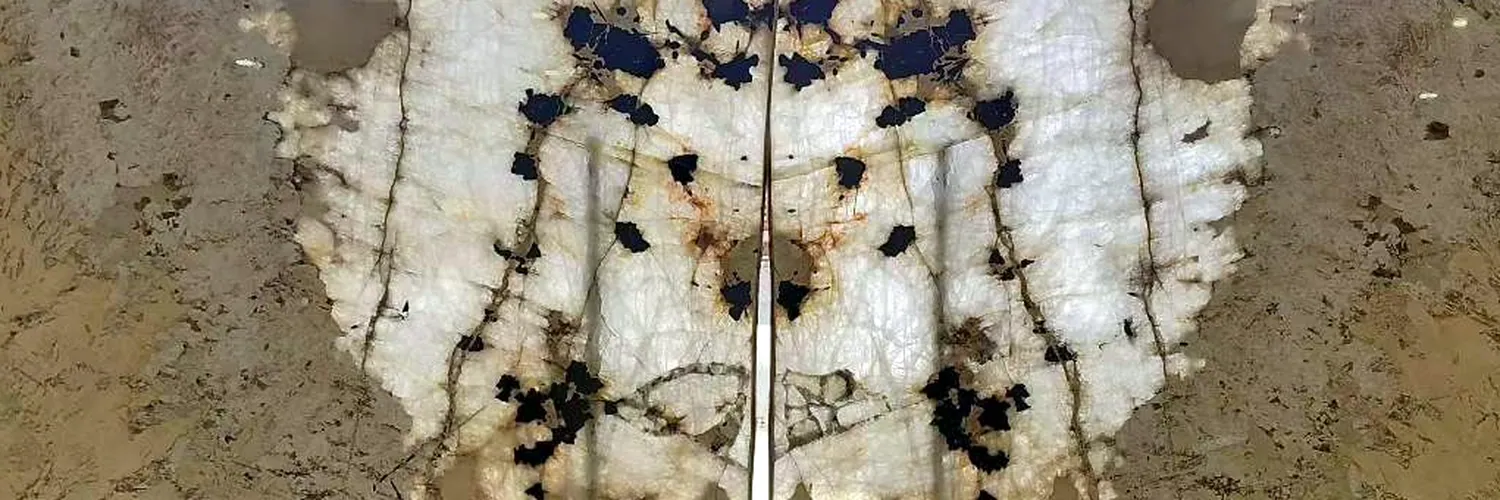
On a waterfall countertop, the stone does not stop at the edge: it turns and drops down the side of the cabinet to the floor, like water. It is the detail that turns a kitchen island into something close to sculpture. Here is how to get it right.
What a waterfall countertop is
The countertop continues vertically down one or both ends to the floor. You see it mostly on islands, but also at the end of a run of perimeter countertops or on a bar. In the UK you will also hear "waterfall worktop" or "waterfall island".
- Single waterfall: one end drops to the floor, while the other rests on the cabinets or overhangs for bar stools.
- Double waterfall: the island becomes a large upside-down U of stone. The most striking version.
- With a clad back: the back of the island, the side facing the living area, is faced in the same stone.
How it is cut: the mitre
The top and the side are both cut at 45° and bonded along the corner (mitred, or mitered in the US). No edge shows at the corner: the stone looks as if it has been folded.
For the veining to continue, the side is cut from the same slab, from the section right after the top, or from the next slab in the block. The veining is marked on the slab before cutting and the order of the pieces is fixed on the slab layout; sometimes a dry lay is done first. The long edges of the top are often mitred too, so the island reads as a solid block. We explain this in countertop thickness.
Why you want a large slab or consecutive slabs
Do the maths: a 2.4 m (about 8 ft) island with two sides around 90 cm (about 36 in) high adds up to more than 4 m (about 14 ft) of continuous stone. Many slabs are not that long. There are two ways to handle it:
- A large-format slab, so the top and at least one side come out of a single piece.
- Consecutive, numbered slabs from the same block, so the pattern carries on from one piece to the next. With two book-matched slabs, the top is symmetrical and each side follows its own half. See what is bookmatching.
Either way, the yield is lower: matching the veining creates more waste than a standard countertop. That is why it pays to choose the actual slabs, from photos, before the design is finalised.
Which stones work best
- Stones with bold veining or banding: here the continuity is visible, and that is the whole point. Patagonia, with large areas of translucent white crystal and black and rust patches, is one of the most recognisable stones in the world. Blue Roma has a sky-blue background with veins that form large branching patterns, and book-matched it creates spectacular symmetrical compositions. Other good candidates: Macchia Vecchia, Elegant Brown, Azul Macaubas and Calacatta Viola.
- Softly veined stones such as Taj Mahal: the continuity is less obvious, but they are more forgiving and any small misalignment goes unnoticed.
- For the top, think about use. The sides take almost no wear, but the top works every day. A quartzite stands up better to scratches and acids; a marble means accepting a patina. We compare them in marble vs quartzite.
Stones with lots of crystal or heavy veining often come reinforced with mesh and resin on the back, and sometimes with small resin-filled areas on the face. This is standard practice, not a defect.
Protecting the corners
- The mitred corner is the most exposed point. Ask for it to be slightly eased, with a small round-over or bevel: a sharp arris chips at the first knock.
- At the base, the side panel must sit firmly and be protected from mop water and from knocks from the mop and vacuum cleaner.
- Stools and chairs hit the corners more than you would think: add felt pads to their legs.
- The cabinet structure must be level and solid. Each 90 × 100 cm side panel in 3 cm stone weighs around 70–76 kg (155–170 lb). Fixings and reinforcement are your fabricator's call.
Does it cost more than a standard island?
Yes, for clear reasons, although there is no fixed figure:
- More material: the sides add almost two metres of stone, and matching the veining leaves more offcuts.
- More workshop time: precise mitres, pieces that have to line up, joints that are bonded and polished.
- More delicate installation: more weight, large pieces and fragile corners until they are joined.
The price depends above all on the stone and the slab you choose. The most reliable approach is to ask for a quote based on the island drawing.
Photos and ideas
Our design ideas include kitchens with a waterfall island and a full-height backsplash, in a light stone and in a black stone with golden veins, plus visualisations made with photos of real slabs from our catalogue. These are some of the stones that look especially good as a waterfall:
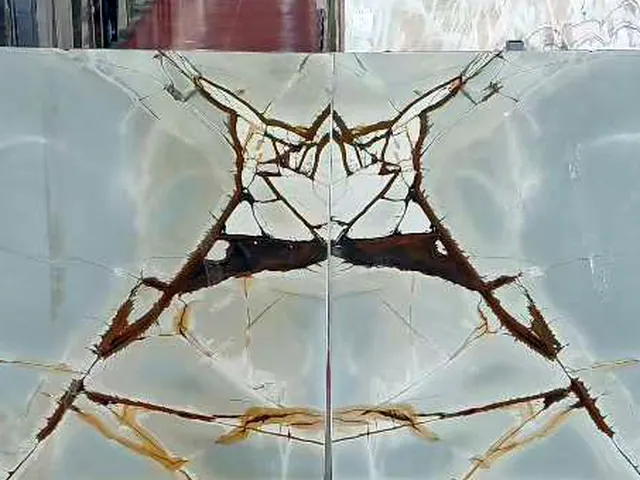
Blue Roma
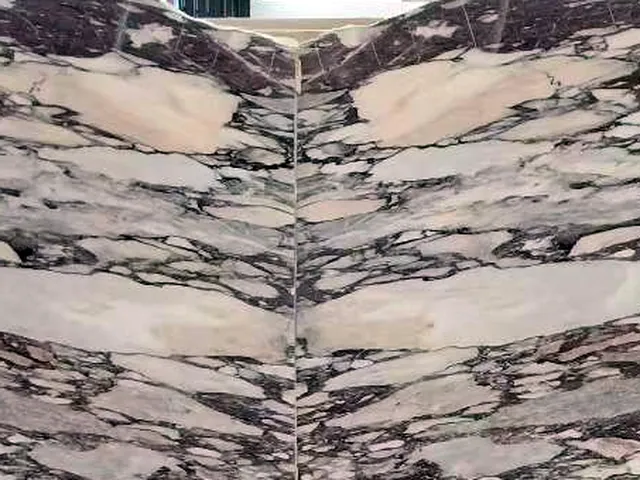
Calacatta Viola
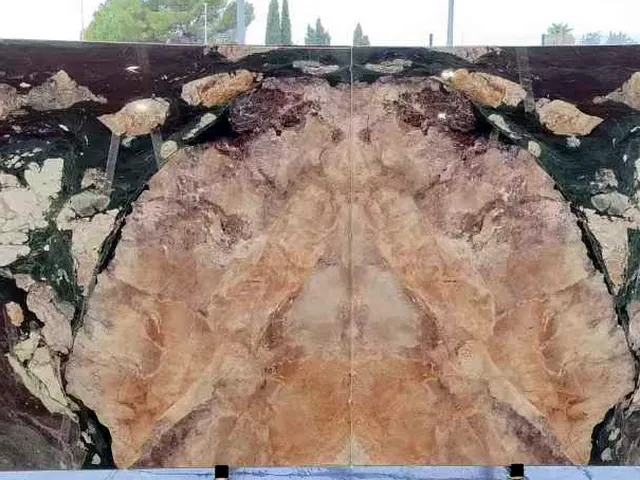
Four Seasons
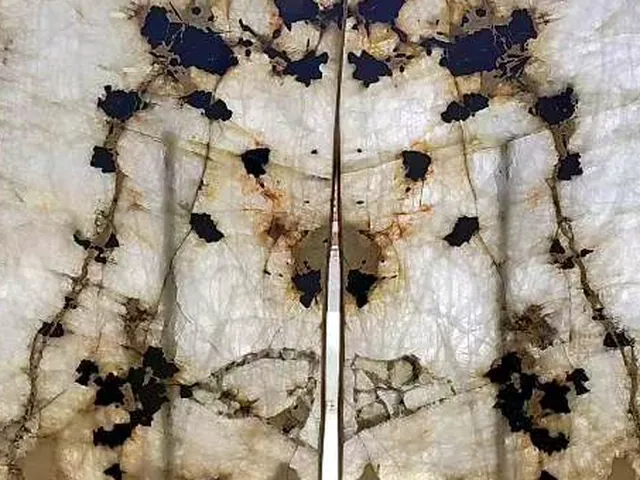
Patagonia
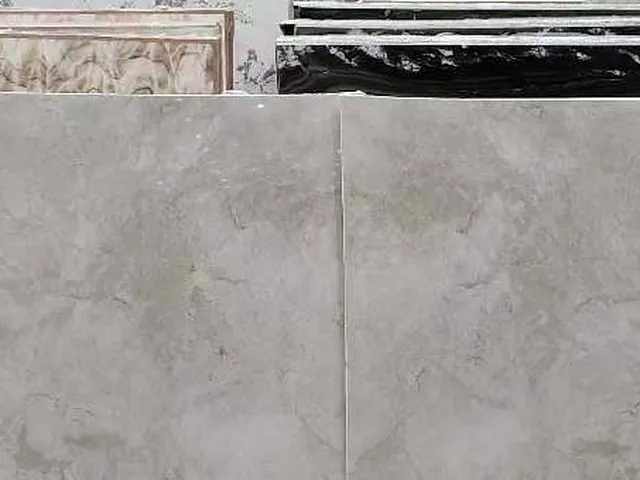
Taj Mahal
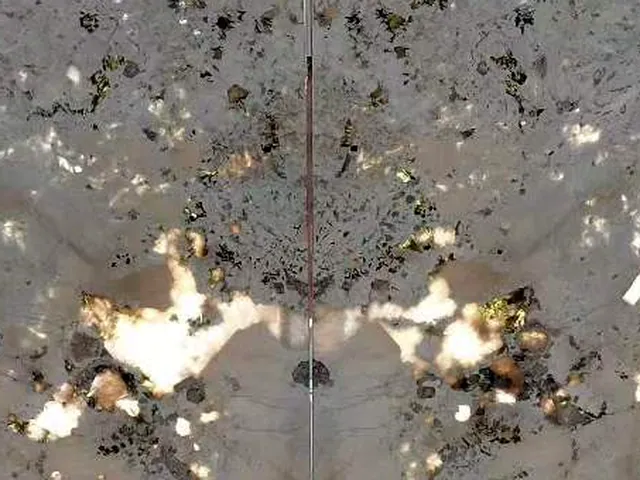
Alpinus Patagonia
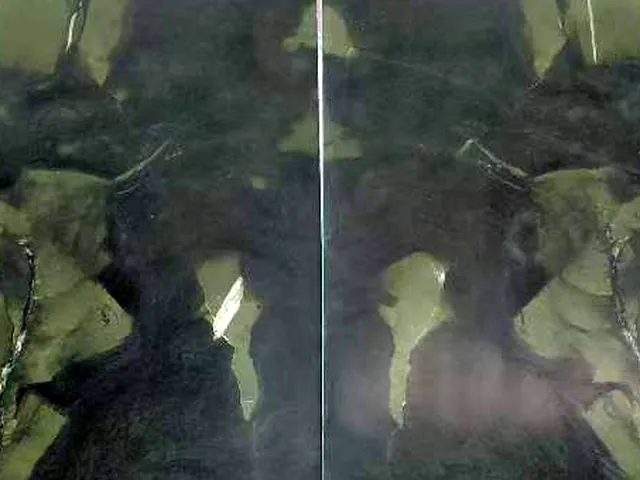
Avocatus
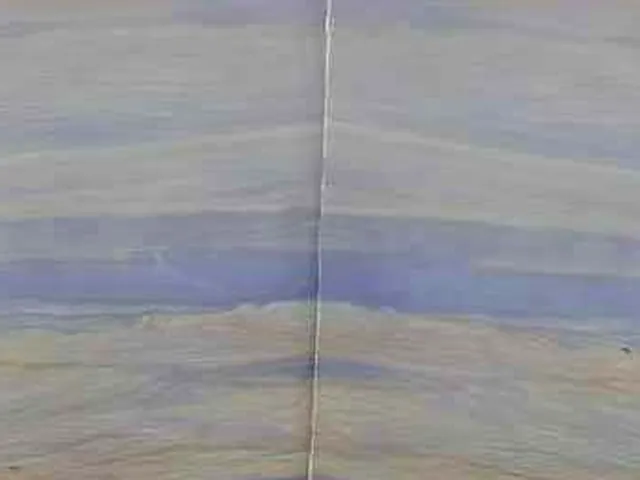
Azul Macaubas
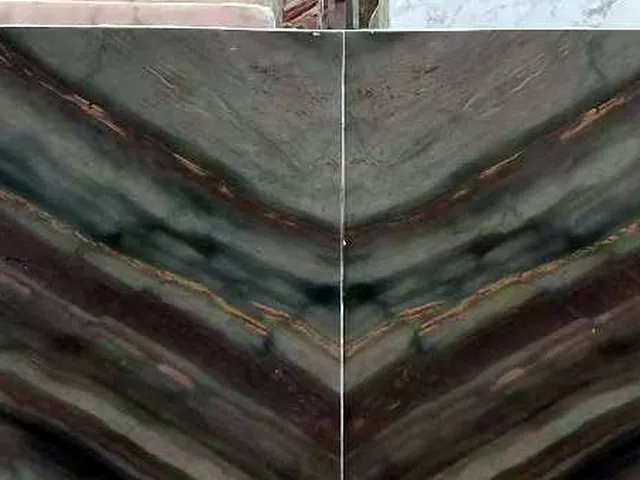
Elegant Brown
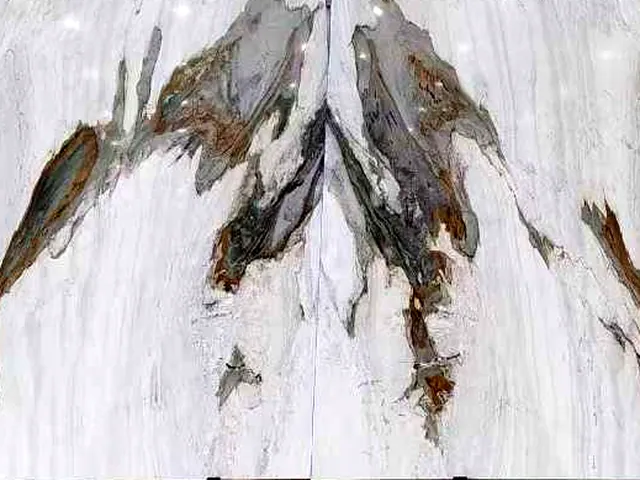
Macchia Vecchia
Planning a waterfall island? Send us the drawing or the dimensions and we will send you photos and videos of the consecutive slabs available. We can reserve them and ship them to any country. Get a quote.
Have a project in mind?
Ask us for a no-obligation quote: we will reply with an indicative price.