Quartzite vs quartz: the differences and how to tell them apart
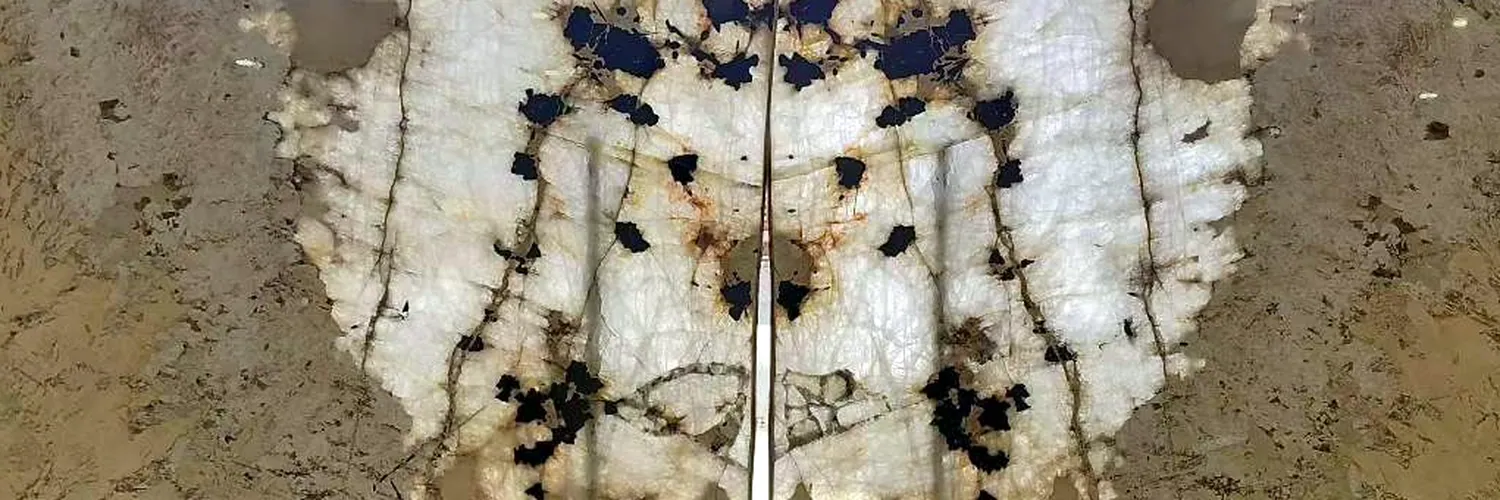
The names are similar and they are confused every day, even in some showrooms. But quartzite is a natural stone cut from a quarry, while engineered quartz is made in a factory. For your kitchen, the difference matters.
What quartzite is
Quartzite is a metamorphic rock: a sandstone that, over millions of years of heat and pressure, recrystallised into a very compact rock made almost entirely of quartz. It is quarried in blocks, sawn into slabs and polished like any other natural stone.
That is why every slab is unique, with veins, translucency and crystals that never repeat. Some of the best known come from Brazil, such as Taj Mahal, Patagonia and Vitoria Regia.
What engineered quartz is
Engineered quartz (sold under various brand names) is made by mixing around 90% crushed quartz with resins and pigments, which are pressed and cured. The result is uniform and low in porosity, but it is an industrial product: it can imitate veining, but not the depth or individuality of real stone.
Differences you will notice at home
| Quartzite | Engineered quartz | |
|---|---|---|
| Origin | Natural, quarried | Manufactured (quartz + resins) |
| Look | Every slab is unique | Uniform and repeatable |
| Direct heat | Copes very well | The resin can mark or yellow |
| Outdoors and sun | Suitable | Not recommended: UV can change the colour |
| Porosity | Low; worth sealing | Very low |
| Repair | Can be re-polished | More limited |
Beware of "soft quartzites"
Some white stones sold as quartzite are actually dolomitic marbles or dolomites. They are beautiful, but softer and more acid-sensitive than true quartzite. That is not a problem in itself — the problem is choosing one for a kitchen expecting it never to etch.
Two simple tests you can do on a sample (never on an installed countertop):
- The glass test: drag a sharp edge of the sample firmly across a glass bottle. True quartzite scratches glass; marble does not.
- The acid test: leave a few drops of vinegar or lemon for 10–15 minutes and wipe them off. If a dull mark remains, the stone contains calcite or dolomite: treat it like marble.
If you are unsure about a particular stone, ask us: we will tell you honestly how it behaves and whether it suits what you have in mind.
Which is right for you?
- If you want natural stone for a hard-working kitchen: quartzite.
- If you want a completely uniform surface and do not mind a manufactured material: engineered quartz.
- If you want the look of marble without the upkeep: a light quartzite such as Taj Mahal, Mont Blanc or Calacatta Da Vinci.
Have a project in mind?
Ask us for a no-obligation quote: we will reply with an indicative price.