Marble, granite, quartzite or quartz: which countertop should you choose?
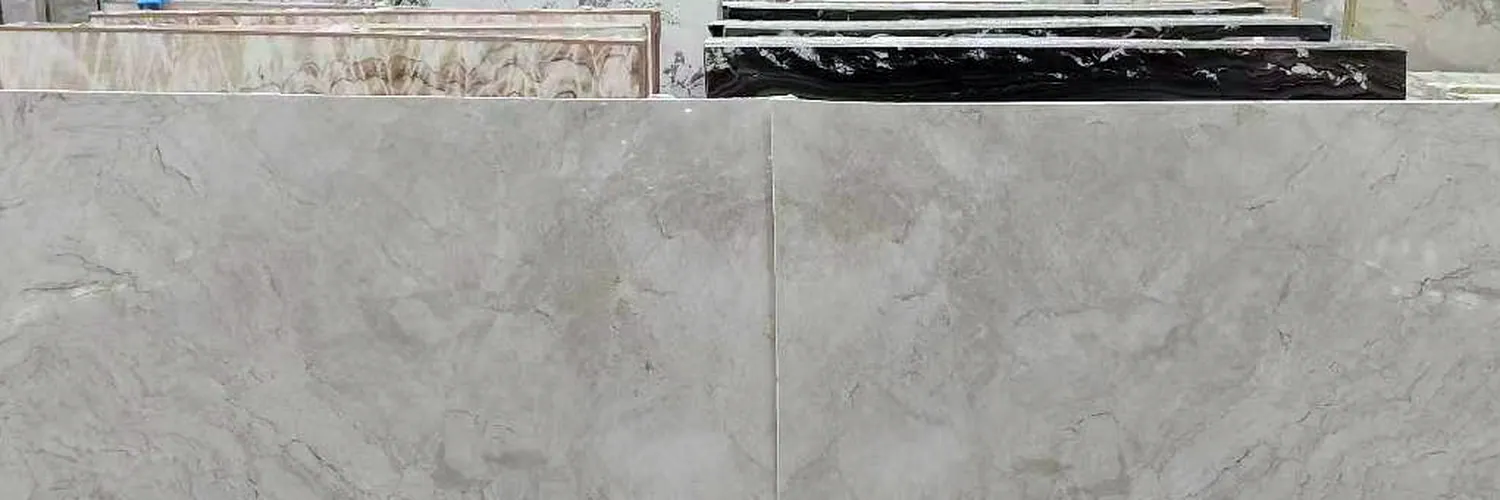
It is the most common question when planning a kitchen. All four materials can look stunning, but they behave very differently with lemon juice, a hot pan or years of daily use. Here are the differences without the jargon.
The short answer
- Marble: the most beautiful and the most delicate. Ideal if you love its veining and accept that your countertop will age with use.
- Quartzite: looks like marble but is far harder. The favourite choice for natural stone in a busy kitchen.
- Granite: the most practical and heat-resistant, with a more speckled look.
- Engineered quartz: uniform and low-maintenance, but it is a manufactured product and dislikes direct heat.
Quick comparison
| Marble | Quartzite | Granite | Engineered quartz | |
|---|---|---|---|---|
| Origin | Natural | Natural | Natural | Manufactured (quartz + resins) |
| Hardness (Mohs) | 3–4 | ~7 | 6–7 | ~7 |
| Scratches | Scratches easily | Very resistant | Very resistant | Very resistant |
| Acids (lemon, vinegar) | Leave dull marks | Resists well* | Resists well | Resists well |
| Direct heat | Copes, with care | Very well | Very well | Poorly: resins can mark |
| Maintenance | Regular sealing | Occasional sealing | Occasional sealing | Almost none |
| Look | Unique, luminous veining | Marble-like, crystalline veining | Speckled or granular | Uniform and repeatable |
* Some white stones sold as quartzite are actually dolomite or dolomitic marble, and they do react to acids. We explain how to tell them apart in this guide.
Marble: beauty with personality
Marble is a metamorphic rock made mostly of calcite. That composition gives it its glow and veining, but also makes it soft and sensitive to acids: a drop of lemon or vinegar left for a while leaves a dull mark (an "etch"), even on sealed stone. Sealing helps against oil and wine stains, but not against that chemical etching.
Does that rule marble out for kitchens? Not at all — Italian kitchens have used it for centuries. It is simply a material that ages and develops a patina. If you like that idea, stones such as Calacatta, Statuario or Calacatta Viola are unrivalled.
Quartzite: the look of marble, the toughness of granite
Quartzite is a sandstone transformed by heat and pressure into an almost pure quartz rock. That is why it is so hard (harder than many granites) and stands up well to scratches, heat and acids. Many quartzites have veins and translucency that recall marble.
It is the star choice for natural-stone kitchen countertops. Some of the most popular: Taj Mahal, a warm cream; Patagonia, with its translucent crystals; or Blue Roma, with its sky-blue background.
Granite: the practical choice
Granite is an igneous rock of quartz, feldspar and mica. Its strength is durability: it resists heat, scratches and daily wear better than almost any other material. It tends to look granular or speckled rather than veined, and it is usually very reasonably priced.
Engineered quartz: uniform and worry-free
Engineered quartz is made from around 90% crushed quartz bound with resins and pigments. It is very low in porosity and easy to clean, and it allows completely uniform surfaces. Its weak point is heat: a pan straight off the hob can damage the resin. And as an industrial product, each slab is the same as the next, without the individuality of natural stone.
So which one?
- Busy kitchen and you want veined natural stone: quartzite.
- Design-led kitchen, gentle use and you love marble: marble, sealed and cared for.
- Maximum durability at a good price: granite.
- Bathrooms, walls, floors, tables or backlit pieces: marble, onyx and semi-precious stones look like nothing else.
Always judge real slabs, not small samples: the same stone varies a lot from one slab to the next. Our catalogue shows photos of real slabs, and we are happy to advise you.
Have a project in mind?
Ask us for a no-obligation quote: we will reply with an indicative price.