Our process
From quarry to kitchen
A marble countertop begins as a wall of rock, sometimes thousands of kilometres away. This is the journey every slab makes.
One real block, from start to finish
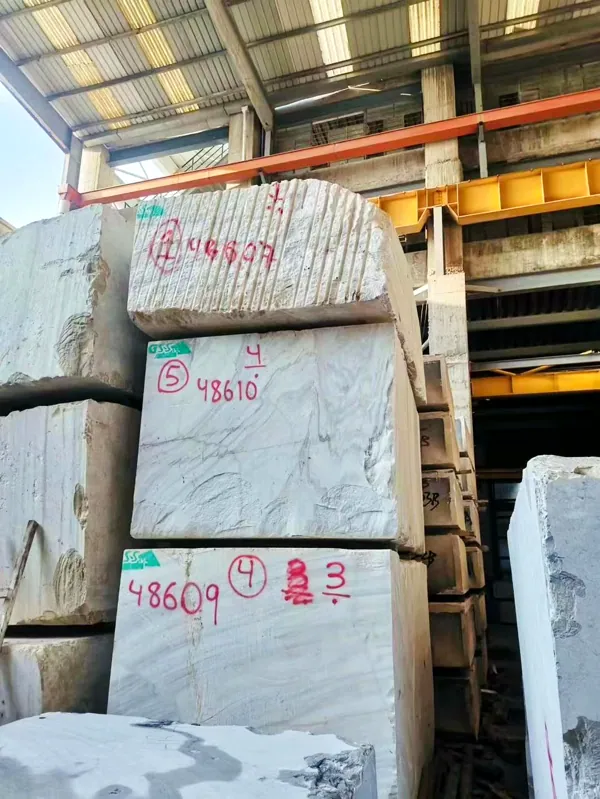
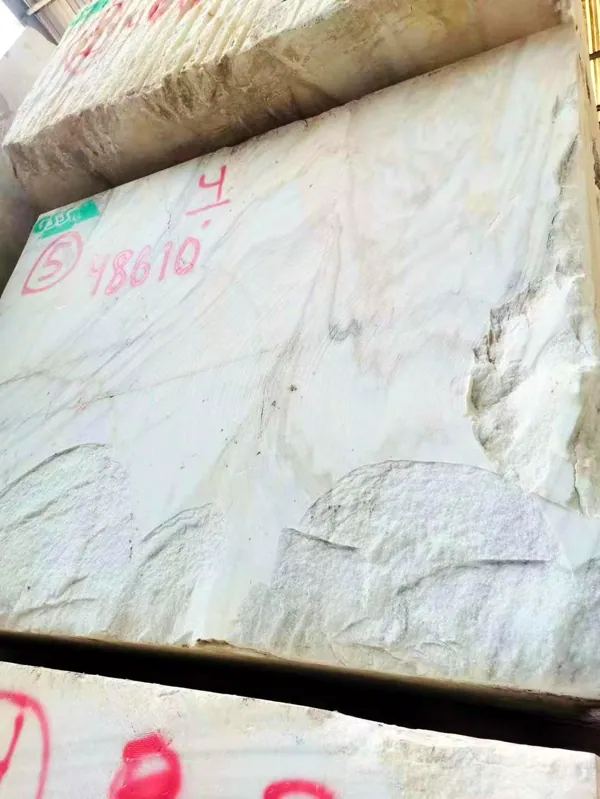
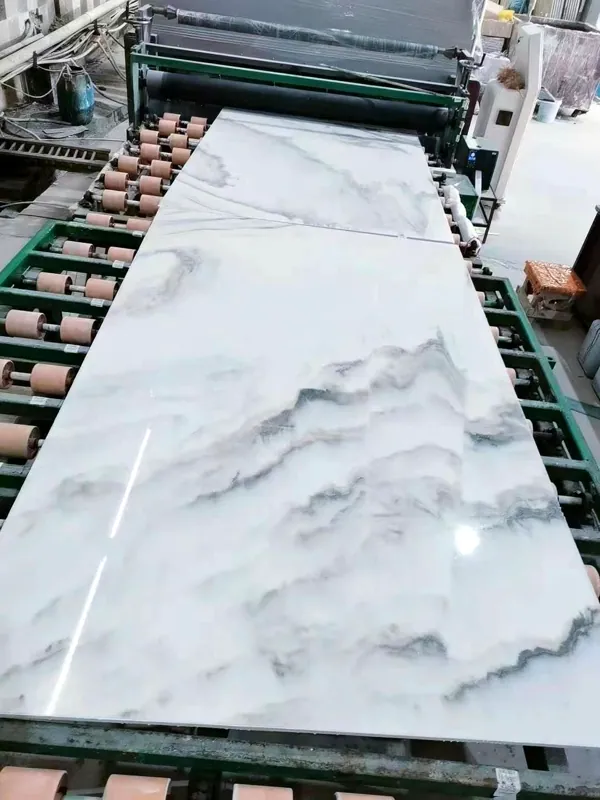
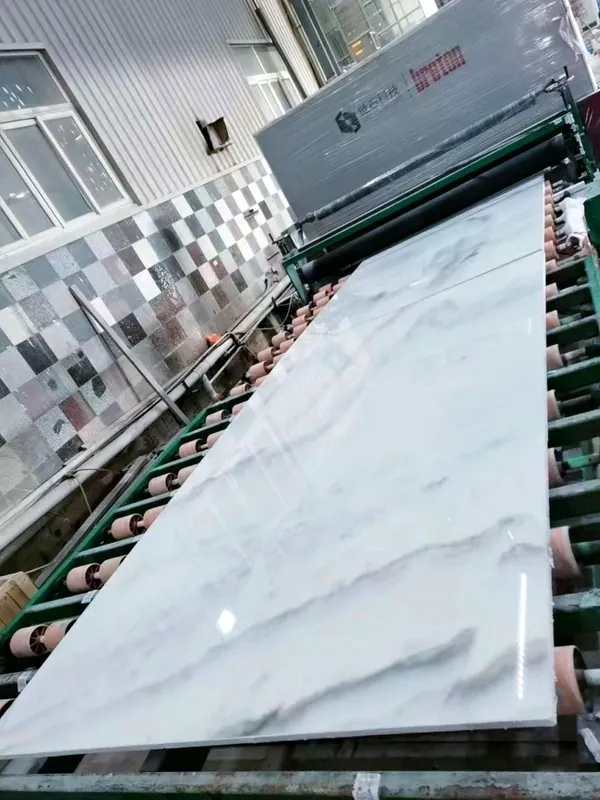
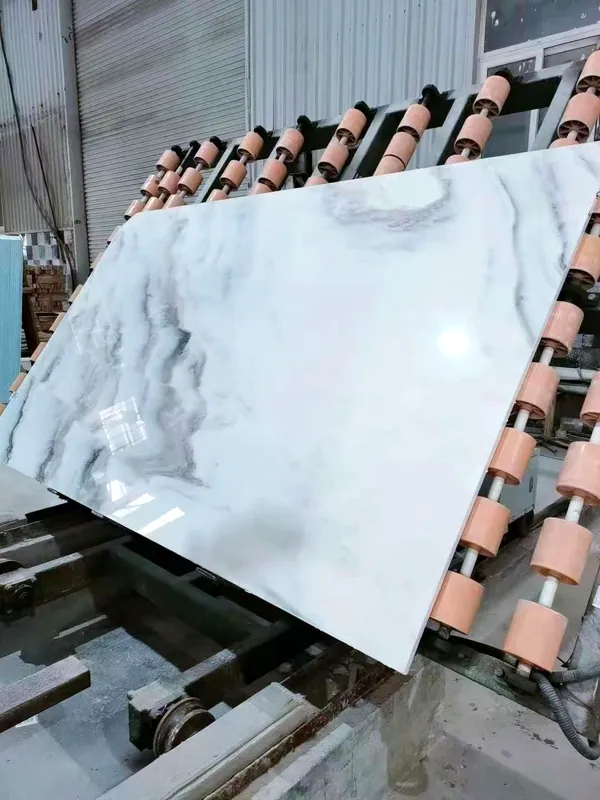
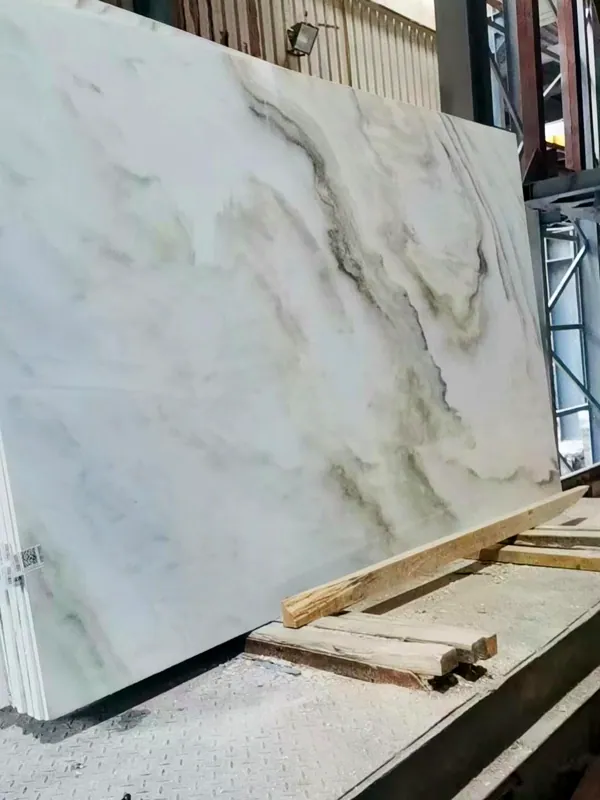
These photos follow a single block. It arrives from the quarry numbered, is sawn into slabs and each slab goes through the polishing line. The polished slabs you see are the ones cut from that block, which is why they all share the same vein pattern.
1. At the quarry: cutting the face
Marble quarries are worked in stepped benches. First, holes are drilled into the rock to thread a diamond wire: a steel cable with diamond beads that, driven by a machine on rails and cooled with water, cuts through stone like a wire through butter.
2. Toppling the "torta"
Several cuts free a huge slice of stone from the face — quarrymen in Spain call it the torta — which can weigh hundreds of tonnes. It is pushed over by machinery onto a bed of earth and rubble that cushions the fall so the stone does not break.
3. Squaring the blocks
The toppled slice is cut into transportable blocks, usually several tonnes each. These raw blocks are what travel to workshops around the world.
4. Sawing into slabs
At the workshop, the block goes through a gang saw (a saw with many parallel blades) or a multi-wire saw that cuts it into 2 or 3 cm slabs. Because consecutive slabs come from the same block, the veining runs from one to the next: opened like a book (bookmatched), they form symmetrical patterns.
5. Polishing
The slabs pass through a line polisher with ever-finer abrasive heads. This creates the finish: polished (gloss), honed (matt) or leathered (textured).
6. To your project, in any country
You choose the slab from real photos of our stock, or by seeing it at our warehouse in Llanera de Ranes (Valencia), by appointment via email. We sell the whole slab: we crate it and ship it anywhere in the world, and your fabricator cuts it to size with its edges and cut-outs and installs it. Browse the catalogue · Get a quote.