Sintered stone vs natural stone: an honest comparison
Sintered stone has earned its place in kitchens, bathrooms and facades, and it is often compared with natural stone as if the two were the same thing. They are not. Neither wins on every count: each is better at different things. Here are the real differences, without overselling either side.
What sintered stone is
Sintered stone is a manufactured material. It starts from ground minerals (depending on the maker, clays, feldspars, silica and colour oxides), which are pressed at very high pressure and fired at very high temperature. The result is a dense slab with almost no pores, a close relative of porcelain. Well-known brands include Neolith, Lapitec and Dekton, and each maker has its own name for it: sintered stone, ultra-compact surface or large-format porcelain.
The pattern is created in one of two ways, depending on the product:
- Printed on the surface: a high-resolution digital print on the visible face. The body of the slab is a single, plain colour.
- Through-body: the colour, and in some products the veining too, runs through the full thickness. The edge looks much more like the face.
Natural stone, on the other hand, is rock sawn from a quarry block. And it is not one material: marble is soft and sensitive to acids, while quartzite and granite are much harder. When you compare, it matters which stone you are comparing with.
Looks
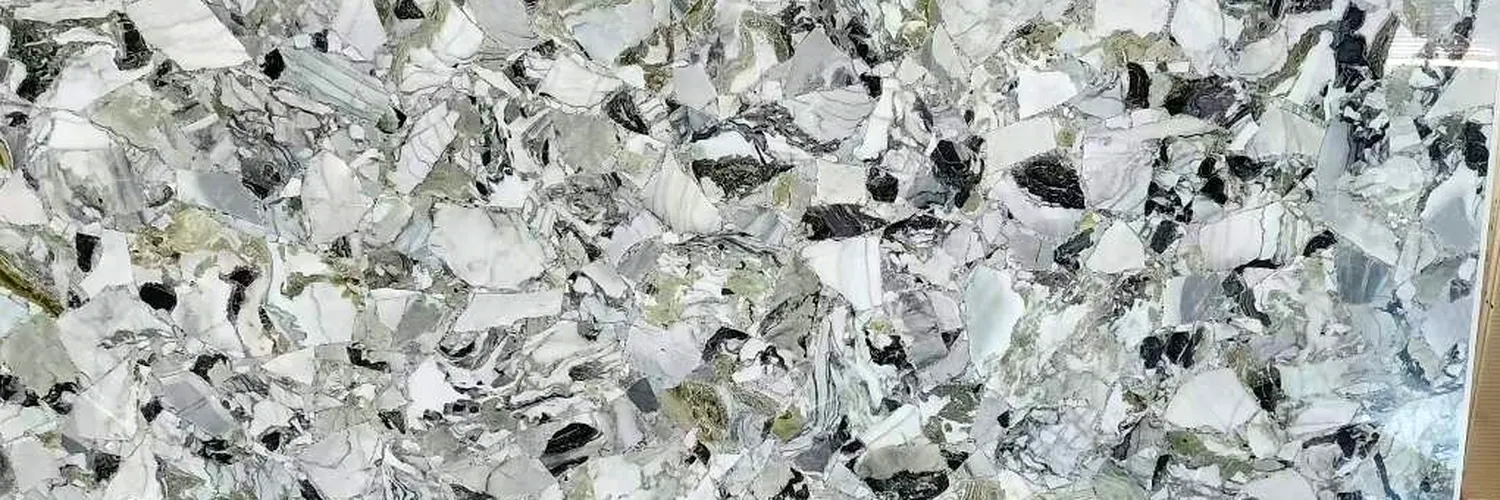
- Repeats. A sintered product reproduces a limited number of designs, which repeat from slab to slab. That is an advantage if you want a uniform look and a drawback if you want a one-off. No two natural stone slabs are the same: in a marble with a mosaic-like pattern such as Invisible Grey, every slab has its own composition.
- Depth. Stone has crystals, translucent areas and small changes in sheen that you notice as you move past it. Good sintered surfaces copy the pattern very well, but the surface itself is more uniform.
- Edges. In natural stone the veining carries on round the edge, and on a waterfall countertop it continues with no tricks. On printed sintered stone the edge shows the body colour; fabricators hide it with mitred edges, or you choose a through-body product.
If you want to spot an imitation in a showroom, we go through it step by step in natural stone or imitation.
Everyday performance
| Sintered stone | Natural stone | |
|---|---|---|
| Stains | Very resistant: absorbs almost nothing | Depends on the stone; it is sealed |
| Acids (lemon, vinegar) | Very resistant | Marble etches; quartzite and granite far less |
| Heat | Handles it very well | Good in general; use trivets |
| Scratches | Very resistant | Marble scratches; quartzite hardly at all |
| Knocks on edges and corners | Higher risk of chipping, especially in thin panels | Copes better at 2–3 cm (3/4"–1 1/4"), though it can also chip |
| Sun outdoors | Colour stays stable | Depends on the stone; polish loses its shine |
The weak spot of sintered stone is its edges and corners. It is very hard but not very flexible, and a sharp knock from a heavy pan can take a chip out. That is why small bevelled or rounded edges and corners without sharp arrises are recommended. Cutting and handling it also call for specific tools and experience, so choose a fabricator who works with it regularly.
Repairs
Here natural stone has the edge. It is solid all the way through: if it gets scratched, etched or dull, a professional can hone or re-polish it and the surface comes back. A chip is filled with resin tinted to the stone's colour and polished.
Chips in sintered stone can be filled too, but the repair usually shows, especially when the pattern is only on the surface. And a printed face cannot be re-polished without losing the pattern. On the other hand, with normal use it rarely needs any repair at all.
Sizes and thicknesses
- Sintered stone: large slabs in fixed sizes and thin gauges, from just a few millimetres. They weigh little per square metre, so they suit wall cladding, cabinet doors, furniture and facades.
- Natural stone: slabs 2 and 3 cm thick (about 3/4" and 1 1/4"), with dimensions that depend on the block. A 2 cm slab weighs around 52–56 kg/m² (roughly 11 lb/sq ft). In exchange, the block can yield solid pieces that sintered stone cannot: stair treads, carved basins, table bases or mouldings.
For countertops (worktops), the choice between 2 and 3 cm is covered in our guide to countertop thickness.
Backlighting
As a rule, sintered stone is opaque. Light through stone is natural stone's territory: onyx, some translucent quartzites such as Crystallo (Cristallo), and semi-precious slabs, which are made of pieces of stone bonded with resin onto a backing. We explain it in backlit onyx.
Sustainability
There are plenty of sweeping claims around. This is what can be said with confidence:
- Natural stone is not manufactured: it is quarried, cut and polished, with no firing. Its footprint lies mainly in the quarry, the energy used for cutting and transport, because it is heavy. It lasts for decades, can be restored and can even be salvaged and reused.
- Sintered stone is made by grinding, pressing and firing minerals at very high temperature, a process that uses energy. Some makers add recycled content and publish environmental data. It is also very durable.
- For a fair comparison, ask for the Environmental Product Declaration (EPD) of each specific product and take transport distance into account.
- Health in the workshop: dry-cutting any material that contains crystalline silica (many granites and quartzites, and many manufactured surfaces) produces hazardous dust. It should be cut with water, dust extraction and respiratory protection.
When each one makes sense
Sintered stone
- Very hard-working kitchen countertops (worktops), if you do not want to think about stains, acids or sealing.
- Outdoor kitchens and facades in strong sun.
- Thin, light cladding on furniture, doors or walls.
- Projects that need the same pattern in many places, such as a chain of stores.
Natural stone
- If you want a unique piece, with real depth and veining that carries through edges, waterfalls and book-matched walls.
- For backlighting or solid carved pieces.
- If you want a material that can be restored and that ages with character.
- If you love the look of marble but need hardness, look at quartzites: we compare them in marble vs quartzite.
If you are torn between a particular marble and the porcelain that imitates it, see marble vs porcelain.
Some stones from our catalogue
Every photo shows a real slab:
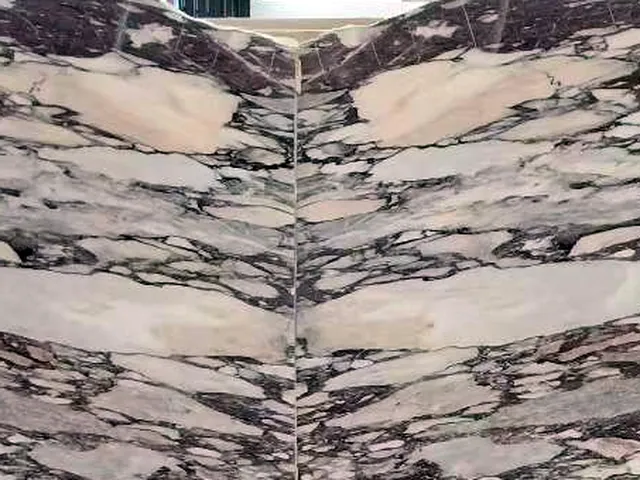
Calacatta Viola
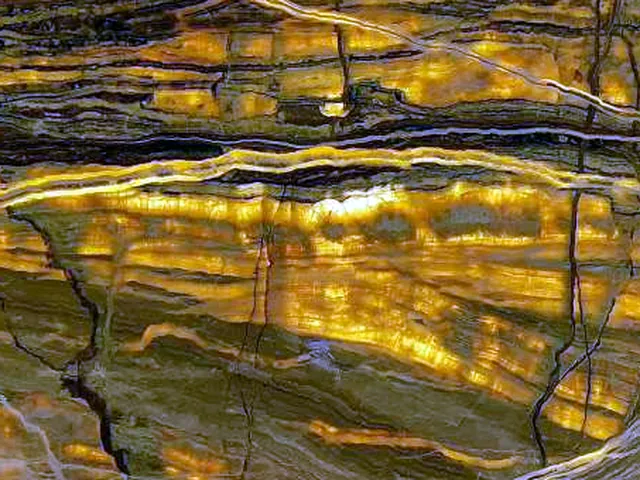
Onyx Capuccino
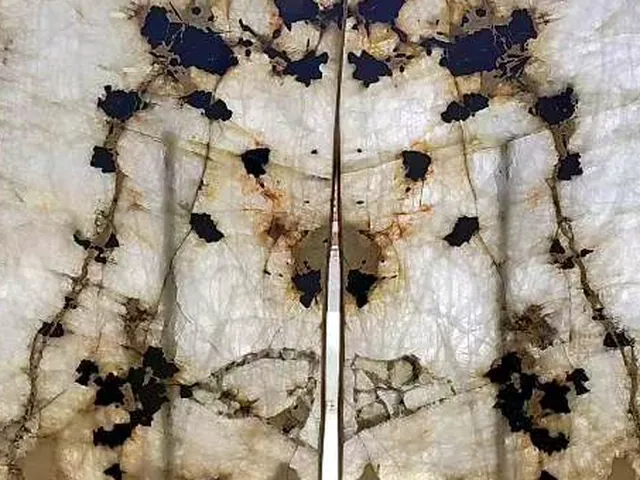
Patagonia
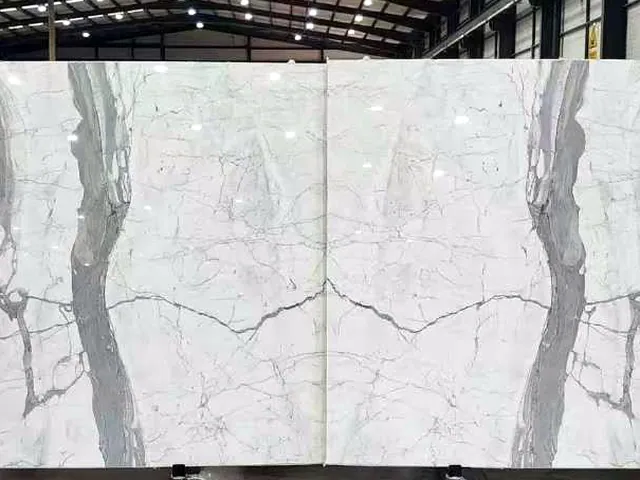
Statuario
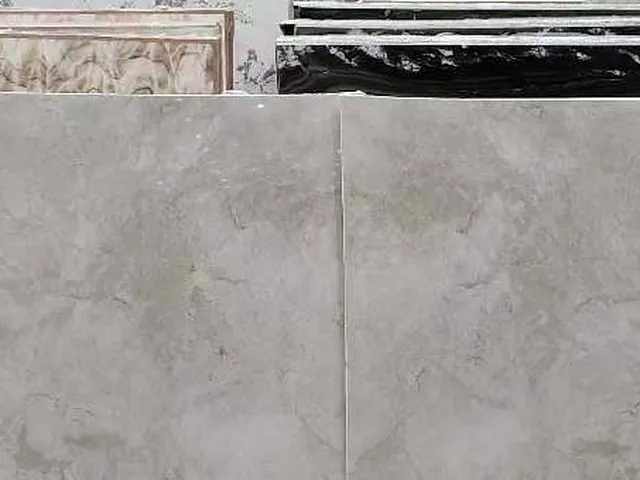
Taj Mahal
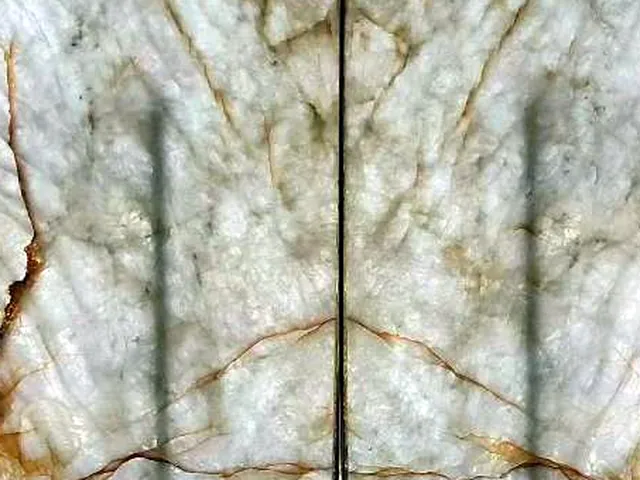
Crystallo
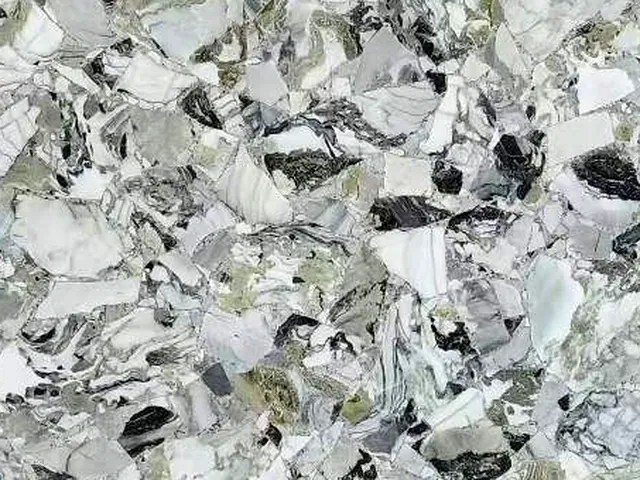
Invisible Grey
Comparing materials? Ask us for photos and videos of real slabs with a quote, and compare them with the sample you have. We ship worldwide.
Have a project in mind?
Ask us for a no-obligation quote: we will reply with an indicative price.