Statuario Marble
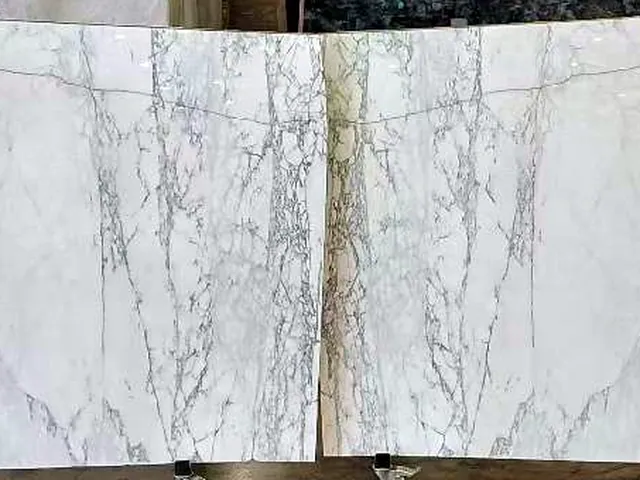
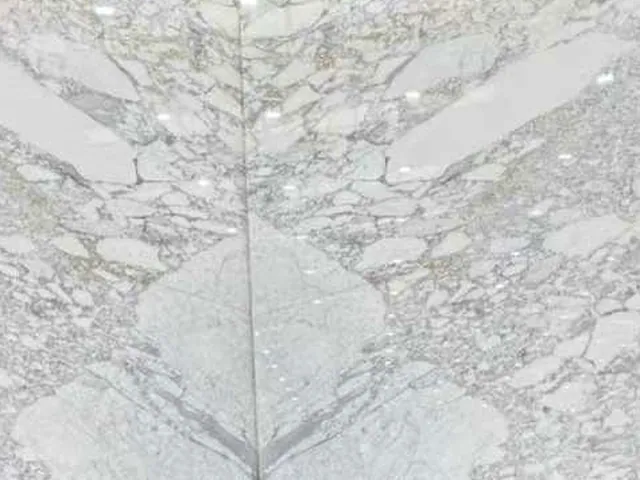
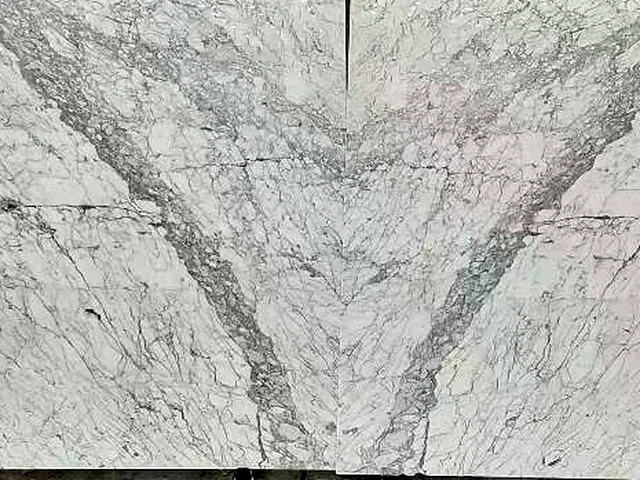
Statuario is one of the most exclusive Italian white marbles: a bright white background with bold, dramatic grey veins. For bathrooms and design pieces. It can be used for countertops if you accept that acids may leave marks and that the surface will develop a patina.
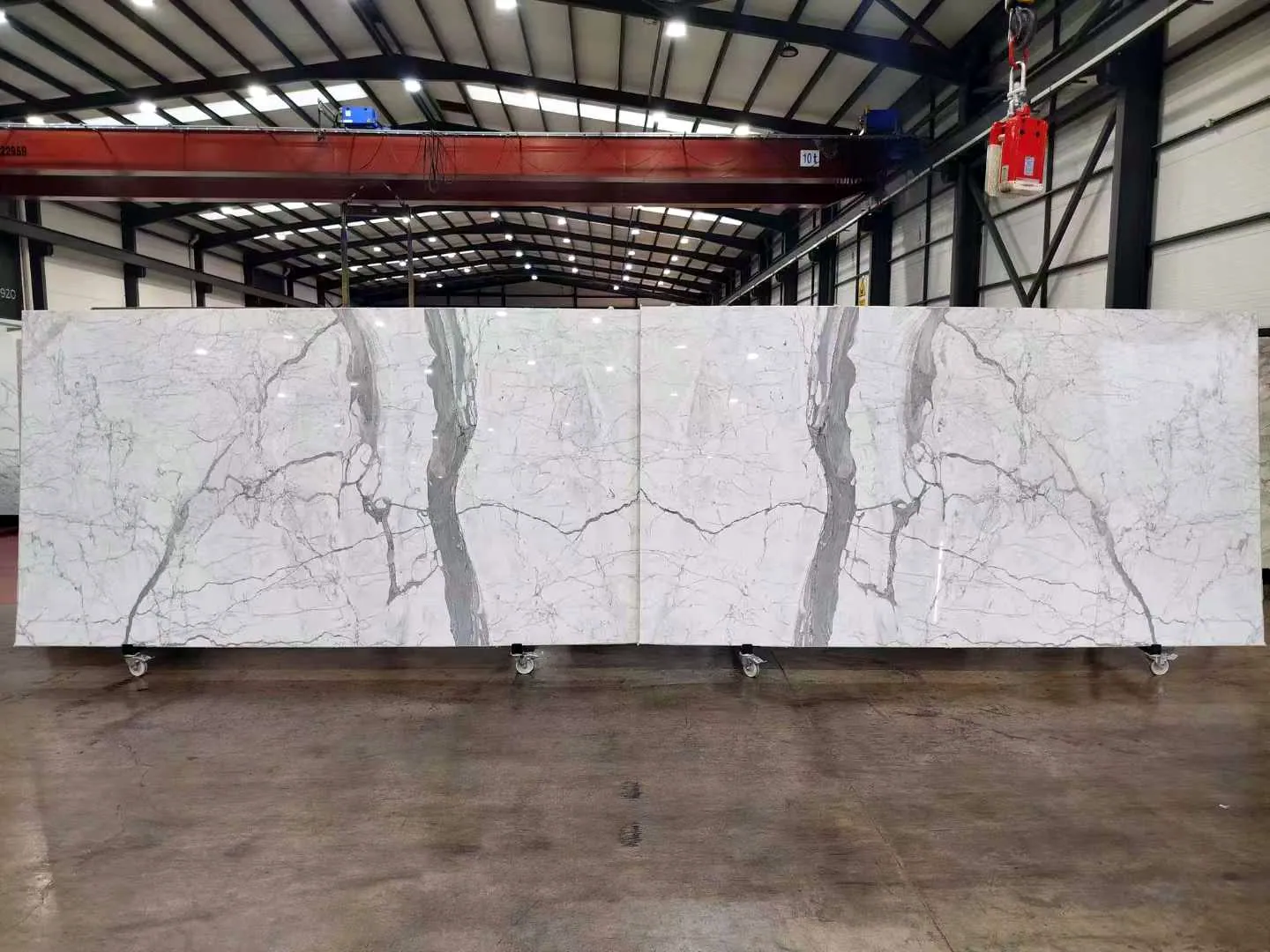
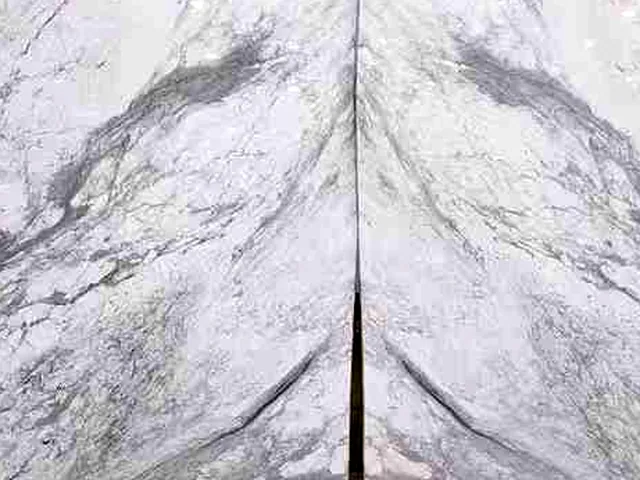
Reference image of a real slab. We confirm the batch, dimensions and availability before your order. Download the photo (for your moodboard)
Also known as: Statuary
- TypeMarble
- ColourWhite
- OriginItaly
- FinishesPolished
- PriceDepends on material, batch, format, quantity and destination
- AvailabilityAsk us about slabs in stock
- ShippingWorldwide
- Sold asWhole slab (your fabricator cuts it)
- See it in personWarehouse in Llanera de Ranes (Valencia), by appointment via email
About this marble
Properties
A metamorphic rock made mostly of calcite. Luminous, with unique veining and easy to re-polish. Hardness 3–4 on the Mohs scale.
Recommended uses
Bathrooms, floors, stairs, cladding, fireplaces, tables. In kitchens, if you are happy for it to develop a patina.
Care
Sensitive to acids (lemon, vinegar) and slightly porous: it should be sealed and cleaned with pH-neutral soap.
What Statuario looks like
Statuario comes from the Apuan Alps around Carrara, in Tuscany, and its name points to sculpture: statuario is Italian for "statuary". What defines it is contrast: a very bright white background with bold, well-defined grey veins that cut across the slab. Compared with Carrara, the background is whiter and the veining far more dramatic.
The amount of veining varies a lot from slab to slab. Some are almost clean, with one or two large veins; others carry a denser network. When choosing:
- Look at the whole slab, not a corner of it. A big vein can end up in the middle of an island or be lost in a cut.
- Check the background in daylight. The whiter and cleaner it is, the more the veins stand out.
- Plan where the veins will fall before cutting, especially around a sink, a hob or a joint.
Where it works best
Main bathrooms, book-matched walls, tables, vanities and design pieces, where the contrast can be seen from across the room. In a kitchen it looks spectacular, but a polished surface will show etch marks from lemon or vinegar: it works if you are happy with a patina or the kitchen sees light use. If you cook every day, read the pros and cons of marble countertops first. It is also used on floors, although that much drama underfoot can feel busy across a large area; it often looks better saved for a wall or a feature piece.
What to pair it with
- Matte black taps and trims for a graphic contrast.
- Brushed brass or steel, depending on whether you want a warm or a cool feel.
- Light wood (oak, ash) to soften it, or white and grey lacquer for a very clean look.
- Plain walls: Statuario already brings all the pattern the room needs.
Similar stones
- Calacatta: also a white background, with thicker, sparser veins. The differences are in types of Calacatta.
- Carrara: more understated, with a greyish background and fine veins. Better at hiding everyday wear.
- Volakas: a Greek marble with a white background and soft, flowing grey veins; less contrast.
- Super White: a veined white that looks like marble and is sold as quartzite. Check the actual slab with the tests in marble vs quartzite.
Real stone or imitation?
"Statuario" is one of the names most copied by porcelain and quartz brands. To spot the real thing: the veins run through the thickness and show on the edge, no pattern repeats between slabs and, up close, the background has crystals and depth. More tips in natural stone or imitation.
Looking for Statuario for your project? Ask us for photos of the slabs available: we show you the actual slab, not a catalogue sample.
See the vein in context
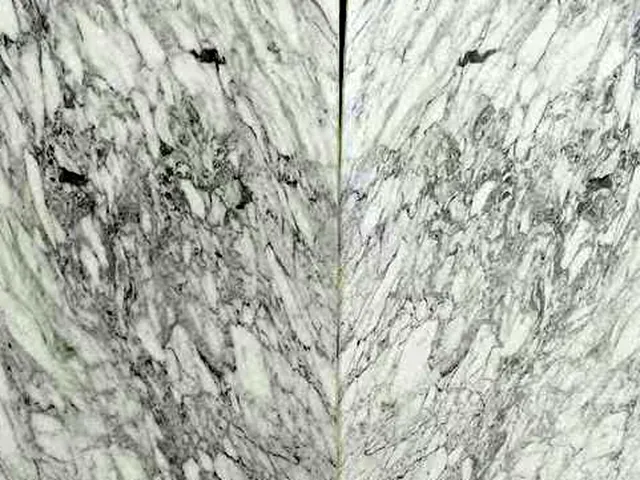
A strong vein can dominate a small piece yet look balanced across a whole slab. Compare both scales before judging the pattern.
Relate the photo to the cutting layout
To preserve a particular vein, place it on the cutting plan. The photo alone does not show how much pattern remains after edges and cut-outs are removed.
Related guides: Carrara vs Calacatta marble: how to tell them apart at a glance · White marble types: names, differences and how to choose · Marble kitchen countertops: pros, cons and how to live with them · How to clean marble (and what never to use) · How to remove stains from marble: coffee, wine, oil, rust and hard water · Marble etching: what it is, why it happens and how to fix it · Do you need to seal marble? When, how often and how to do it · Marble vs quartzite: the real differences for countertops
Interested in Statuario?
Add it to your selection with any others you are considering, or ask for a quote now. We will reply with today’s price and the available slabs.
Other stones with a similar appearance
Visual similarity does not imply the same composition, care or applications.