Countertop thickness: 2 cm or 3 cm, edges and overhangs
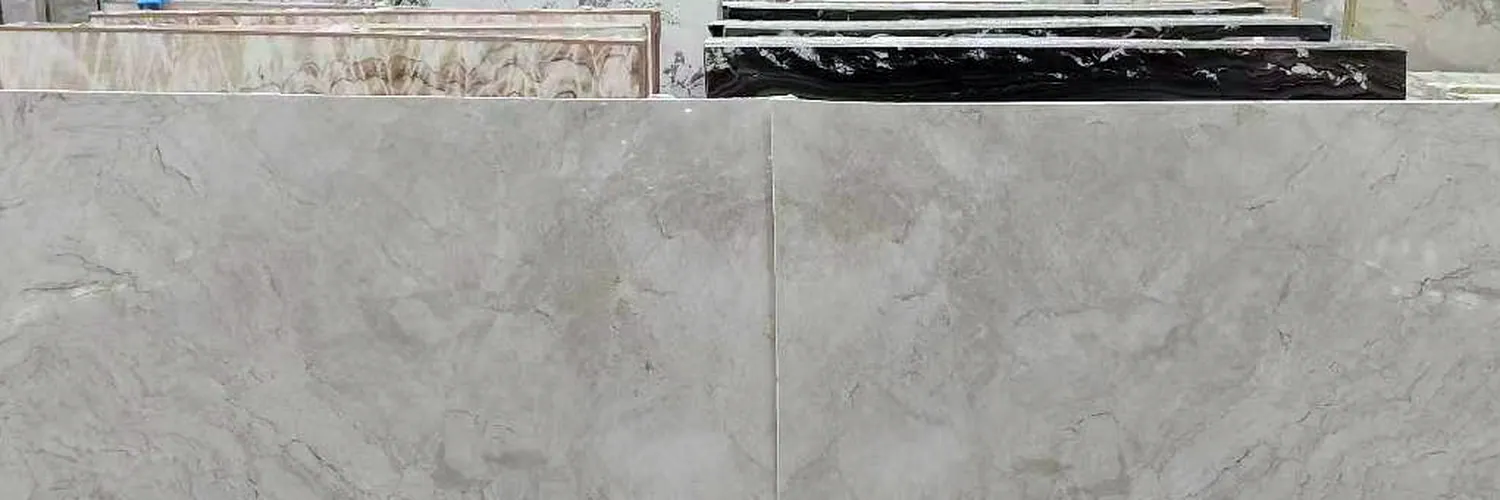
Natural stone slabs almost always come in two thicknesses: 2 cm (about ¾ in) and 3 cm (about 1¼ in). The choice changes how the countertop looks, how much it weighs and how it is fabricated. And with a mitred edge, a thin slab can pass for a solid block.
2 cm vs 3 cm at a glance
| 2 cm (¾ in) | 3 cm (1¼ in) | |
|---|---|---|
| Approximate weight | 52–56 kg/m² (about 11 lb/ft²) | 78–84 kg/m² (about 16–17 lb/ft²) |
| Edge look | Slim and light | More substantial |
| Stiffness | Lower: needs good support | Higher |
| Handling | Easier to move, install and ship | More material and more weight on site |
| Typical uses | Backsplashes, walls, vanities, tables; countertops with a mitred edge | Kitchen countertops and islands |
When 3 cm makes sense
Many fabricators prefer 3 cm for kitchens. The piece is stiffer, copes better with sink and cooktop cut-outs, and the edge has presence without adding anything to it. It is also the natural choice for islands with a lot of unsupported surface.
When 2 cm makes sense
2 cm is the usual thickness for backsplashes (splashbacks in the UK), wall cladding, vanity tops and many tables. In kitchens it is mostly used in two ways: laid on a continuous support panel, or with a mitred edge that makes it look thicker. It weighs a third less, which you notice when moving it, installing it and shipping it.
Not every stone is cut in both thicknesses: it depends on how each block was sawn. If you fall for a particular slab, check its thickness first and design around it.
How much does a stone countertop weigh?
Most marbles, quartzites and granites have a density of about 2,600–2,800 kg/m³. A 2 cm slab weighs roughly 52–56 kg per square metre, and a 3 cm slab roughly 78–84 kg.
For example, the top of a 2.4 × 1 m island (about 8 × 3¼ ft) weighs around 125–135 kg (275–300 lb) in 2 cm and 185–200 kg (410–445 lb) in 3 cm, before adding waterfall sides. That is why the cabinets must be level and strong enough to carry the load, and why delivery and installation need planning.
Mitred edges: the thick look without the thick slab
A mitred edge (mitered in the US) gives you a 4, 6 or 8 cm edge (roughly 1½–3 in) from a standard slab. A strip is cut from the same slab, the countertop edge and the strip are both cut at 45°, and the two are bonded. The joint sits right on the corner, almost invisible, and the veining wraps around the edge as if the countertop were solid stone.
- The strip must come from the same slab, ideally from the area right next to the top, so colour and veining match. It is set aside on the slab layout before anything is cut.
- It uses more material and more workshop time than a simple edge.
- There is a simpler option: a laminated edge, where the strip is glued flat underneath. It costs less, but the joint shows on the edge as a horizontal line.
Edge profiles
- Square (eased) edge: the cleanest, most contemporary look. Ask for the corners to be slightly eased: a sharp arris chips easily, especially on marble.
- Bevelled edge: a small chamfer on the top corner. It softens the line and protects the edge.
- Bullnose or half bullnose: the edge is rounded at the top or all the way round. The most comfortable day to day and the most resistant to knocks.
- Ogee and other mouldings: classic profiles for traditional kitchens and bathrooms.
- Mitred: the thick edge described above, and the one used on waterfalls.
Overhangs and support
Stone is not designed to be left hanging in the air. A small overhang past the cabinet fronts is normal. Large overhangs, such as a seating area on an island for bar stools, need support: concealed brackets, a steel reinforcement, legs or a stone side panel. How far each piece can overhang without support is your fabricator's call, based on the stone, its thickness and the cut-outs it carries.
- 3 cm is stiffer than 2 cm, but neither replaces proper support.
- Sink and cooktop cut-outs weaken the piece. The narrow strips left beside them are vulnerable spots.
- Stones with lots of crystal or heavy veining often come reinforced with mesh and resin on the back. This is standard practice, not a defect.
Thickness on islands and waterfalls
An island is seen from every side, so its edge stands out far more than a countertop against the wall. A common approach is to mix: perimeter countertops in 2 or 3 cm, and the island in the same stone with a thick mitred edge.
On a waterfall countertop, the top and sides meet in a mitre, so the corner shows no edge at all. The thickness shows on the long edges and on the edges of the side panels, which are often mitred too so the island reads as a solid block. Here, 2 cm keeps the side panels much lighter, while 3 cm looks more monolithic. If the stone also runs up the wall, see our guide to the marble backsplash.
Thickness and hardness go together
In a kitchen, the type of stone matters as much as the thickness. A quartzite such as Taj Mahal, with its warm cream background and soft beige and golden veins, combines the look of a light marble with the hardness of quartzite. A marble, on the other hand, will show signs of use whatever its thickness. We compare them in marble vs quartzite.
Countertop stones in our catalogue
Every photo shows a real slab:
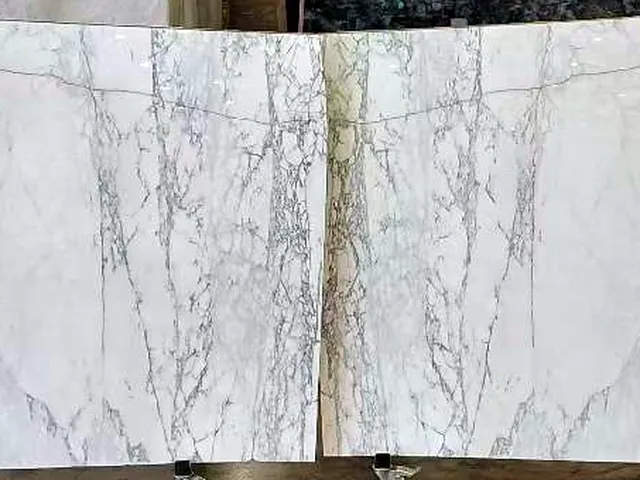
Calacatta
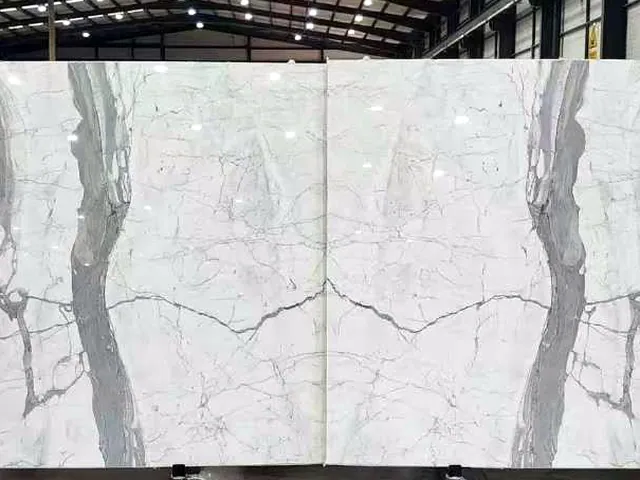
Statuario
Taj Mahal
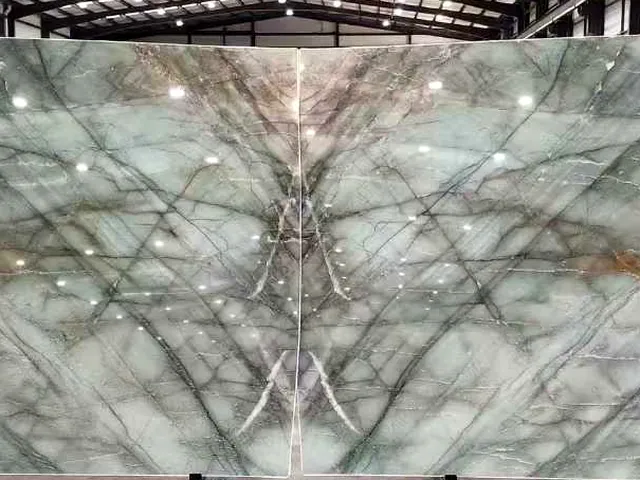
Calacatta Da Vinci
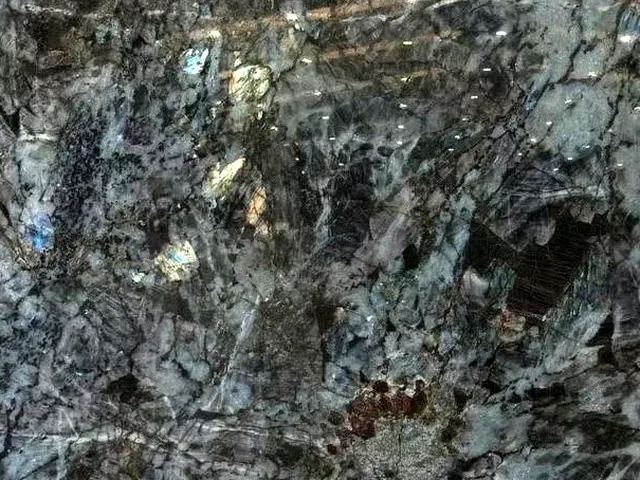
Lemurian
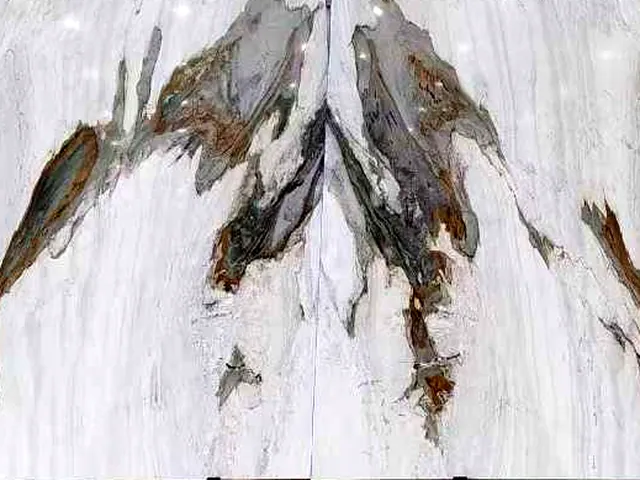
Macchia Vecchia
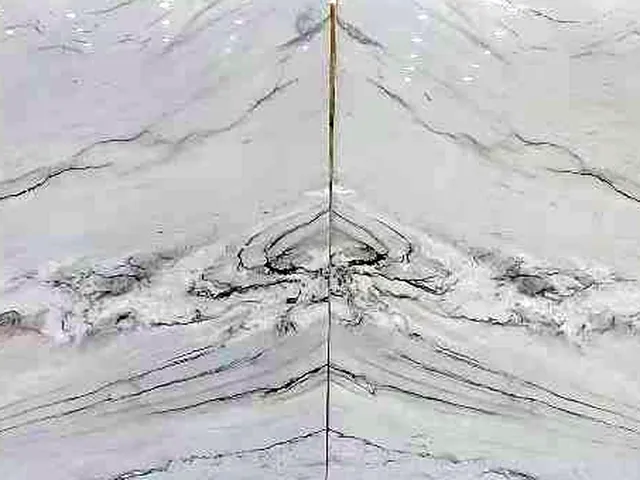
Mont Blanc
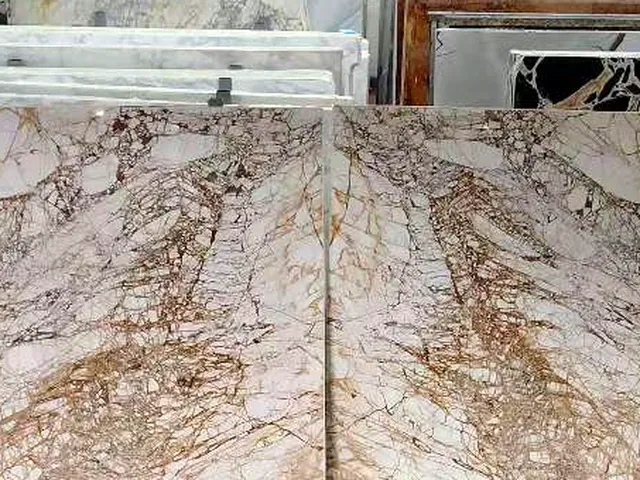
Roma Imperial
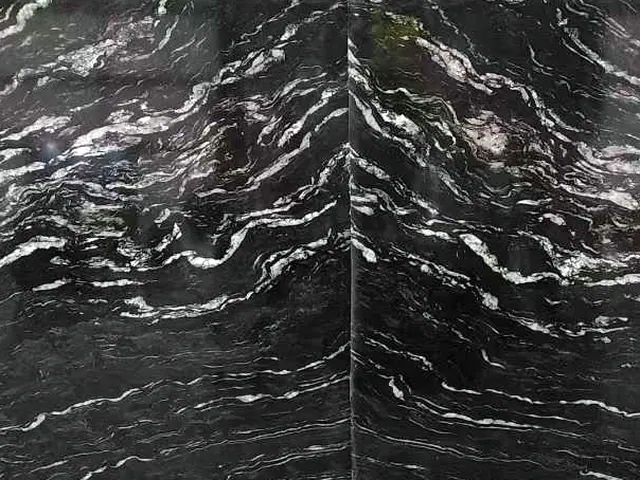
Titanium
Send us your countertop dimensions and the edge you have in mind, and we will send you photos and videos of real slabs with their thickness. We can reserve them and we ship worldwide. Get a quote.
Have a project in mind?
Ask us for a no-obligation quote: we will reply with an indicative price.