Marble flooring: formats, installation and care

A well-chosen, well-laid marble floor lasts for generations. It works in a home, a hotel lobby or a shop, but each setting calls for a different format, finish and care routine. Here is what to decide before the first piece is cut.
Formats: tiles or large pieces
- Modular floor tiles. Standard-size pieces cut in batches. The most practical option for large, regular areas. In Europe the product standard is EN 12057.
- Large pieces cut from slabs. Cut to size from whole slabs, with fewer joints and more continuous veining. They let you match the pattern from one piece to the next, or even book-match the floor. For flooring slabs the European standard is EN 12058. How the cutting is planned is covered in large-format slabs and slab layout.
Usual thicknesses
Stone flooring is mostly 2 cm (about 3/4") or 3 cm (about 1 1/4") thick. 2 cm is standard in homes and for medium-size tiles. 3 cm is kept for large pieces, high-traffic areas or heavier loads, because the piece flexes less. A 2 cm slab weighs around 52–56 kg/m² (roughly 11 lb/sq ft) and a 3 cm slab around 78–84 kg/m² (roughly 16–17 lb/sq ft), which matters when renovating over older floor structures. The final thickness is the designer's or engineer's call, based on the format and use.
Installation
- A flat, stable substrate. Stone does not correct an uneven or cracked base: it reflects it. The substrate is levelled first and left to cure.
- The right adhesive. Today stone floors are nearly always laid with adhesive rather than a traditional mortar bed. For light marbles, use a white adhesive, as a grey one can show through or stain.
- Fine joints. With well-calibrated pieces the grout joint can be very thin and matched to the stone. The floor still needs its perimeter and structural movement joints.
- Serpentine greens. Green marbles such as Verde Alpi are sensitive to moisture during installation: with cement-based or water-based adhesives they can warp. Reactive adhesives (epoxy or polyurethane) are usually recommended instead.
Finishes and slip resistance
The finish changes both how the floor looks and how safe it is:
- Polished: a mirror shine and deep colour. The least slip-resistant finish, and the first to show wear.
- Honed: matte and silky. Somewhat less slippery, and better at hiding signs of use.
In bathrooms, entrances from the street and anywhere that can get wet, the finish matters a great deal. The UK uses the pendulum test and the US uses DCOF; Spain sets slip classes by area for hotels, shops and public buildings. We explain all of it in natural stone slip resistance.
Polishing in place
Many marble floors are ground and polished after they are laid. The small lips between pieces are taken down, the surface becomes continuous and the shine is even. It is one of natural stone's strengths: the same process can renew the floor years later.
Wear in traffic areas
Marble is a relatively soft stone. In hallways, entrances and in front of counters, the polish dulls sooner and traffic paths appear. In very busy areas, a honed finish or a harder stone (granite or quartzite) ages better. Entrance mats keep grit from scratching the floor.
Care and maintenance
- Neutral cleaning: water and a pH-neutral soap. No vinegar, bleach, acidic or abrasive cleaners, which mark marble.
- Sealing: an impregnating sealer reduces absorption and buys time to wipe up a spill. It does not prevent etching. See do you need to seal marble.
- Re-polishing or crystallising: when the floor loses its shine, a professional re-polishes it with abrasives or crystallises it to bring back the lustre.
Classic designs
- Black and white checkerboard. A white marble with Nero Marquina is a timeless classic for entrance halls, bathrooms and cafés. Find your white in white marble types.
- Stone rugs. A central field with a border in a contrasting stone, marking out areas in a living room or lobby. Pairings such as Crema Valencia with Dark Emperador work very well.
- One stone in large pieces. Very white with almost no veining, like Thassos White, for bright, minimalist spaces. Being so light, it should be well sealed.
For lobbies, restaurants and stores, see also natural stone for hotels and retail.
Underfloor heating
Natural stone conducts heat well and works with underfloor (radiant) heating. Always follow the heating system manufacturer's instructions, though: gradual start-up, a flexible adhesive and movement joints are part of the system, not of the stone.
Flooring stones in our catalogue
Every photo shows a real slab:
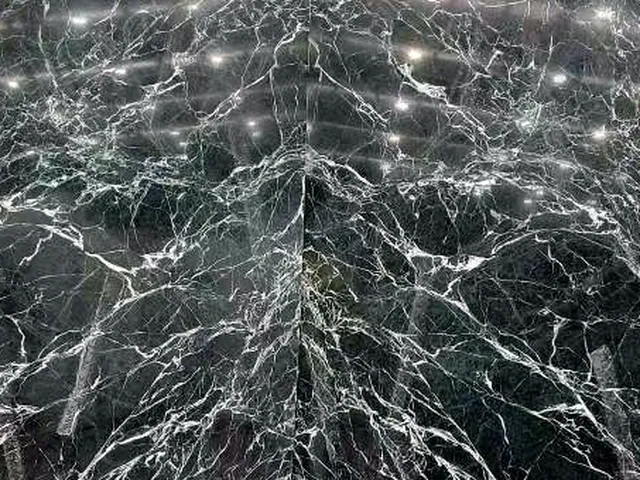
Verde Alpi
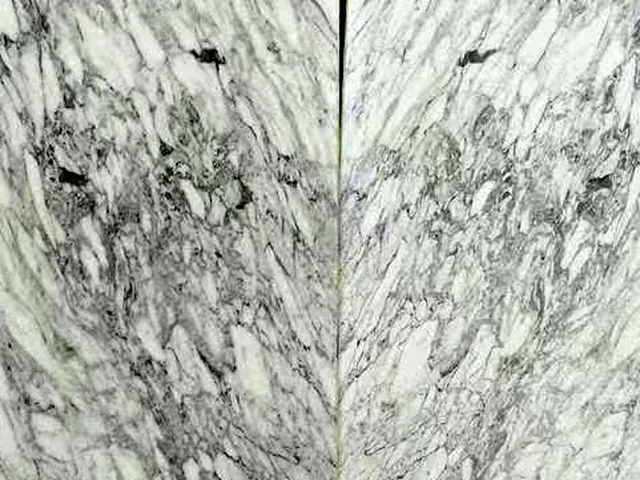
Arabescato
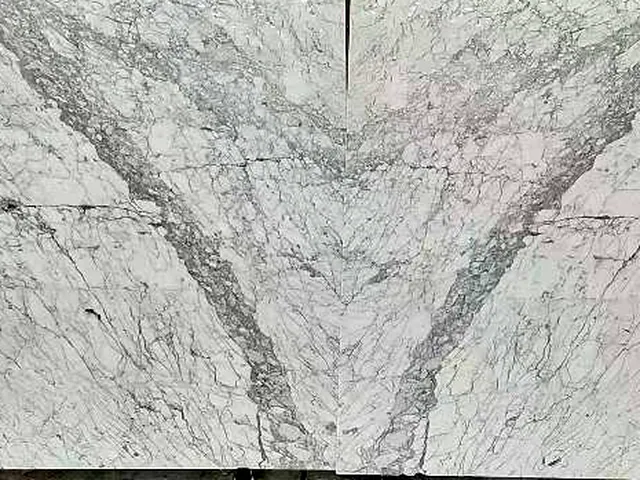
Carrara
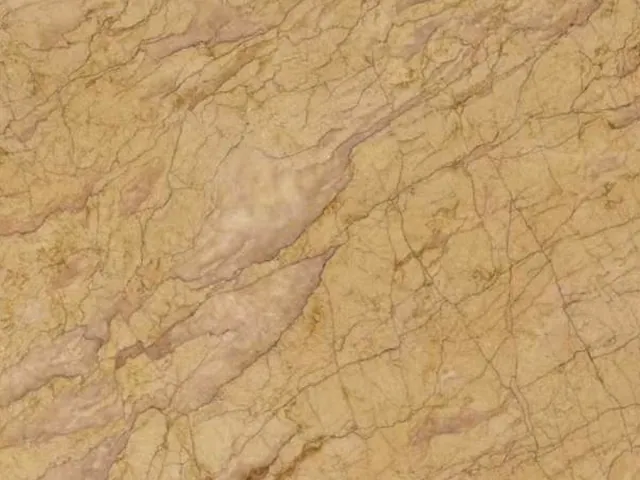
Crema Valencia
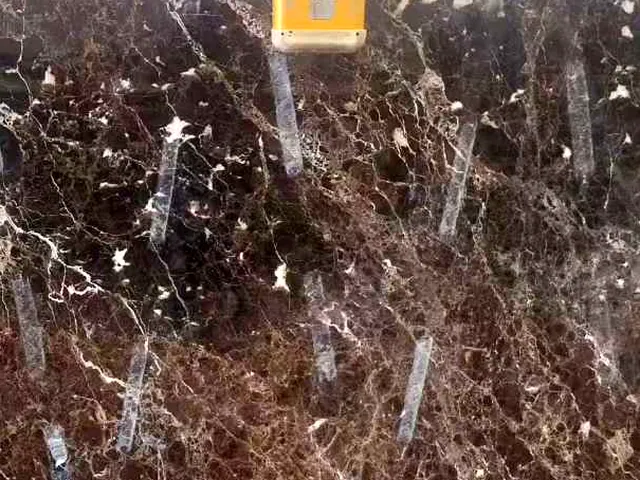
Dark Emperador
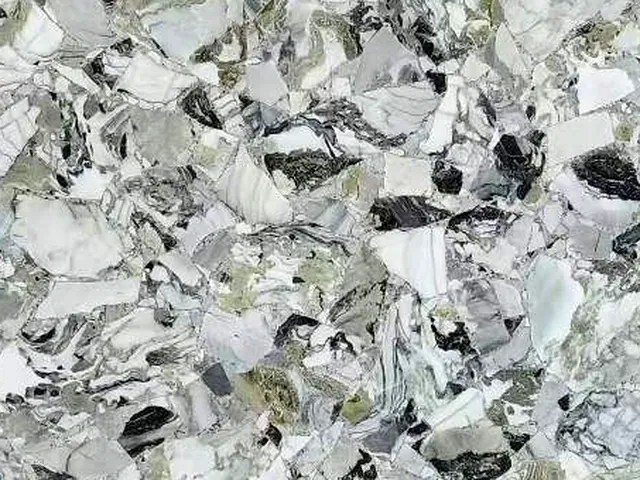
Invisible Grey
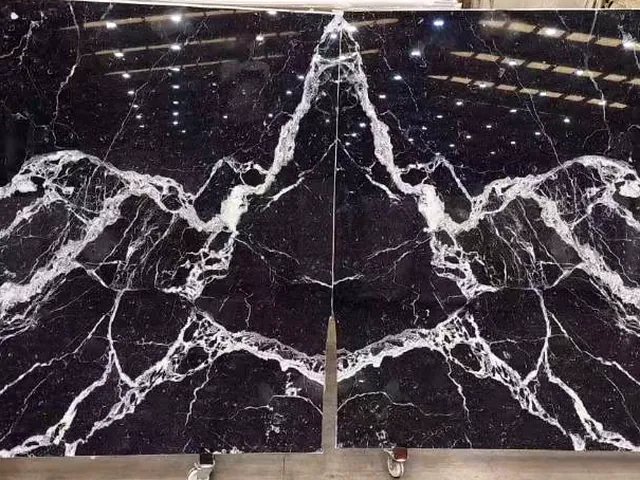
Nero Marquina
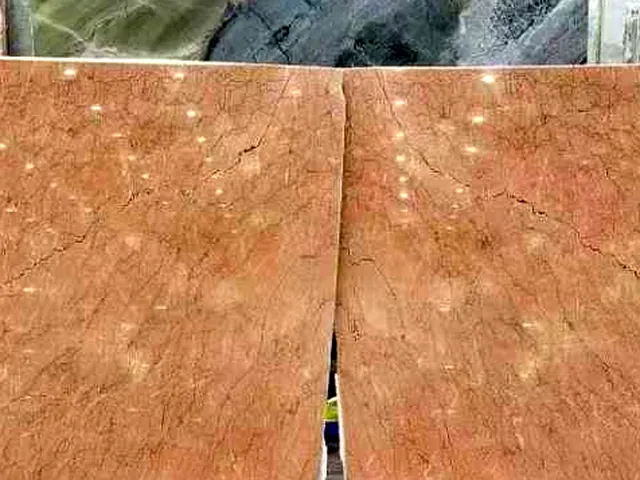
Rosa Valencia
Thassos White
Planning a floor? Tell us the area and the use and we will send you photos of real slabs with a quote. We cut pieces to size and ship worldwide.
Have a project in mind?
Ask us for a no-obligation quote: we will reply with an indicative price.