Nero Marquina Marble
Nero Marquina is Spain's signature black marble: an intense black background with bold white veins. It comes from the Basque Country and is a classic for bathrooms, floors and walls. It can be used for countertops if you accept that acids may leave marks and that the surface will develop a patina.
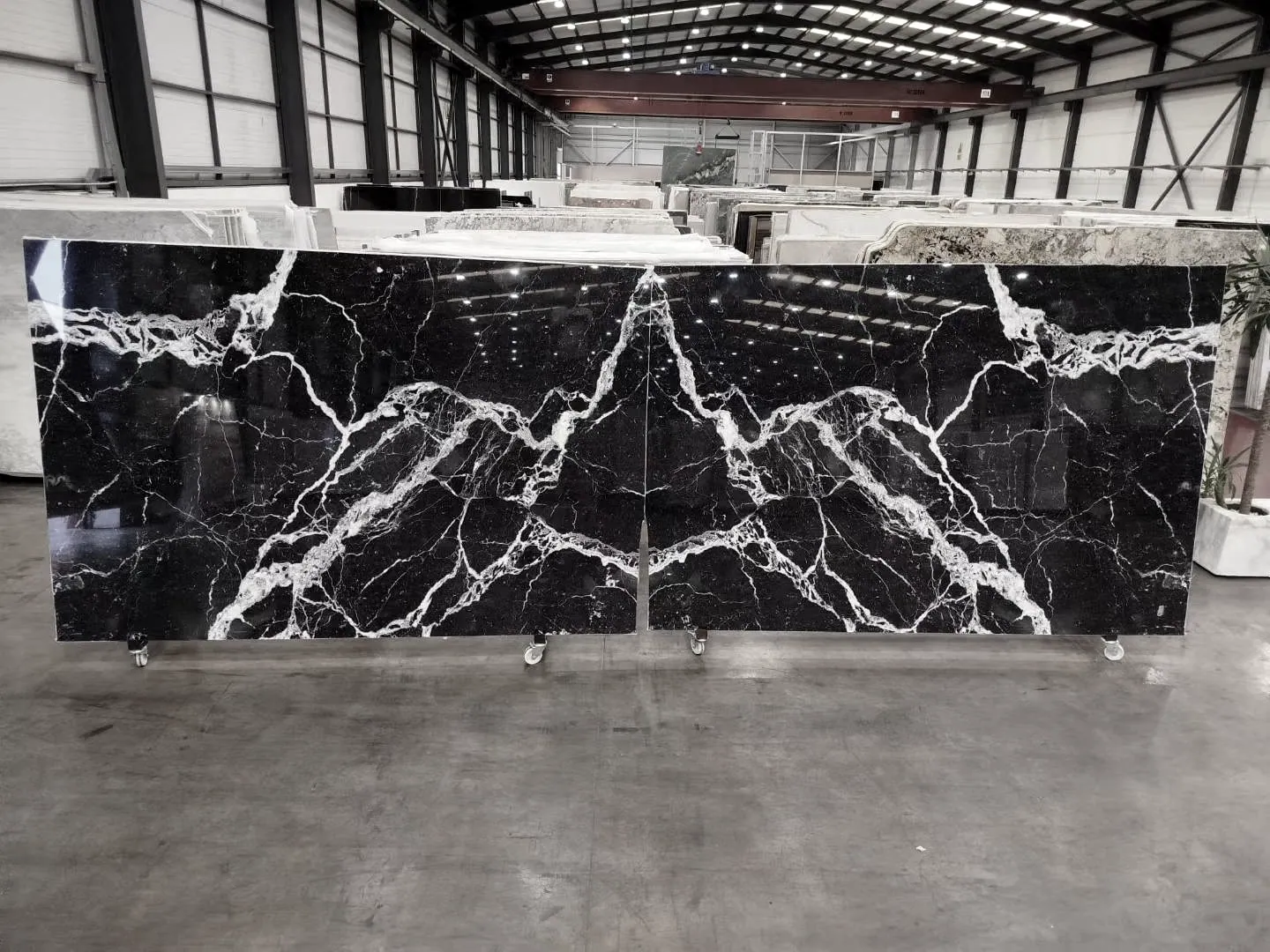
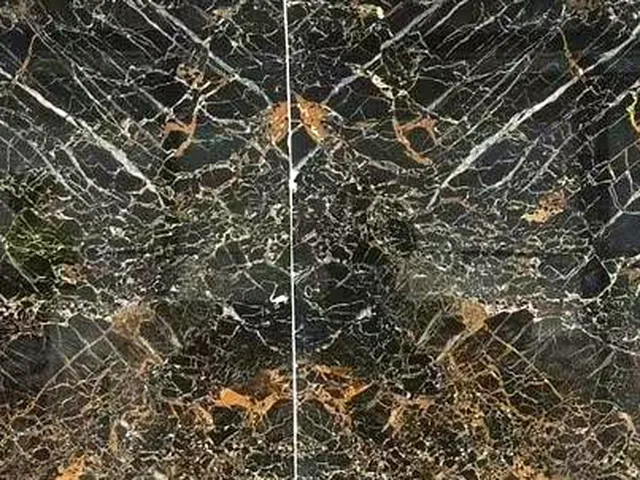
Reference image of a real slab. We confirm the batch, dimensions and availability before your order. Download the photo (for your moodboard)
Also known as: Nero Marquina, Black Marquina
- TypeMarble
- ColourBlack
- OriginSpain
- FinishesPolished
- PriceDepends on material, batch, format, quantity and destination
- AvailabilityAsk us about slabs in stock
- ShippingWorldwide
- Sold asWhole slab (your fabricator cuts it)
- See it in personWarehouse in Llanera de Ranes (Valencia), by appointment via email
About this marble
Properties
A metamorphic rock made mostly of calcite. Luminous, with unique veining and easy to re-polish. Hardness 3–4 on the Mohs scale.
Recommended uses
Bathrooms, floors, stairs, cladding, fireplaces, tables. In kitchens, if you are happy for it to develop a patina.
Care
Sensitive to acids (lemon, vinegar) and slightly porous: it should be sealed and cleaned with pH-neutral soap.
What Nero Marquina looks like
Nero Marquina takes its name from the Markina area in the Basque Country, in northern Spain. Technically it is a very fine-grained black limestone, but it has always been sold as marble. What defines it is contrast: an intense black background crossed by bold white veins.
The amount of veining varies a lot from slab to slab. Some slabs have a few fine veins on an almost clean background; others carry a dense white network, with thick veins that cross each other. Neither is better: it depends on what you are after.
- For a floor or a large area of cladding, choose slabs that look alike, so the whole surface reads as one.
- For a feature wall, a washbasin or a table, look for slabs with strong, well-placed veining.
- If it will be book-matched, ask for consecutive slabs from the same block.
Where it works best
It is a bathroom classic: vanity tops, washbasins, bath panels and walls, especially with brass or chrome fittings. It also works beautifully on fireplaces, tables, bars and in black and white checkerboard floors with a white marble, a pairing that never dates.
Two uses call for honesty. On a hard-working kitchen countertop, polished black shows etch marks, limescale and fingerprints far more than a light stone; if you want black with white veins in the kitchen, look at a quartzite such as Titanium (below). And on high-traffic floors such as lobbies or shops, wear on the polish shows sooner on a black stone.
What to pair it with
- White marbles such as Carrara or Thassos White, in checkerboards, borders or stripes.
- Warm Spanish marbles such as Crema Valencia, in classic-style floors.
- Brass and gold for an elegant feel; steel and chrome for a sharper, more contemporary look.
- Pale woods, white walls and deep green or velvet textiles.
Similar stones
- Negresco: also black with white veins, forming strongly symmetrical patterns when book-matched.
- Titanium: a black quartzite with high-contrast white veins. Much harder, and the best choice for a dark kitchen.
- Via Lactea: a black quartzite with white speckles and veins, like a starry sky.
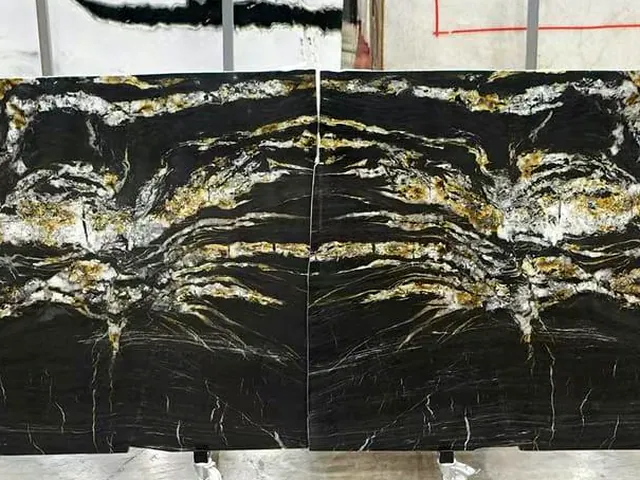
- Portoro: if you would rather have gold and ochre veins on the black instead of white.
We compare them in our guide to black marble and stone, and tell its story in our guide to Spanish marble.
Interested in Nero Marquina? Ask us for photos of the slabs available and we can reserve them for you. We ship worldwide.
Read contrast against black
Follow the white veins across the complete slab. A close crop can exaggerate their presence and hide areas of dark background.
Distinguish reflection from colour
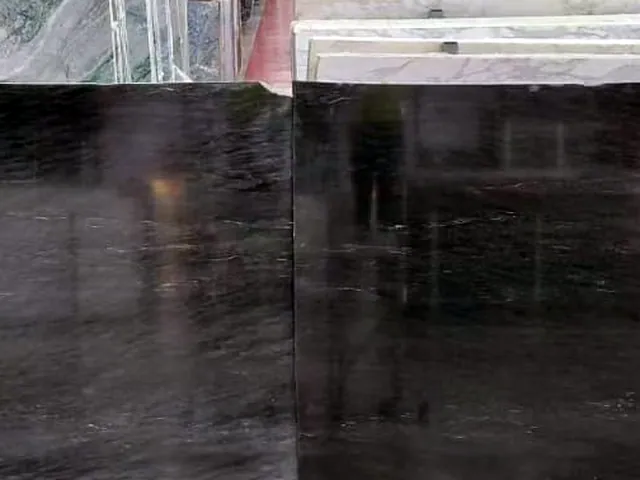
Reflections of lights or windows on a polished finish are not veins. Check another angle when a reflection obscures the surface.
Related guides: Spanish marble: Crema Marfil, Negro Marquina, Emperador and Rojo Alicante · Black marble and stone: types, names and how to choose · Marble kitchen countertops: pros, cons and how to live with them · How to clean marble (and what never to use) · How to remove stains from marble: coffee, wine, oil, rust and hard water · Marble etching: what it is, why it happens and how to fix it · Do you need to seal marble? When, how often and how to do it · Marble vs quartzite: the real differences for countertops
Interested in Nero Marquina?
Add it to your selection with any others you are considering, or ask for a quote now. We will reply with today’s price and the available slabs.
Other stones with a similar appearance
Visual similarity does not imply the same composition, care or applications.