Carrara Marble
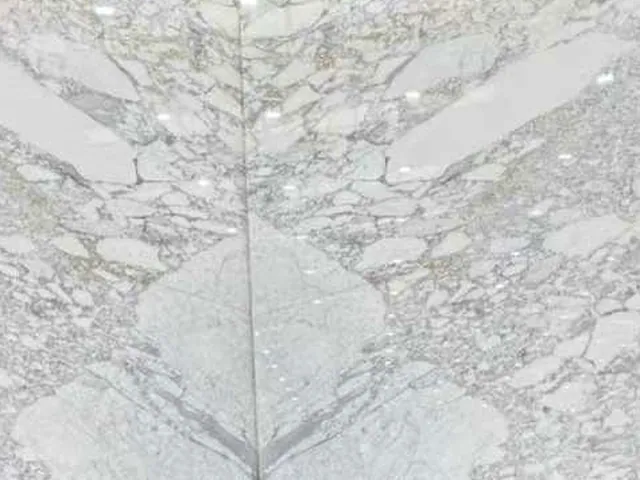
Carrara is the quintessential Italian white marble: a greyish-white background with fine, soft grey veins. More understated than Calacatta, it is ideal for bathrooms, floors and cladding. It can be used for countertops if you accept that acids may leave marks and that the surface will develop a patina.
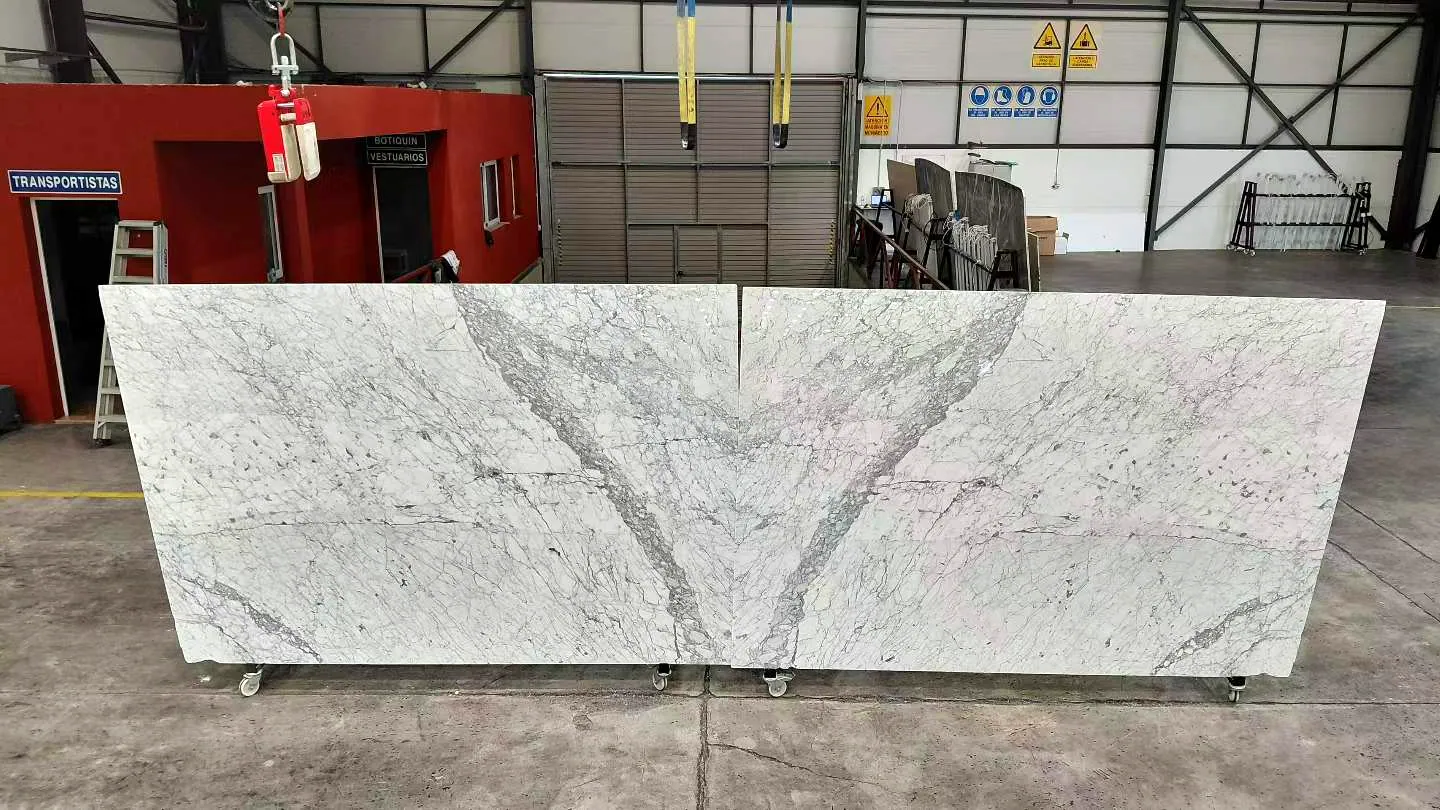
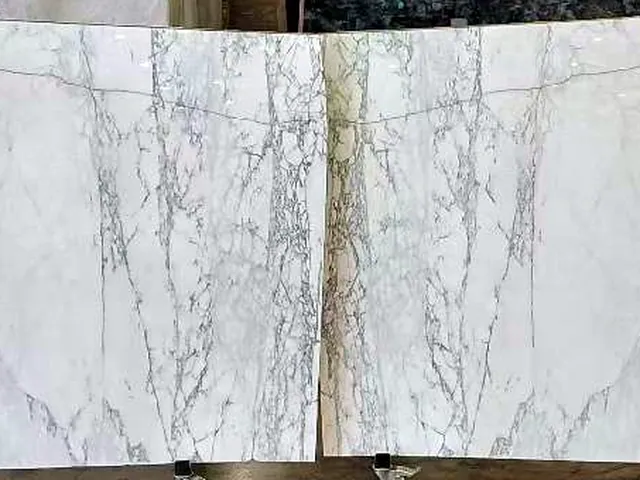
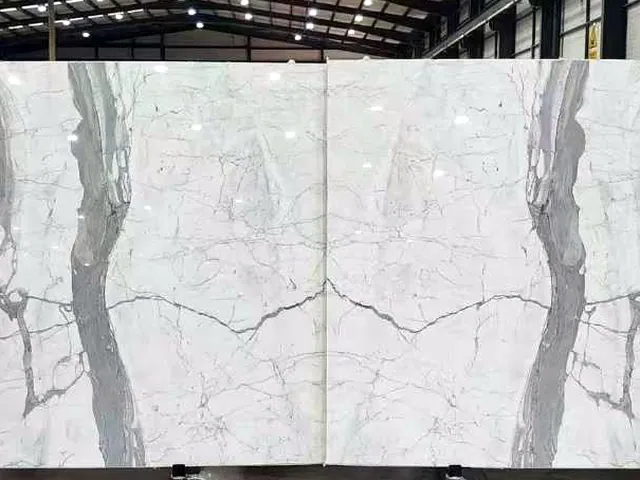
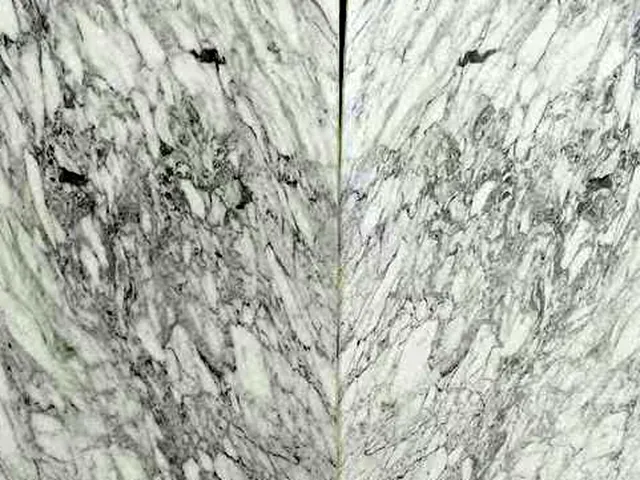
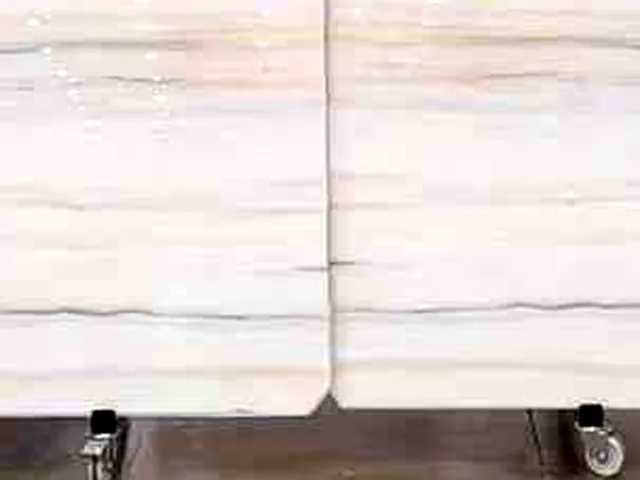
Reference image of a real slab. We confirm the batch, dimensions and availability before your order. Download the photo (for your moodboard)
- TypeMarble
- ColourWhite
- OriginItaly
- FinishesPolished
- PriceDepends on material, batch, format, quantity and destination
- AvailabilityAsk us about slabs in stock
- ShippingWorldwide
- Sold asWhole slab (your fabricator cuts it)
- See it in personWarehouse in Llanera de Ranes (Valencia), by appointment via email
About this marble
Properties
A metamorphic rock made mostly of calcite. Luminous, with unique veining and easy to re-polish. Hardness 3–4 on the Mohs scale.
Recommended uses
Bathrooms, floors, stairs, cladding, fireplaces, tables. In kitchens, if you are happy for it to develop a patina.
Care
Sensitive to acids (lemon, vinegar) and slightly porous: it should be sealed and cleaned with pH-neutral soap.
What Carrara looks like
Carrara is the white marble of the Apuan Alps, around the town of Carrara in Tuscany. It is the most plentiful marble in the area, and it shows: it is fairly consistent from one slab to the next. The background is a greyish white and the veining is fine and soft, like pencil strokes or feathers. From a distance, the overall effect reads as a very light grey.
Even so, slabs do differ. When choosing, look at:
- The background tone: some slabs are whiter, others greyer or slightly bluish.
- How dense the veining is: from almost clean to fairly busy.
- How uniform the batch is: for a floor or a whole bathroom, ask for slabs from the same block so everything matches.
Where it works best
This is the marble for large surfaces: floors, whole bathrooms, wall cladding and stairs, because its consistency makes joints almost disappear. In the kitchen it is the most forgiving white marble: the greyish background and fine veins hide everyday marks better than a bright white. But it is still marble, and lemon and vinegar will etch it; if that worries you, read marble countertops: pros and cons. For bathroom floors and showers, choose a less slippery finish than polished (see natural stone finishes).
What to pair it with
- Whites and soft greys on walls and cabinetry, for a calm feel.
- Natural wood (oak, walnut) to warm up the grey background.
- Chrome, steel or nickel taps, which suit its cool tone; brass gives it a more classic look.
- Handmade white tiles on one wall and Carrara on another: the contrast in texture works beautifully.
Similar stones
- Calacatta: a whiter background with thicker, bolder veins. How to tell them apart: Carrara vs Calacatta.
- Volakas: a Greek marble with a whiter background and soft, flowing grey veins.
- White Serpeggiante: parallel grey veins that snake across the slab, for a more linear look.
- Super White: white with grey veins and clouds, a similar look, sold as quartzite. Before using it in a kitchen, do the tests in marble vs quartzite.
Real stone or imitation?
Almost every porcelain and quartz brand has its own "Carrara". The difference is in the details: in the natural stone the veining runs through the thickness and shows on the edge, slabs never repeat and, up close, the surface has crystals and depth. We compare the two materials in marble vs porcelain and share more clues in natural stone or imitation.
Want to see the current batch? Ask us for photos of the Carrara slabs available and we will send them over.
Compare whites and greys
Look at the Carrara background alongside the veins rather than judging only the whitest area. Lighting and finish affect the perception of grey.
Look at several slabs
Compare pattern distribution between pieces if continuity matters. A shared trade name does not guarantee the same tone across batches.
Related guides: Carrara vs Calacatta marble: how to tell them apart at a glance · White marble types: names, differences and how to choose · Marble kitchen countertops: pros, cons and how to live with them · How to clean marble (and what never to use) · How to remove stains from marble: coffee, wine, oil, rust and hard water · Marble etching: what it is, why it happens and how to fix it · Do you need to seal marble? When, how often and how to do it · Marble vs quartzite: the real differences for countertops
Interested in Carrara?
Add it to your selection with any others you are considering, or ask for a quote now. We will reply with today’s price and the available slabs.
Other stones with a similar appearance
Visual similarity does not imply the same composition, care or applications.