Portoro Marble
Portoro is a black marble with gold veins from Italy, quarried around La Spezia (Portovenere). One of the most exclusive black marbles: real slab photos and what drives its price.
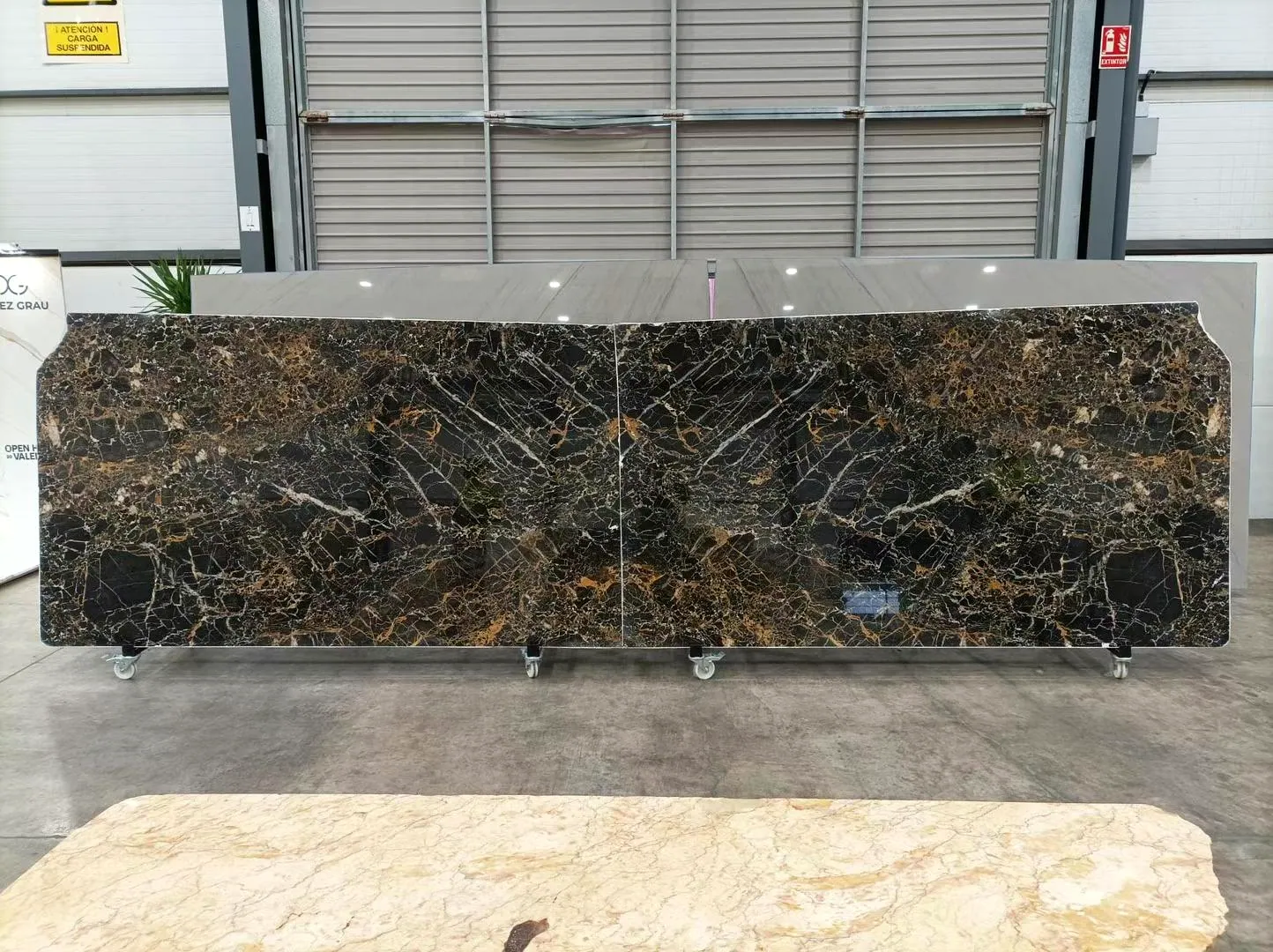
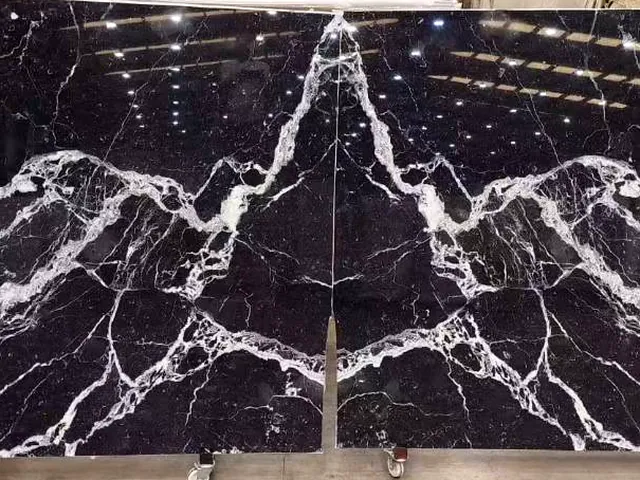
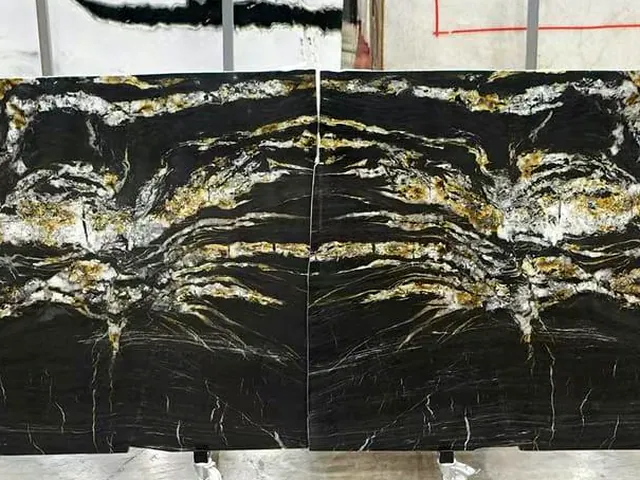
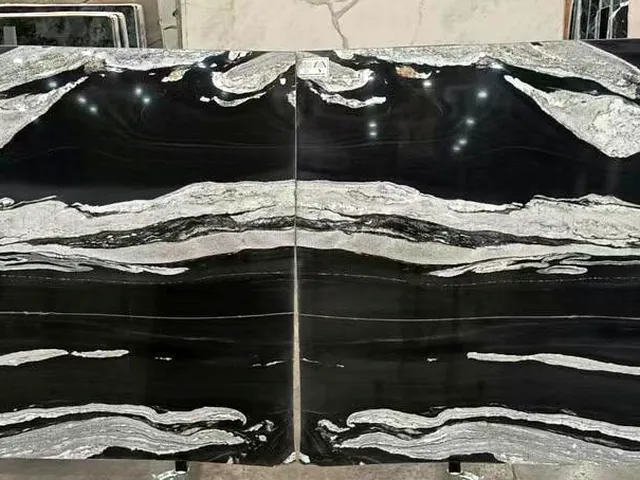
Reference image of a real slab. We confirm the batch, dimensions and availability before your order. Download the photo (for your moodboard)
Also known as: Nero Portoro
- TypeMarble
- ColourBlack
- OriginItaly
- FinishesPolished
- PriceDepends on material, batch, format, quantity and destination
- AvailabilityAsk us about slabs in stock
- ShippingWorldwide
- Sold asWhole slab (your fabricator cuts it)
- See it in personWarehouse in Llanera de Ranes (Valencia), by appointment via email
About this marble
Properties
A metamorphic rock made mostly of calcite. Luminous, with unique veining and easy to re-polish. Hardness 3–4 on the Mohs scale.
Recommended uses
Bathrooms, floors, stairs, cladding, fireplaces, tables. In kitchens, if you are happy for it to develop a patina.
Care
Sensitive to acids (lemon, vinegar) and slightly porous: it should be sealed and cleaned with pH-neutral soap.
Where Portoro marble comes from
Portoro is Italian. It is quarried around the Gulf of La Spezia on the Ligurian coast, between the Portovenere headland and Palmaria island, just south of Cinque Terre. That is why it is also known as Nero Portoro, "black and gold". The area is small and output has always been limited, which is where its reputation as a luxury marble comes from.
It has been used for centuries in European churches, palaces and grand rooms, and today it is one of the most sought-after stones for hotels and high-end homes. If you are offered a "Portoro" from somewhere else, ask: there are similar stones from other countries, such as Portoro Dominicano, which are a different stone (at a different price).
Portoro marble price: what it depends on
We do not give a price per square metre because with Portoro, more than with almost any other marble, every slab is priced on its own. What drives the price most:
- How much gold veining there is, and its tone. Slabs with a lively, evenly spread golden network are the rarest and the most expensive.
- Slab size. Portoro tends to yield smaller slabs than other marbles; a large slab without defects is worth more.
- Consecutive slabs. To bookmatch or cover a large wall you need several consecutive slabs from the same block.
- Thickness and finish, and shipping to your site.
- The market. As a scarce stone, its price moves with demand.
That is why we quote on real slabs: tell us the use and rough sizes and we will send you photos of the slabs available with today's price. If Portoro is beyond your budget, see the similar stones below.
What Portoro looks like
Portoro is a black Italian marble with gold and ochre veins, from the Ligurian coast. It is one of the most exclusive black marbles in the world: little of it is quarried, and slabs with good gold veining are hard to come by. That is why it is kept for pieces that will be seen and appreciated up close.
The veins form an irregular network of varying thickness. In some areas they cluster and almost cover the background; in others, the black is left clean. From slab to slab, the amount of veining and the shade of gold change, ranging from a bright yellow to a more muted ochre.
When choosing your slab, look at:
- The shade of gold. A yellow gold looks brighter and more luxurious; an ochre one, more restrained and classic.
- How dense the network is. For a large wall, slabs with similar veining; for a one-off piece, the slab with the boldest pattern.
- Consecutive slabs. Book-matched, Portoro forms spectacular symmetrical patterns, but you need sequential slabs from the same block.
Where it works best
Its natural home is luxury interiors: hotel and private bathrooms, reception walls, fireplaces, furniture tops, tables and bars. It also makes a big impact in small pieces such as washbasins, borders or inlays in a light floor. You will often find it in hotels, restaurants and shops.
We don't recommend it for the countertop of a kitchen that sees a lot of cooking: etch marks and limescale show on polished black. On high-traffic floors, wear on the polish shows sooner too. Being such an exclusive stone, it looks its best on surfaces you see up close rather than on a large floor you walk over.
What to pair it with
- Brass, brushed gold and bronze, which echo the colour of the veins.
- Dark woods such as walnut, and black lacquer.
- Velvets in bottle green, burgundy or midnight blue.
- White marbles in a checkerboard or as a contrast, for an Art Deco feel.
- Warm light, which makes the gold glow.
Similar stones
- Portoro Dominicano: a black and brown background with a more fragmented gold network. It recalls classic Portoro, with a bolder pattern.
- Port Laurent: gold and ochre veins that run like threads across the slab.
- Magma Gold: lots of gold veining on a black background, with a very luxurious look.
- Nero Marquina: if you prefer the contrast of black with white veins.
We compare them all in our guide to black marble and stone.
Looking for Portoro? Ask us for photos of the slabs available: we will show you the actual slab and reserve it for you. We ship worldwide.
Related guides: Black marble and stone: types, names and how to choose · Marble kitchen countertops: pros, cons and how to live with them · How to clean marble (and what never to use) · How to remove stains from marble: coffee, wine, oil, rust and hard water · Marble etching: what it is, why it happens and how to fix it · Do you need to seal marble? When, how often and how to do it · Marble vs quartzite: the real differences for countertops
Interested in Portoro?
Add it to your selection with any others you are considering, or ask for a quote now. We will reply with today’s price and the available slabs.
Other stones with a similar appearance
Visual similarity does not imply the same composition, care or applications.