Portoro marble: the gold-veined black, how to choose it and where to use it
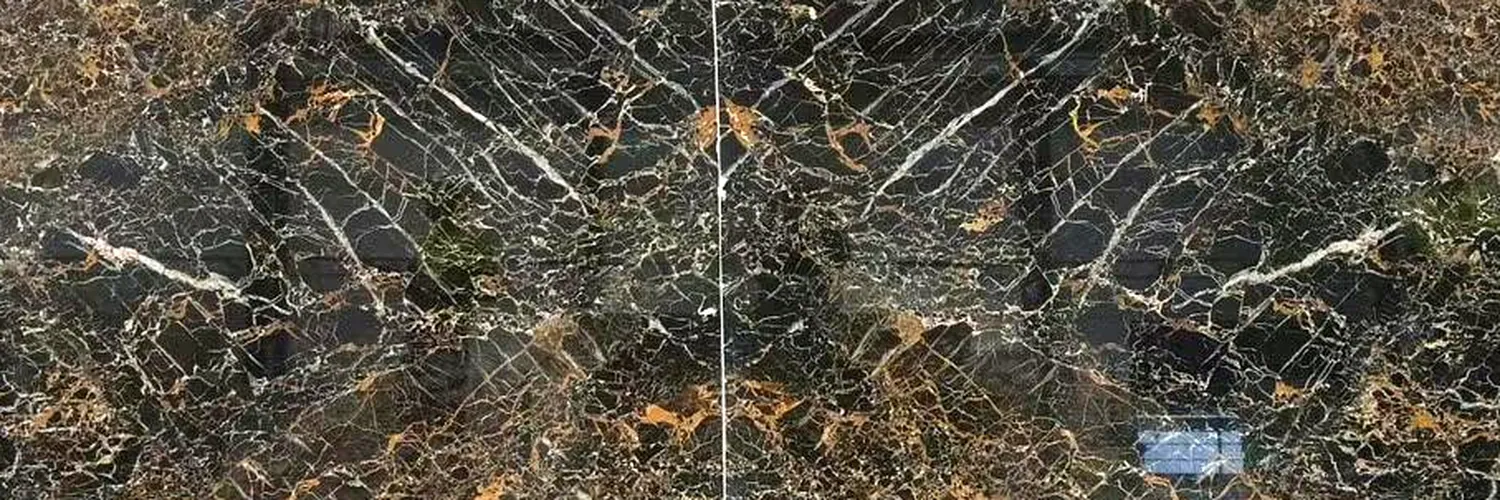
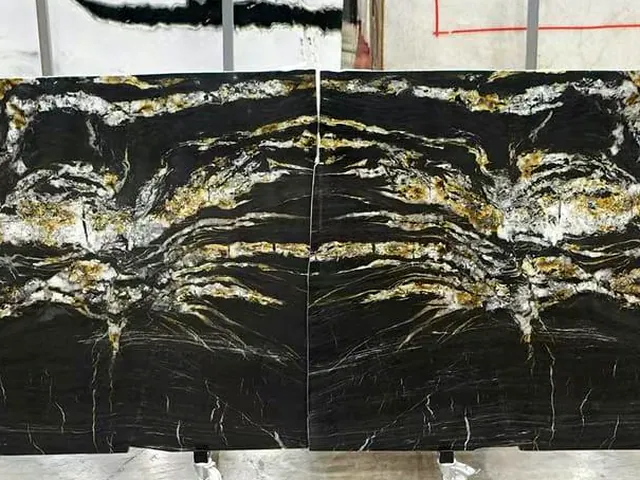
Portoro is one of the most exclusive black marbles in the world: a deep black background crossed by gold and ochre veins. Few stones give a wall, a bathroom or a fireplace so much character. Here is how to choose the slab and where it really shines.
Real slabs in our stone library. Tap + to save the ones you like and ask for photos and a quote for all of them at once.
What Portoro is
It is an Italian marble from the Gulf of La Spezia, around Portovenere. Its signature is contrast: an intense black with gold and ochre veins. Like all marble it is made mostly of calcite, so it cuts and polishes well, but acids affect it.
Every slab is a different pattern
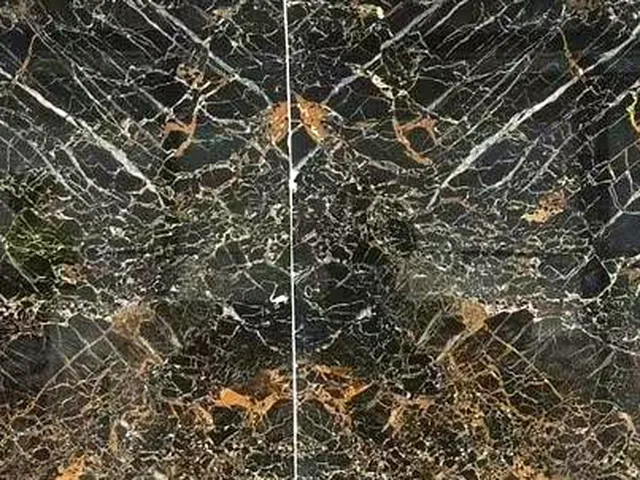
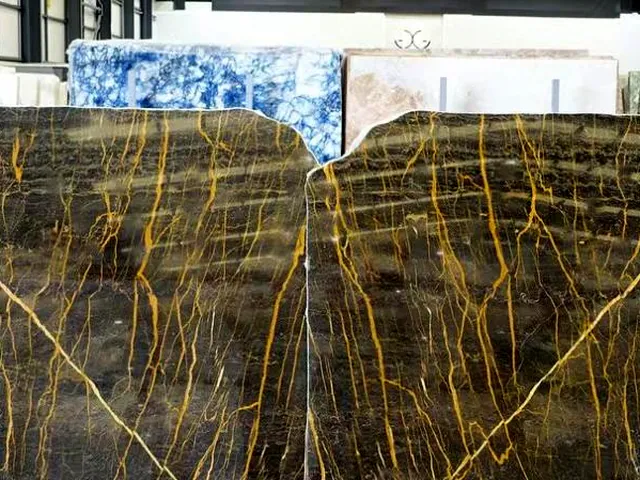
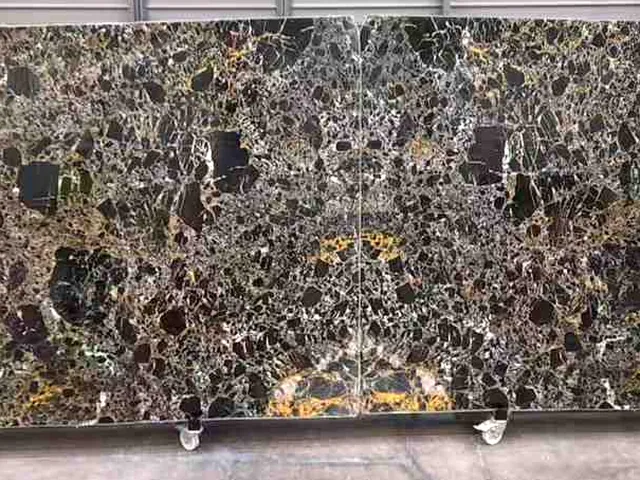
In Portoro, the amount of gold veining varies a lot from slab to slab: some are almost entirely black with fine veins, others have a dense gold network across most of the surface. That is why you should:
- Choose the actual slab from a photo of the whole slab, not a small sample. You can see real slabs on our Portoro page.
- Ask for consecutive slabs from the same block if you are cladding a wall or need several pieces. The veining then continues and the slabs can be bookmatched, one of the uses where Portoro is most striking. See what is bookmatching.
- Decide where the main veins fall before cutting: on a fireplace or a vanity front, the most golden area should sit at the centre of the view.
Where it looks best
- Feature walls in living rooms, receptions, restaurants and hotels, especially bookmatched.
- Bathrooms: vanity tops, washbasins, bath panels and cladding. More in marble in the bathroom.
- Fireplaces, where black and gold work with real or decorative fire. Ideas in marble fireplace.
- Tables, bars and counters, as a one-off piece.
For a hard-working kitchen, think twice: it is a marble, and etch marks show more on polished black than on white.
What it pairs with
- Brass, bronze and brushed gold, which echo the colour of the veins.
- Dark wood (walnut, smoked oak) and velvets in green, burgundy or deep blue.
- Warm light, which makes the gold glow. Under very cold light the black looks harsher.
It works best as the star, with everything else in the background.
Polished or another finish
Portoro is usually used polished, because the gloss deepens the black and makes the gold stand out. A matt (honed) finish hides everyday marks better, but the black looks greyer and the veins lose contrast. If in doubt, ask to see the same material in both finishes. We explain them in natural stone finishes.
Care
- Keep acids away: lemon, vinegar, wine or limescale removers leave a dull mark, even on sealed stone. See marble etching.
- Seal it when installed and repeat the water-drop test from time to time.
- Clean with water, pH-neutral soap and a soft cloth. On polished black, dry it to avoid limescale rings.
- If the shine fades over the years, a stone fabricator can re-polish it.
How much does it cost?
It is a high-end marble. The price depends on the actual slab (above all how much gold veining it has and what it looks like), its size, thickness and destination, and it changes with the market, so any fixed figure would soon be out of date. The most reliable approach is to ask about the slabs available: we will send you photos and a price for real slabs.
Similar stones
If you are after a black with gold veins, our library also has Port Laurent, Portoro Dominicano, Belvedere and Etna Black. The similarity is visual: composition and care can differ, so ask us about each one. We compare them in black marble and stone types.
Are you an interior designer or architect? How we work with design studios · Contractor or fabricator? Trade supply