Rojo Alicante Marble
Rojo Alicante is a Spanish marble from the province of Alicante, with an intense red background and white veins. A classic for floors, stairs and cladding that is making a strong comeback in contemporary design.
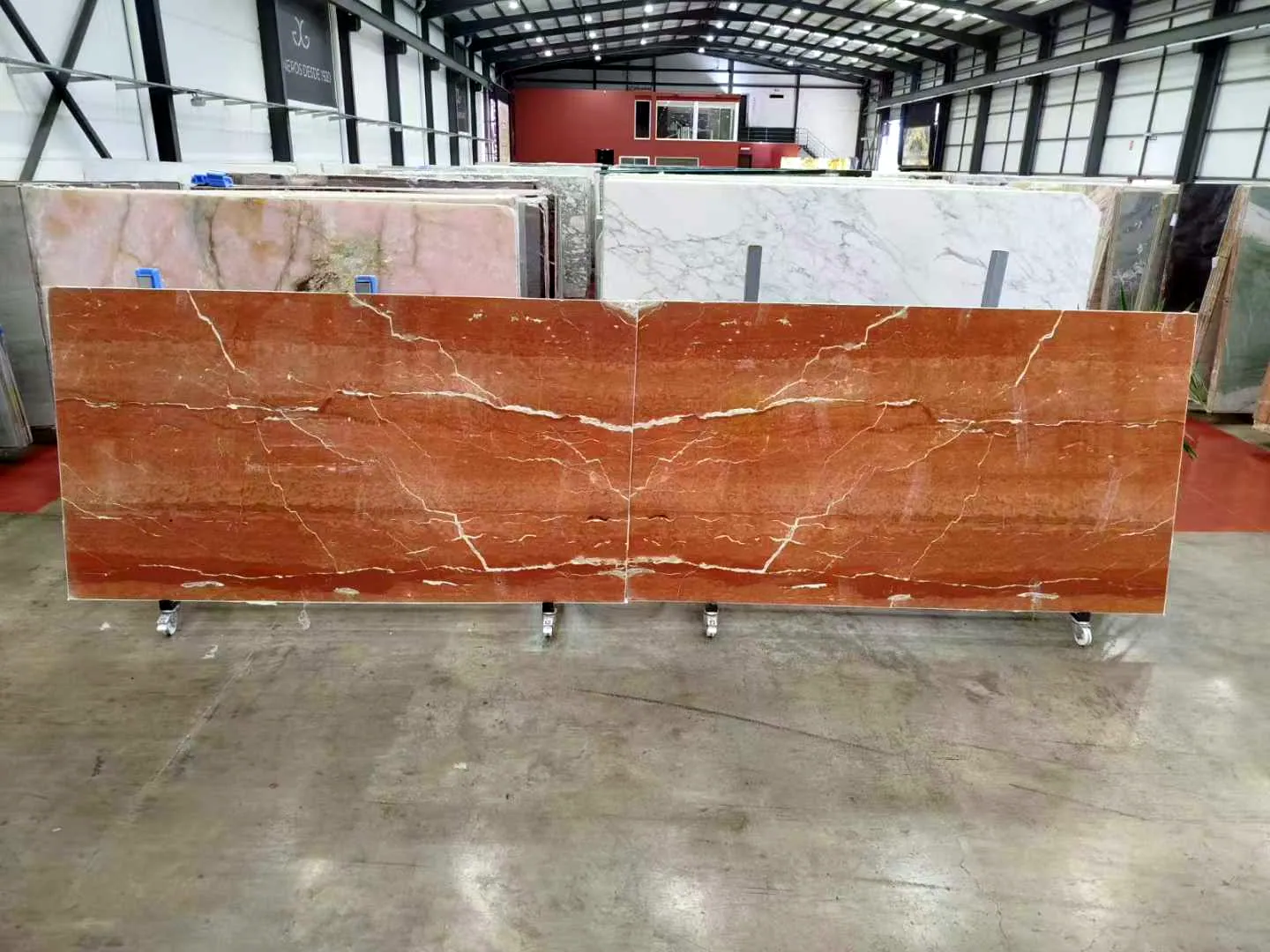
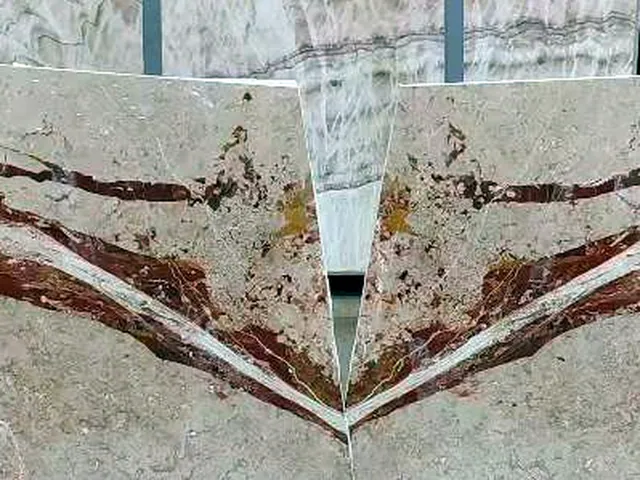
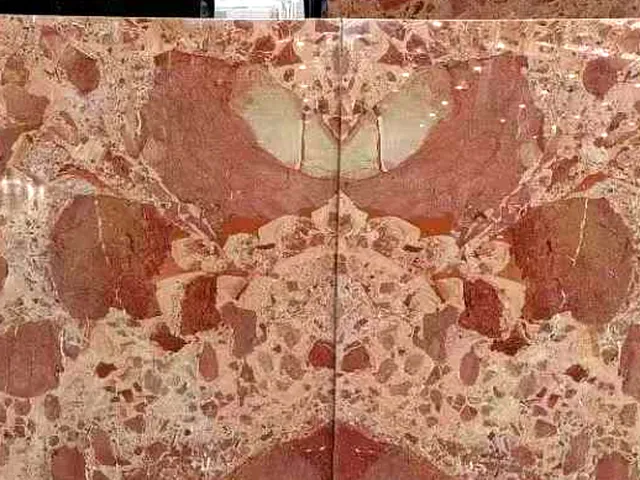
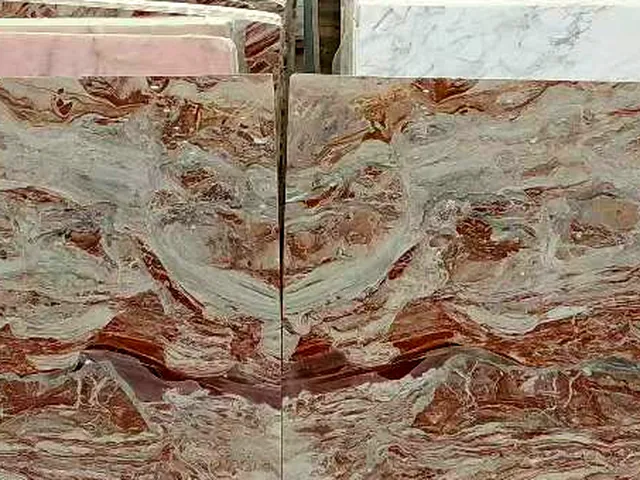
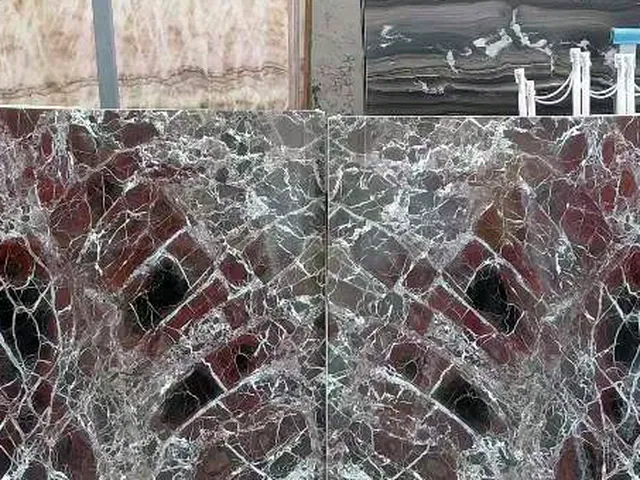
Reference image of a real slab. We confirm the batch, dimensions and availability before your order. Download the photo (for your moodboard)
Also known as: Rosso Alicante
- TypeMarble
- ColourRed
- OriginSpain
- FinishesPolished
- PriceDepends on material, batch, format, quantity and destination
- AvailabilityAsk us about slabs in stock
- ShippingWorldwide
- Sold asWhole slab (your fabricator cuts it)
- See it in personWarehouse in Llanera de Ranes (Valencia), by appointment via email
About this marble
Properties
A metamorphic rock made mostly of calcite. Luminous, with unique veining and easy to re-polish. Hardness 3–4 on the Mohs scale.
Recommended uses
Bathrooms, floors, stairs, cladding, fireplaces, tables. In kitchens, if you are happy for it to develop a patina.
Care
Sensitive to acids (lemon, vinegar) and slightly porous: it should be sealed and cleaned with pH-neutral soap.
What Rojo Alicante looks like
Rojo Alicante is a Spanish marble from the province of Alicante, with an intense red background crossed by white veins. For decades it was the star of floors and staircases across Spain, and today it is making a strong comeback in interior design, in classic schemes and very contemporary projects alike.
The shade of red and the amount of veining vary from slab to slab. Some slabs are a more even red with a few scattered veins; others are criss-crossed by a network of fine white veins that gives them more movement. When choosing, look at:
- How consistent the batch is, if it is going on a floor or a large area of cladding: slabs that look alike work best.
- The vein pattern, if it is for a piece seen up close, such as a table, a washbasin or a bar front.
- The light it is seen in. Red changes a lot with lighting, so ask for photos in daylight to get a true idea of the colour.
Where it works best
It is a classic for floors, stairs and cladding. Today it is also used for washbasins and vanity tops, tables, restaurant bars and kitchen backsplashes, where a red like this adds real personality.
A design tip: red dominates a room. It works better in one well-chosen dose (a washbasin, a table, a wall or a floor) than repeated on every surface. And, like any marble, it will develop a patina on a hard-working kitchen countertop; if you like that lived-in look, go for it.
What to pair it with
- Other Spanish marbles: Crema Valencia and Nero Marquina in checkerboards, borders and classic-style floors.
- White marbles such as Carrara, for a clean, graphic contrast.
- Brass, natural wood and whitewashed walls, for a Mediterranean feel.
- Olive green, dusty pink and steel, in more contemporary interiors.
Similar stones
- Rosso Lepanto: a darker burgundy background with pale fragments and a network of white veins.
- Breccia Rosso: a breccia marble with fragments in coral red, pink and cream. Warmer and more decorative.
- Vulkan Red: an intense red with fine white veins and great visual impact.
- Rosa Valencia: another Spanish marble, with a salmon-pink background and soft veins, if you want a calmer tone.
For more ideas, see our guides to pink and red marble and Spanish marble.
Looking for Rojo Alicante for your project? Ask us for photos of the slabs available and we will reserve the ones you like best. We ship worldwide.
Read red under comparable light
Compare the red background and white veins under similar lighting. Warm light or a heavily saturated photo can change the impression of the material.
Preserve the pattern
Compare the amount and position of veining as well as colour. Choosing a different crop can produce a quieter or more contrasting result.
Related guides: Spanish marble: Crema Marfil, Negro Marquina, Emperador and Rojo Alicante · Pink, red and purple marble: types and how to choose · Marble kitchen countertops: pros, cons and how to live with them · How to clean marble (and what never to use) · How to remove stains from marble: coffee, wine, oil, rust and hard water · Marble etching: what it is, why it happens and how to fix it · Do you need to seal marble? When, how often and how to do it · Marble vs quartzite: the real differences for countertops
Interested in Rojo Alicante?
Add it to your selection with any others you are considering, or ask for a quote now. We will reply with today’s price and the available slabs.
Other stones with a similar appearance
Visual similarity does not imply the same composition, care or applications.