Types of onyx: colours, names and onyx vs marble
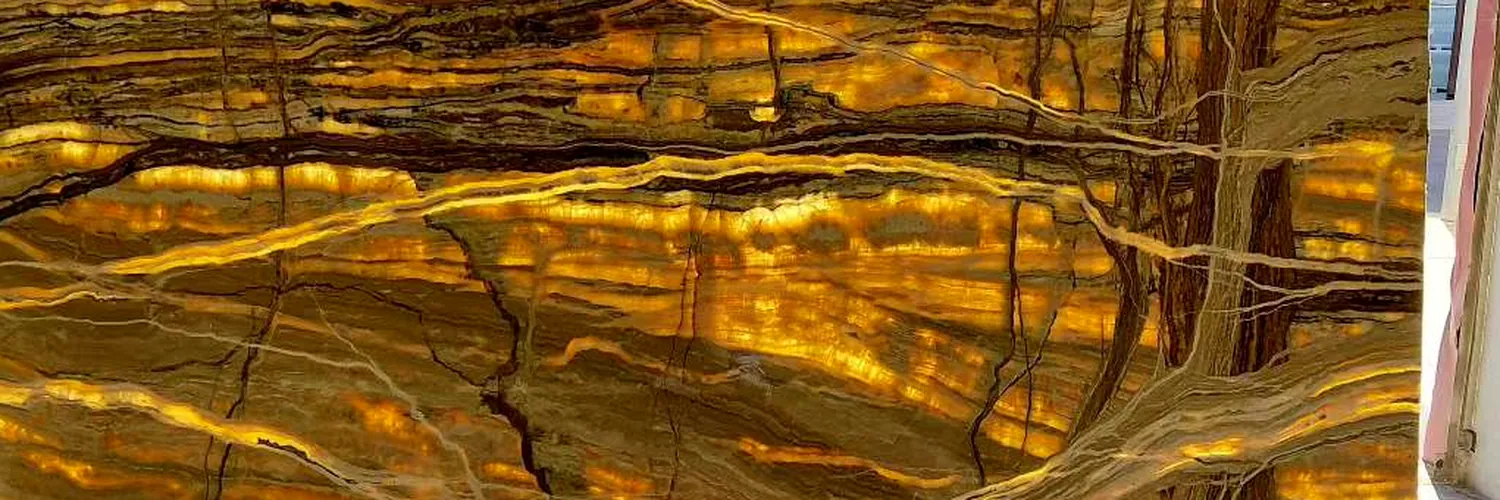
Onyx is the natural stone that lets light through, which is why it is saved for pieces lit from behind: bars, feature walls, washbasins and reception desks. Here are the most common types by colour, with photos of real slabs, and how onyx compares with marble before you choose it.
What onyx is
The onyx used in interiors is a calcite stone that forms in layers, as mineral-rich water drips and deposits over thousands of years. Those layers are the bands you see across the slab. Because thin calcite is translucent, onyx lets light pass through, and nothing else in natural stone does it quite as well.
Do not confuse it with the black onyx used in jewellery, which is a variety of chalcedony (quartz). In architecture and interior design, "onyx" always means the calcite stone.
Types of onyx by colour
Trade names usually come from colour and pattern. These are the main groups:
Honey, cappuccino and golden onyx
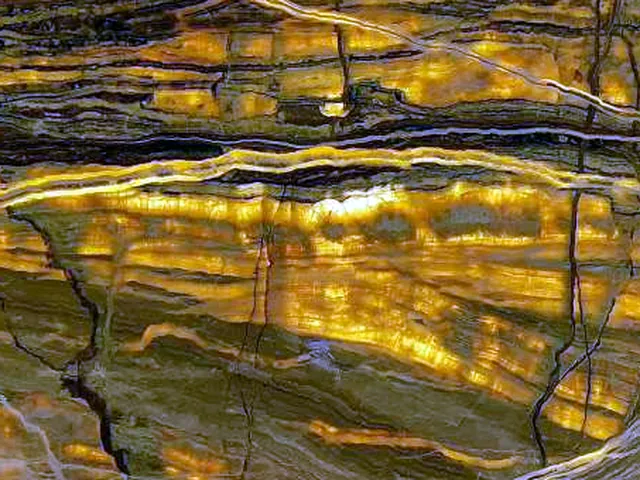
Bands in honey, caramel and coffee tones. The classics, and the ones that respond best to light: backlit, they glow amber. Onyx Capuccino is a typical example.
White and cream onyx
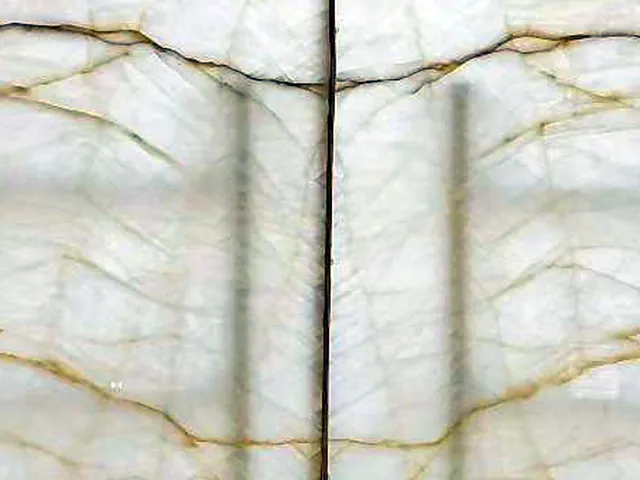
A light background with soft or golden veins, giving a clean, elegant light that suits bathrooms and receptions. See Madagascar, a creamy white with a network of gold veins.
Green onyx
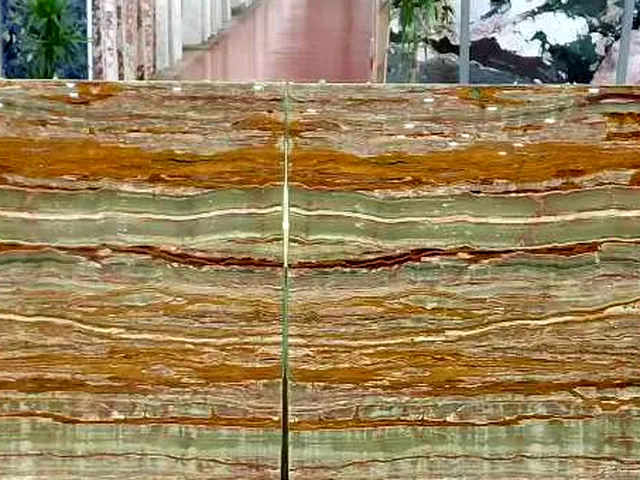
Bands of green, honey and orange: the onyx for bars and counters with real character. Example: Green Onyx.
Pink onyx
A soft pink background with white and reddish veins. Delicate and highly decorative, especially in bathrooms. See Pink Onyx.
Black and multicolour onyx
Black Onyx pairs a black ground with amber clouds that light up in the paler areas. Onyx Picasso mixes blue, orange, white and honey like brushstrokes: more a work of art than a cladding.

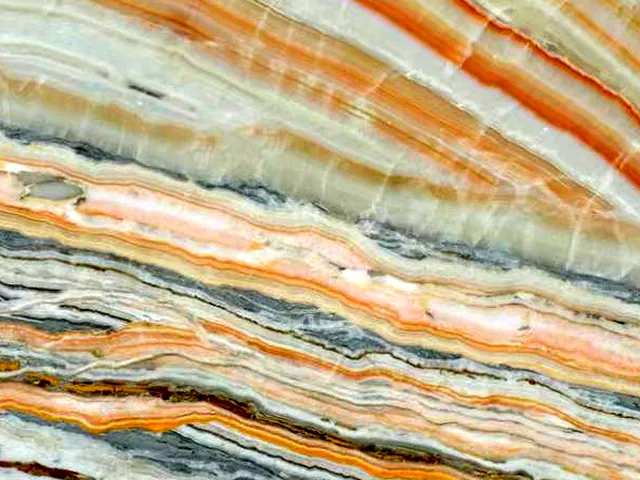
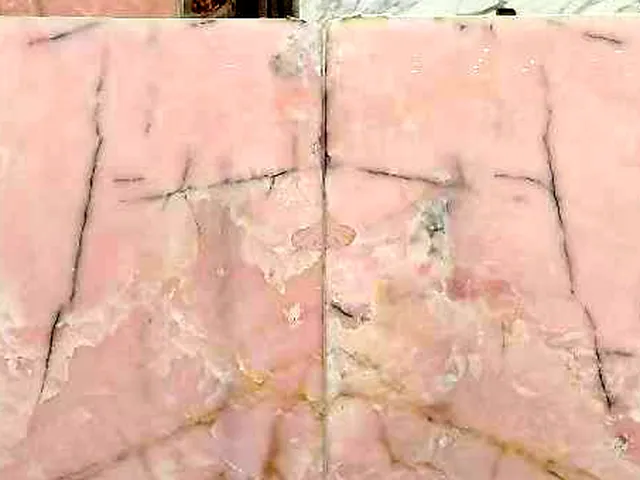
Can every onyx be backlit?
All onyx lets some light through, but not equally. Pale areas and thin bands glow strongly; dark areas barely do. Before choosing a slab for a backlit piece, ask for a photo of that slab with light behind it. It is the only way to know how it will look. Our backlit onyx guide goes into detail.
Onyx vs marble
| Onyx | Marble | |
|---|---|---|
| Light | Translucent: can be backlit | Opaque |
| Hardness | Softer and more brittle | Somewhat tougher |
| Acids | Very sensitive | Sensitive |
| Slabs | Usually backed with mesh and resin | Usually solid |
| Best use | Decorative and backlit pieces | Bathrooms, floors, walls, tables |
Both are calcite, so both etch with lemon juice or vinegar. The difference is that onyx is more fragile and is almost always reinforced on the back with mesh and resin. For everyday surfaces, marble or quartzite will cope better. For a piece that glows, nothing replaces onyx.
Where to use onyx (and where not)
- Yes: backlit walls and panels, bars and counters, washbasins and lightly used vanity tops, tables, fireplace surrounds and reception pieces.
- With care: everyday bathroom vanities, sealed and cleaned with neutral soap.
- No: busy kitchen countertops and high-traffic floors. More in our onyx countertops guide.
How to choose the slab
- Decide whether it will be lit. It completely changes which slab suits you.
- Look at consecutive slabs. Onyx makes stunning symmetrical patterns when bookmatched, but you need consecutive slabs from the same block.
- Check the back. Ask whether the slab is backed with mesh and resin; for backlighting it usually is.
Planning a project with onyx? Ask us for photos of the slabs available, including with light behind them. We can reserve them for you and ship worldwide.
Have a project in mind?
Ask us for a no-obligation quote: we will reply with an indicative price.