Travertine: what it is, types, vein cut vs cross cut, and blocks
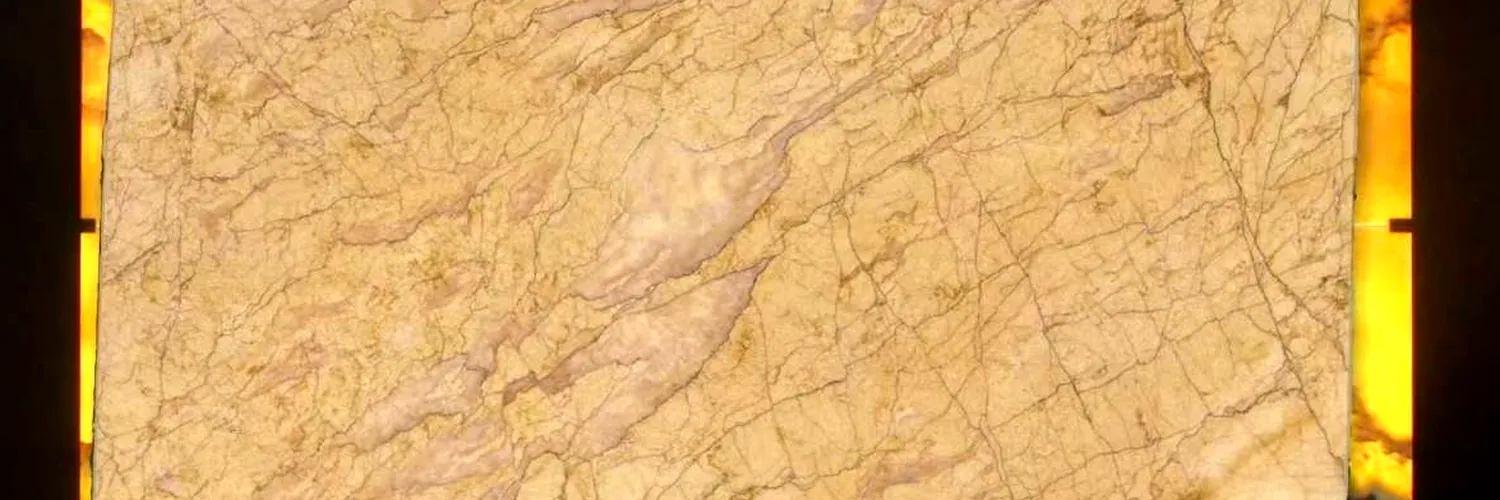
Travertine is the stone of the Romans: the Colosseum was built with it. It is a limestone full of pores, with a warm, natural look that is back in fashion for floors, façades, basins and furniture. We mainly supply travertine as quarry blocks, for factories and sawmills.
What travertine is
It is a limestone that forms near hot springs rich in calcium carbonate. As it builds up in layers, water and gas leave voids, which is why travertine has its typical pores and cavities. In the trade it is grouped with marble because it is cut, polished and used the same way, and at customs it is classified with it (see our marble HS code guide).
Colours and types
- Classic or beige: light cream, the best known. The stone of the great Roman buildings.
- Noce: walnut brown, darker and warmer.
- Silver or grey: grey tones, more contemporary.
- Red: reddish and orange tones, very decorative.
- Gold or yellow: intense yellows and golds.
Italy, Turkey and Iran are the main producers, and each quarry has its own tone and pattern. As with any natural stone, what matters is the actual block or slab, not just the name.
Vein cut vs cross cut
Travertine looks very different depending on how the block is cut:
- Vein cut: cut across the layers, showing parallel stripes. A linear, modern look.
- Cross cut: cut along the layers, showing a cloudy, more uniform pattern.
The choice is made at the sawmill when the block is cut, so whoever buys blocks for sawing decides the result.
Filled or unfilled
- Filled: the pores are filled with resin or cement in the stone's colour. The surface is smooth; this is the norm for floors and countertops.
- Unfilled: the pores stay open. A more rustic, natural look, common outdoors and with tumbled finishes.
The usual finishes are polished, honed, tumbled and brushed. See the differences in natural stone finishes.
Where to use it
- Floors and stairs, indoors and out. Outdoors, choose honed or tumbled so it is not slippery (see slip resistance).
- Façades and cladding, including ventilated façades.
- Basins, bathtubs and furniture carved from solid stone, one of its most fashionable uses today.
- Countertops: possible, but it is a limestone, so acids etch it just like marble (see marble etching). Filled and sealed.
Travertine blocks for sawing
If you run a factory or sawmill, buying blocks gives you control: you choose the cut (vein or cross), the thickness and the final format. When assessing a travertine block, check:
- Colour and consistency on every face.
- Pore size and density: very large cavities raise filling costs and waste.
- Hairlines and cracks that may open when sawn.
- Dimensions and shape: squared or irregular block, and whether it fits your gang saw.
We cover inspection, measuring, loading and paperwork in detail in marble quarry blocks.
Price
It depends on colour, quarry, block quality and quantity. We do not publish figures because every lot is priced on its own.
Looking for travertine blocks? Write to us with the colour, quantity and destination, or see our trade page. We ship from Valencia worldwide.
Have a project in mind?
Ask us for a no-obligation quote: we will reply with an indicative price.