Marble quarry blocks: how to assess, measure and ship them
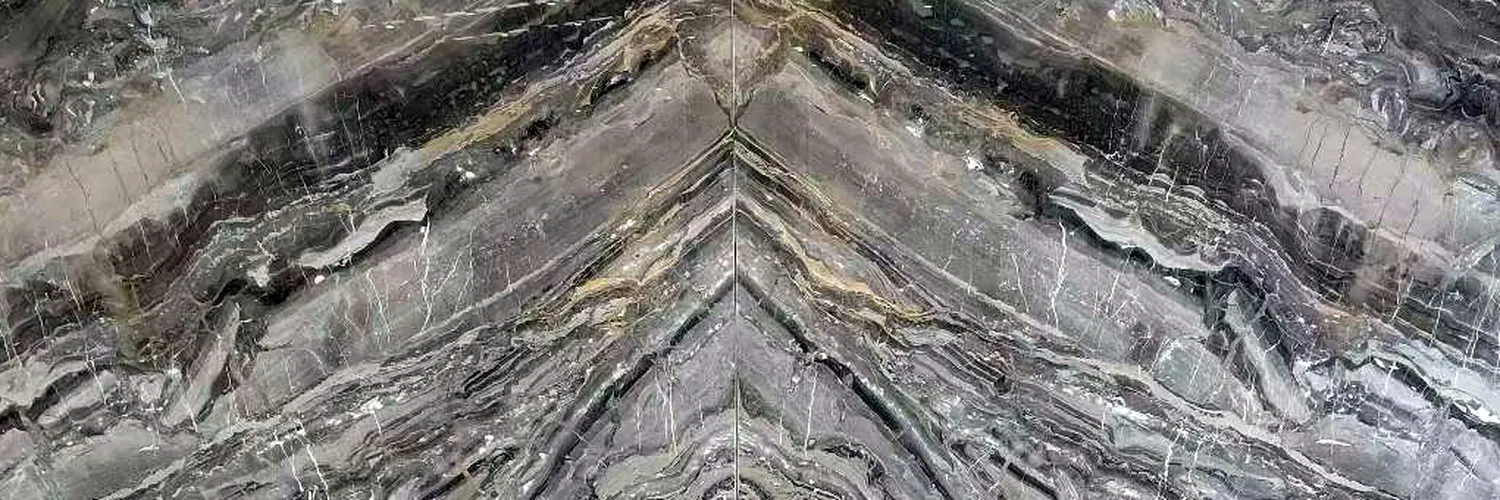
When you buy a block, you are buying every slab that will come out of it. A flaw nobody spotted at the quarry shows up on the gang saw, when it is too late to fix. This guide is for importers, sawmills and slab factories in China, the Middle East, India, Turkey or any other market: what to look for in a block, how it is measured and how it travels.
What a commercial block is
At the quarry, a huge mass of rock is freed from the face and divided into blocks of several tonnes, a size that can be transported and sawn. There are two kinds:
- Squared block: its faces are sawn almost flat and at right angles. This is what a gang saw or multi-wire saw needs: it yields better, is easy to measure and loads safely.
- Irregular block (informe, "shapeless", in Spanish quarries): it keeps uncut faces, bulges or broken corners. It yields less and is harder to measure. It usually goes to smaller pieces, or to factories that square it themselves.
There are grades in between. For trade terms, see our natural stone glossary.
How a block is assessed
Colour and consistency
The background must be the shade the destination market expects, and it must hold across the whole block. A colour change from one face to another means mismatched slabs within the same lot.
Cracks and hairlines
Hairlines are fine cracks, sometimes almost invisible when the stone is dry. Some are closed and harmless; others split the slab during sawing or polishing. What counts is where they run: a hairline crossing the block from side to side can ruin many slabs, while one in a corner is lost in the trim.
Veining
Look at the pattern, its amount and its direction. The direction decides how the block is cut: vein-cut for stripes, cross-cut for a cloudier look. Each factory chooses according to what it sells, so check the veining on at least two perpendicular faces. If the slabs will be sold bookmatched, the veining also needs to be consistent through the block.
Defects
Stains, nodules, rust spots, vugs (small cavities) or soft veins that wash out during polishing. Some are tolerated, depending on the market and the agreed quality; others rule the block out.
Slab yield
It all comes down to how many square metres of good slab each cubic metre will give. That depends on the block's shape, the cutting thickness (usually 2 or 3 cm, about ¾ or 1¼ in), what each pass of the blade or wire takes away and the defects to be trimmed off. A striking block that is badly squared or full of hairlines can yield less than a plainer, sound one.
How a block is inspected
- Wet the block. Dry, the sawing dust dulls the colour and hides hairlines. Wet, the block shows a colour close to the polished slab, and cracks stand out as dark lines.
- Photos and video of every face, in natural light. A video walking round the block shows what a photo cannot: edges, broken corners and where a hairline goes.
- Numbering and marking. Each block has its number painted on and its dimensions recorded. The same number appears in the photos, block list and shipping documents, so the block you approve is the block you receive.
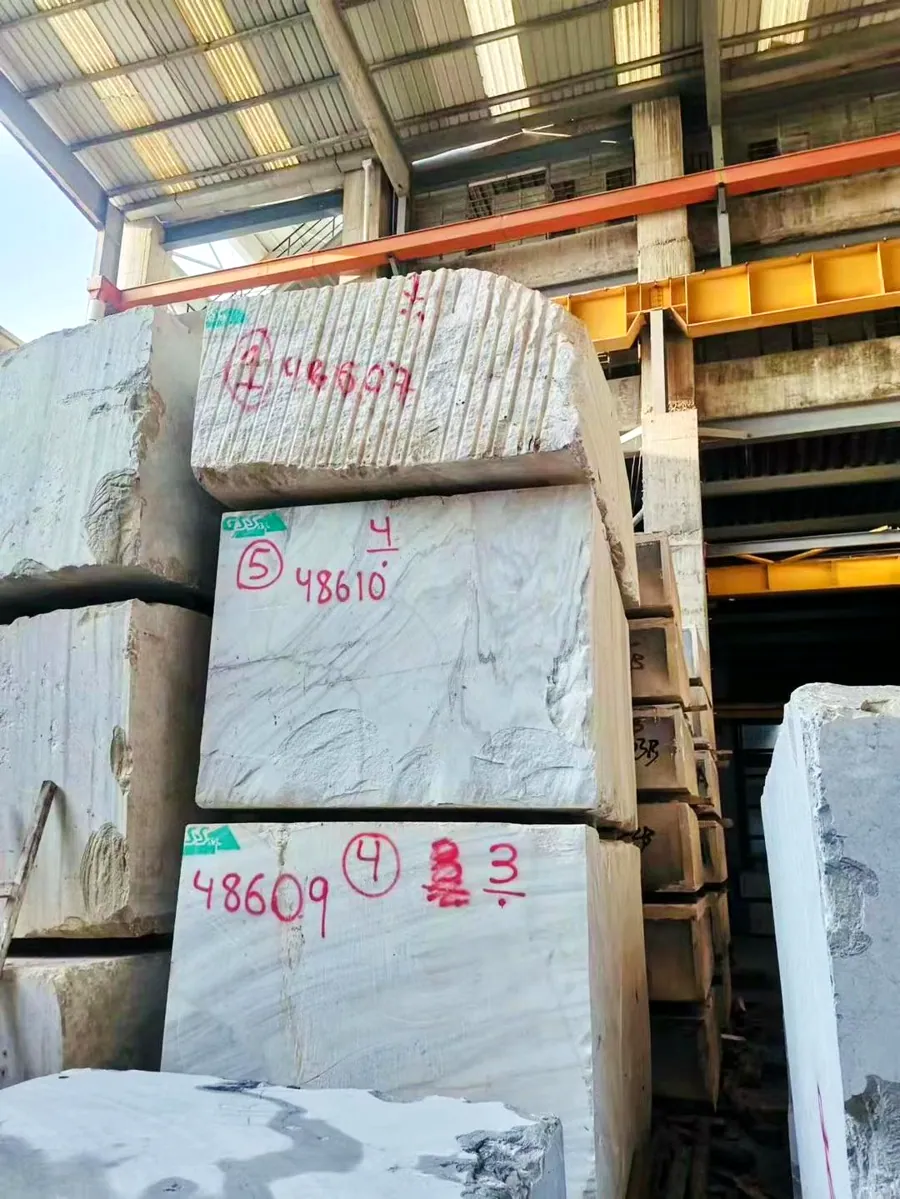
How blocks are measured and sold
A block is measured by its length, height and width. It is sold by volume, in cubic metres, or by weight, in tonnes (metric tons), depending on the custom in each market and what the contract says. To convert: most marbles have a density of about 2.6–2.8 t/m³ (roughly 162–175 lb/ft³).
For an irregular block, agree beforehand how it will be measured: where the usable part ends and what is deducted. We do not publish prices; they depend on the material, the block and the market.
Loading and shipping
The usual choice is a 20-foot container. With stone, the limit is weight, not space: the container reaches its weight limit long before it is full, so only a few blocks fit. The maximum load depends on the shipping line and on road rules in each country: confirm it with the line or your freight forwarder before finalising the selection.
Blocks travel unpacked. They are chocked with timber beams and lashed with cables or straps to the container's lashing points, with the weight evenly spread so they cannot shift. Export timber is treated to the ISPM 15 standard.
Documents
- Commercial invoice.
- Packing list, with the number, dimensions and volume or weight of each block.
- Bill of lading.
- Certificate of origin, where the destination country requires one.
Common Incoterms
- EXW (Ex Works): the buyer collects the blocks and handles the transport.
- FOB (Free On Board): we deliver the blocks loaded on board at the port of departure.
- CFR or CIF: we pay the freight to the destination port; with CIF, the insurance too.
More detail, including indicative HS codes, in how to buy natural stone from abroad.
How we work
- Selection: we find blocks to match the material, colour and quality each buyer asks for.
- Photos and video of every block before you buy, wet and from every side, with its number and dimensions.
- Reservation: once approved, the block is held for you while the order is finalised.
- Export worldwide, China included, with the documents and Incoterm we agree.
For buyers in China
We already export quarry blocks to China. We send photos and video of each block through whichever channel you prefer, with the block number visible in every shot, and can quote CFR or CIF to your port. Sale by volume or by weight follows the practice in your market.
Need slabs too? Browse our marble, quartzite and onyx in the catalogue.
Importing blocks or running a slab factory? Tell us the material, quality, number of blocks and destination port on our trade page, or get in touch for photos and video of the blocks available.
Have a project in mind?
Ask us for a no-obligation quote: we will reply with an indicative price.