How to choose stone slabs remotely: a guide for design studios and contractors
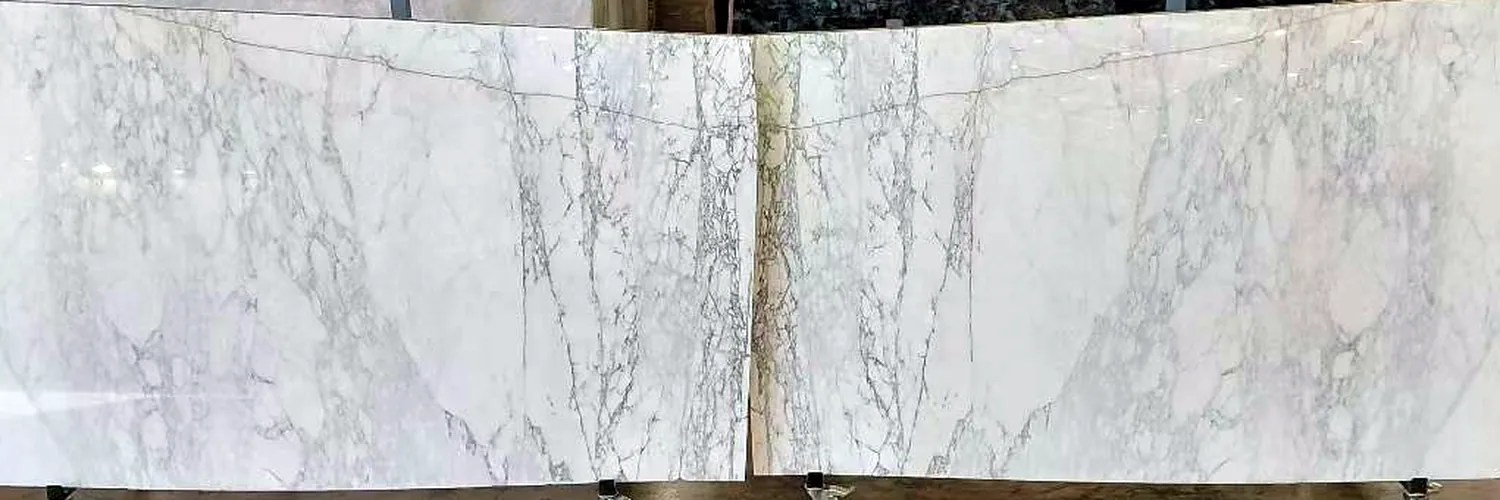
More and more interior designers, architects and contractors choose stone for their projects without leaving the studio. It can be done well, but you need to know what to ask for: with natural stone you do not buy a material, you buy specific slabs.
Why the actual slab matters
Two slabs with the same name can be very different: more or less veining, another tone, crystal areas or patches in different places. In stones like Patagonia, Portoro or onyx, the difference from one slab to the next is huge. That is why the decision is made on photos of the slabs available, not on a catalogue image.
What to ask for on each slab
- A photo of the whole slab, straight on and evenly lit, to see the full composition.
- Detail photos of the areas you care about: veins, crystal, resin-filled fissures.
- A video, if possible: movement shows gloss and depth better. Many of our stone pages already include a video of a real slab.
- Dimensions (length, width and thickness) and the finish.
- Reference of the slab and the block it comes from, so you know which are consecutive.
- Condition: whether it has mesh and resin on the back, filled fissures or areas best avoided when cutting.
How to read a stone photo
- Light changes colour. Warm light yellows whites and creams; cold light makes them greyer. Compare slabs in photos taken under similar light.
- Gloss is misleading. A polished slab reflects whatever is in front of it; look at the veining, not the reflections.
- A photo is not a test. It cannot tell you how absorbent the stone is or how it behaves. That is what the technical data sheet and tests on an offcut of the same stone are for.
If you want to see them in person
Photos and videos are enough for most projects, but if you want to see the tone, feel and finish with your own eyes, you can visit our warehouse in Llanera de Ranes (Valencia) by appointment via email. There you can see the whole slabs you are interested in, side by side. We do not prepare small samples: we sell the whole slab, which is what really shows the pattern.
Consecutive slabs and layout
If the project needs several slabs (a wall, an island with a waterfall, a full bathroom), ask for consecutive slabs from the same block. The tone is then consistent, the veining continues and the slabs can be bookmatched. Then:
- Send your fabricator the drawings with the size of each piece; we sell the whole slab and they do the cutting.
- Ask for the layout to be drawn on the photo of each slab, so you can see where each piece falls and which part of the veining ends up in the most visible area.
- Confirm the joints and how the veining continues before cutting.
More detail in large-format slabs and slab layout and what is bookmatching.
Sharing the selection with your client
On our website you can save several stones with the + button and, from "My selection", share them with a link: your client opens it and sees the same stones. Each stone page also lets you download the slab photo for presentations and moodboards. Once you have the shortlist, ask for prices or photos of available slabs for all of them at once from the same panel.
Before confirming the order
- Availability: confirm that the slabs you chose are still available; stone stock changes.
- Batch and dimensions: they should match what you saw in the photos.
- Documentation: technical data sheet and material data if the project requires them. See how to specify natural stone.
- Fabricator: we sell whole slabs; cutting and installation are done by your fabricator. If you do not have one, we can help you find one.
- Transport: packing, lead times and destination. If the site is in another country, read buying natural stone from abroad.
Working in a design studio? See how we work with interior designers and architects, or send us the project and we will send you photos of real slabs.
Need information about a material? Tell us which stone you are interested in, the approximate quantity and the destination. Ask about availability and a quote
Are you an interior designer or architect? How we work with design studios · Contractor or fabricator? Trade supply