Blue natural stone: types, names and how to choose
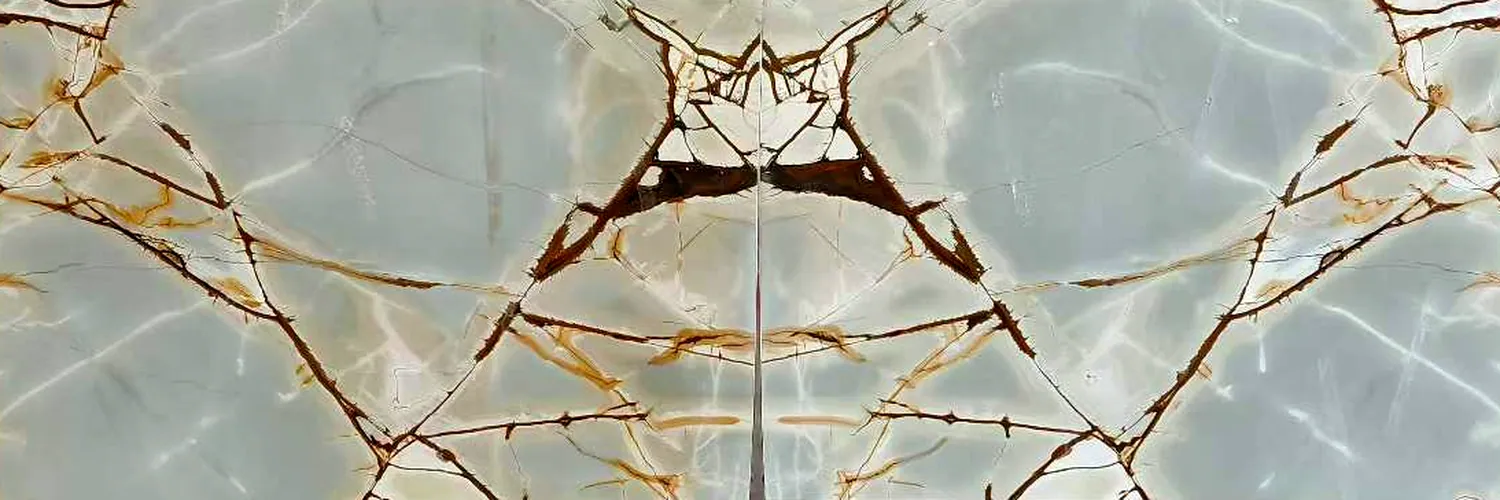
Blue is one of the rarer colours in natural stone, which is exactly why it turns heads. It is almost always saved for a statement piece: an island, a vanity, a bar or a wall. Here are the options and how to choose between them.
Looking for blue gemstones or crystals for jewellery? This is not that guide. Here we talk about natural stone slabs for projects: countertops, bathrooms, walls, floors and furniture.
The families of blue stone
Blue quartzites
The most versatile option, because quartzite is a hard stone. Blue Roma has a sky-blue background with brown, rust-toned veins forming large branching patterns; book-matched, it creates symmetrical compositions, and its hardness makes it suitable for kitchen countertops. Azul Macaubas, from Brazil, is one of the best-known blue quartzites: sky blue with lighter and deeper horizontal bands. Fusion mixes wavy bands of blue, green, grey and gold, like moving water. And Crystallo Blue is translucent white crystal with areas of intense blue: backlit, it is spectacular.
Deep blues with gold
Midnight-blue or intense blue backgrounds with golden veins and patches, for luxury pieces. Bulgari looks like a mosaic of crystals, with golden fragments, and is used for washbasins, tables or backlit panels. Blue River has gold and white veins that cross like rivers, and Soralite has golden and white patches that look like a natural mosaic.
Dark, graphic blues
Bahía has a deep blue background with lighter areas and dark veins that form a herringbone when book-matched. Bambú is a very dark navy crossed by fine, straight light lines, almost geometric; we have it polished and honed.
Blues with bands of colour
Royal Blue combines bands of turquoise, navy and orange that form a symmetrical horizon when book-matched. Explosion Blue mixes wavy bands of greyish blue, white and cream with a very dynamic movement.
Semi-precious blues
Sodalite is an intense blue with white veins. Like most semi-precious slabs, it is made of pieces of the stone bonded with resin and polished on a backing: it is not cut from a solid block. It is kept for one-off pieces such as tables, washbasins and panels. We also have blue calcite, with a sky-blue background and white and grey veins running diagonally across the slab, fresh and bright for bathrooms and walls.
Blue-grey: Belgian Blue
If you want a quieter blue, Belgian Blue is a bluish-grey limestone with small fossils and white specks. It is very hard-wearing and is used for floors, stairs, façades and contemporary countertops. If you searched for "bluestone" meaning a grey-blue stone for floors and paving, this is the one in our range to look at. Our catalogue lists it among the greys, but we have included it in the grid below.
Tips for choosing a blue stone
- See it in different light. Blue changes a lot between daylight and artificial light, warm or cool. Ask us for photos and videos of the actual slab before you decide.
- For the kitchen, go for quartzite. If it is going on an everyday countertop, choose a quartzite such as Blue Roma. For vanities, bars, tables and walls, every option is open. We compare them in marble vs quartzite.
- Think about book-matching. Banded and boldly veined stones (Royal Blue, Bahía, Blue Roma) gain a lot from consecutive slabs opened like a book. See what is bookmatching.
- If you want light, look at backlit options. Crystallo Blue, Bulgari and many semi-precious slabs can be lit from behind. Our backlit onyx guide explains how it is installed.
How to use blue stone in a project
- Blue and gold: many of these stones already carry gold in the veining. With brass taps and trims, the effect multiplies.
- Blue, white and wood: a sky blue like Azul Macaubas with white walls and pale wood feels bright and Mediterranean.
- Navy with grey and black: a dark, almost geometric blue like Bambú suits understated bathrooms, walls and furniture.
- Fewer surfaces, well chosen: an intense blue looks better on an island or a wall than spread around the whole house.
- Finish and care: a polished finish deepens the colour. Do the water-drop test to see whether the stone needs sealing, and clean with a pH-neutral soap.
Blue stones in our catalogue
Every photo shows a real slab in our warehouse:
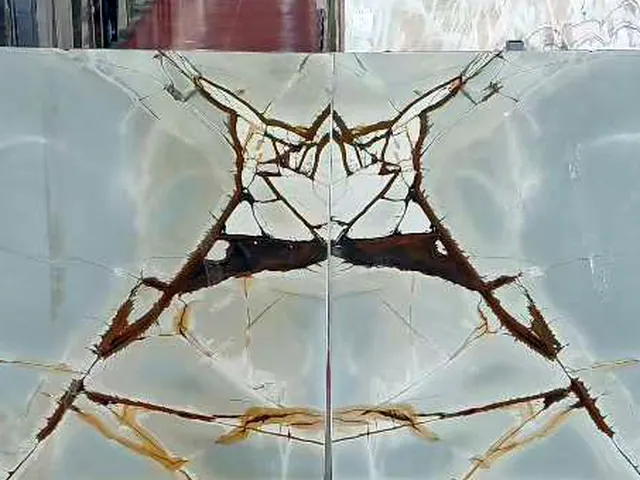
Blue Roma
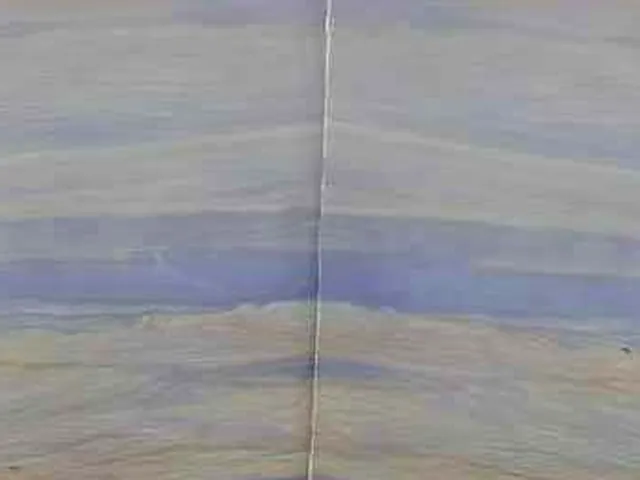
Azul Macaubas
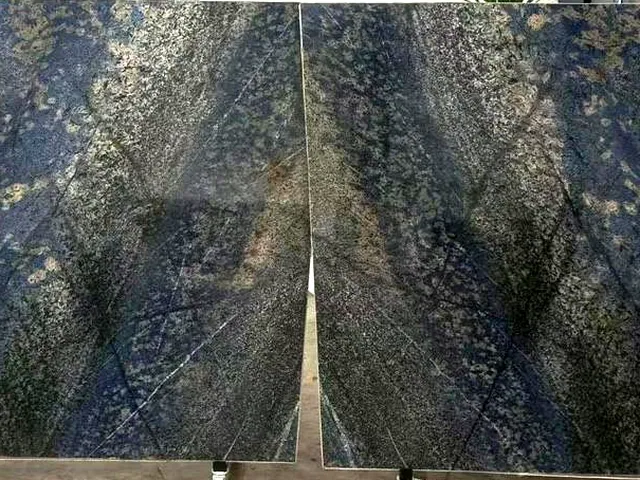
Bahía
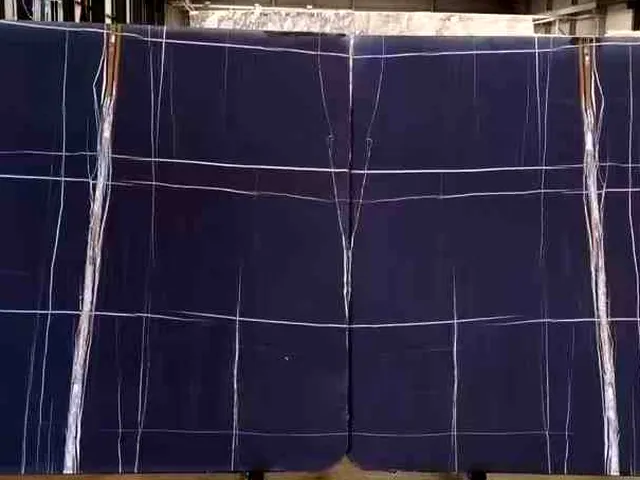
Bambú
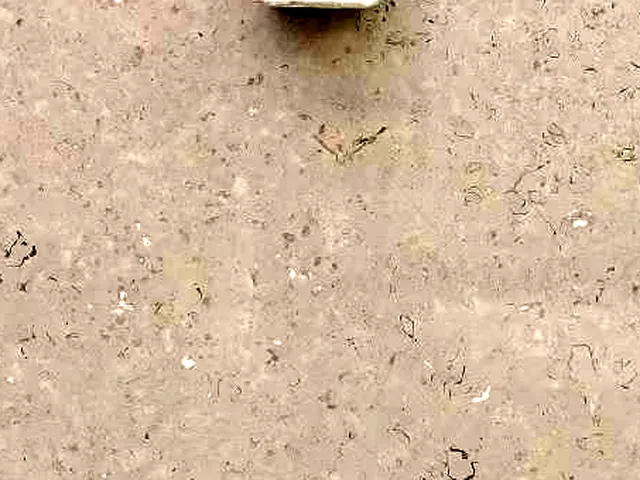
Belgian Blue
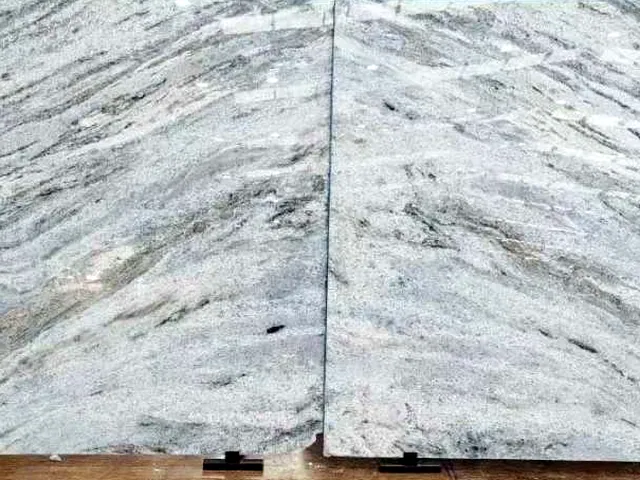
Blue Calcite
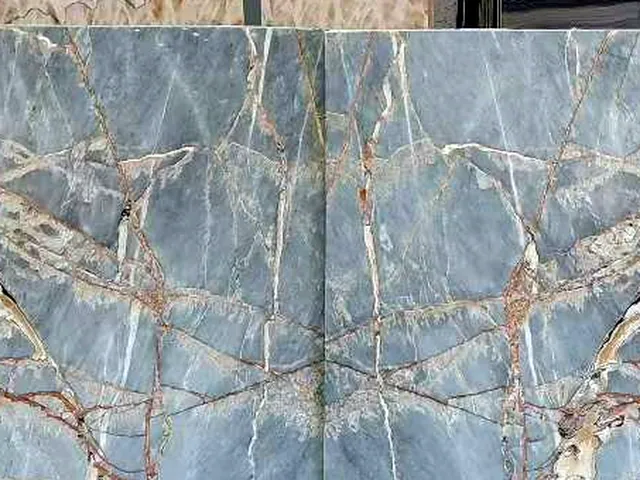
Blue River
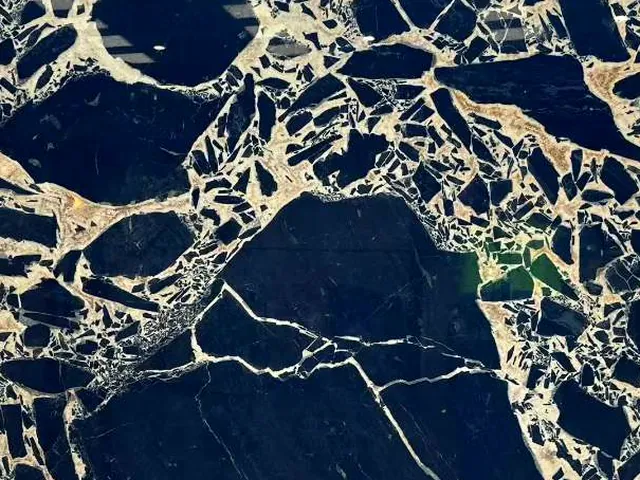
Bulgari
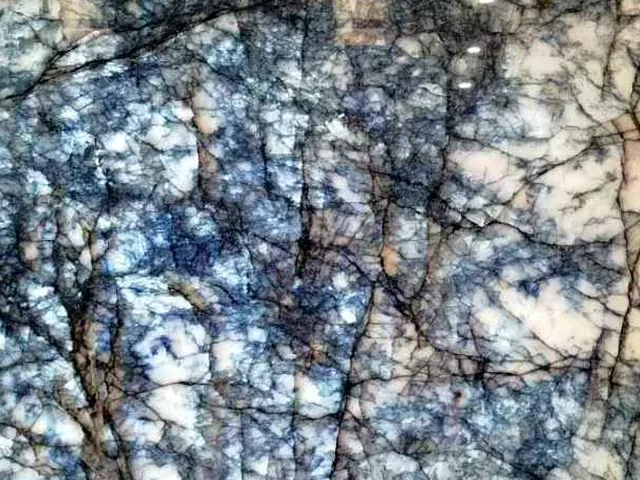
Crystallo Blue
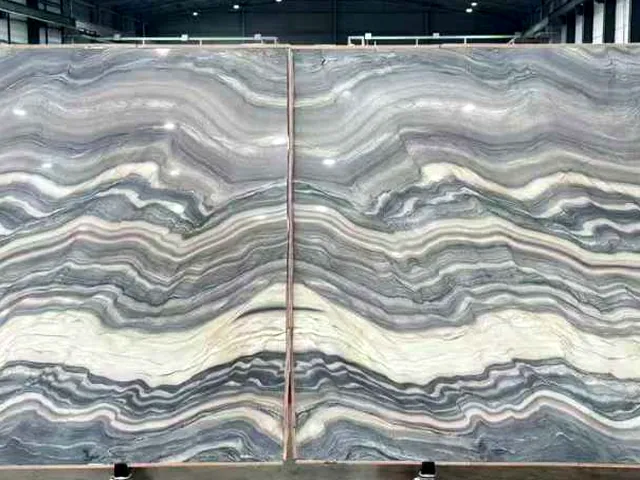
Explosion Blue
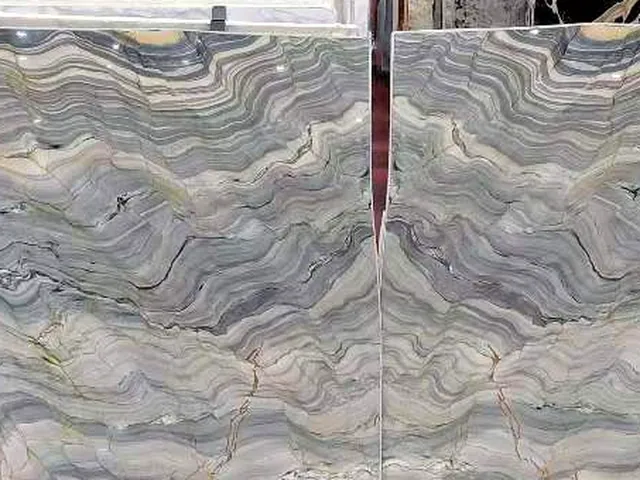
Fusion
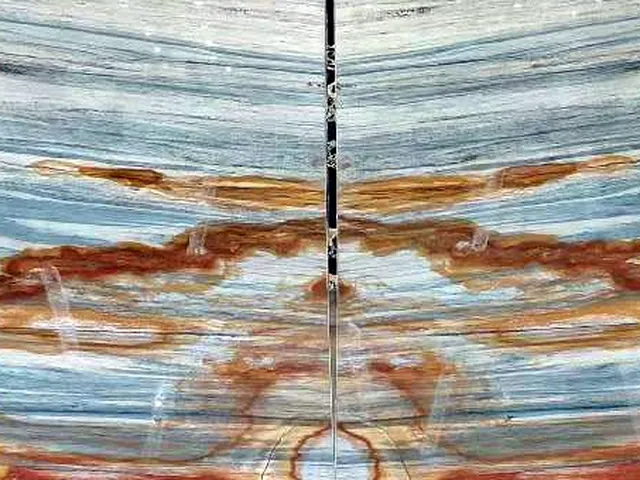
Royal Blue
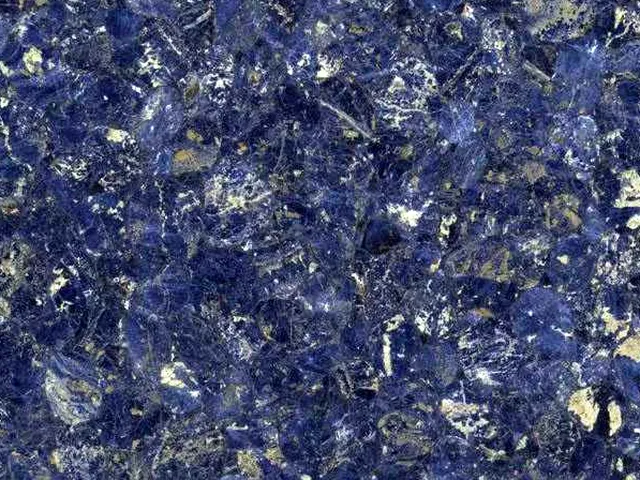
Sodalite
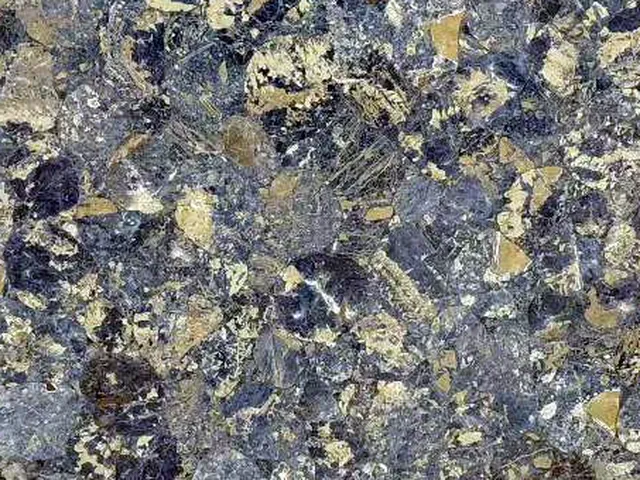
Soralite
Planning a project in blue stone? Tell us the use and dimensions and we will send you photos of the slabs available. We can reserve them and ship to any country.
Have a project in mind?
Ask us for a no-obligation quote: we will reply with an indicative price.