Engineered stone ban and silicosis: what has changed
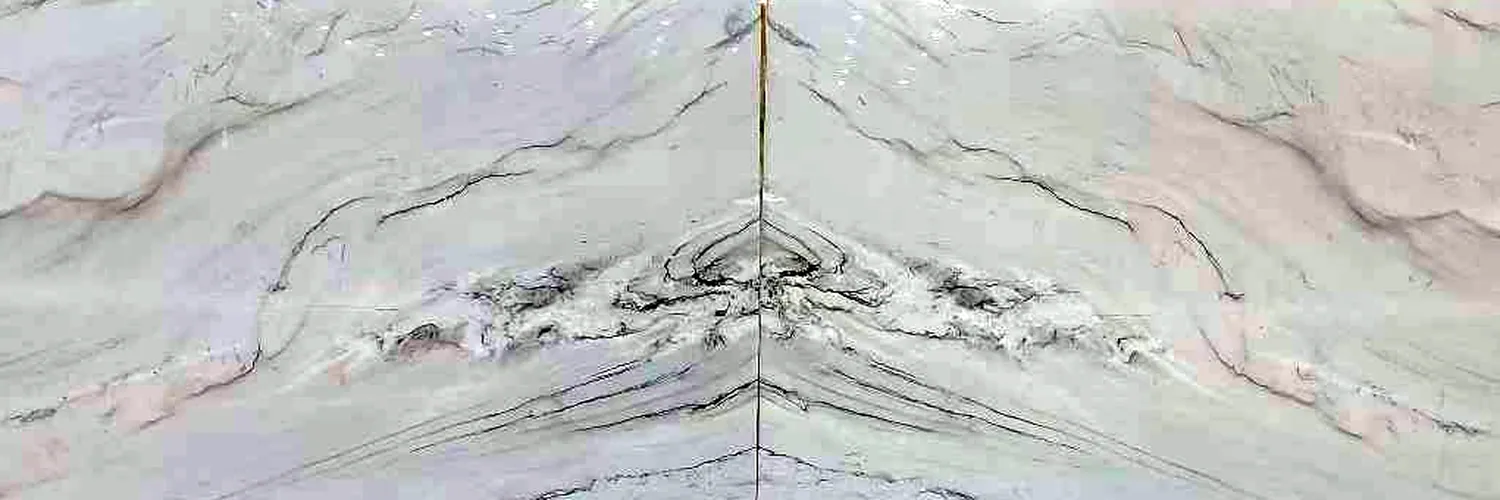
Engineered stone, usually sold simply as "quartz", is behind a sharp rise in silicosis among the people who cut it. Australia has banned it and California is close to doing the same. Here is what is happening, what the rules say in the UK, the US and Spain, and what it means if you are buying or fabricating countertops (worktops). Updated October 2026.
The problem is the dust from cutting, not the countertop in your kitchen
Silicosis is an incurable lung disease caused by breathing in fine respirable crystalline silica dust, which is released when silica-containing materials are cut, ground or polished. Engineered stone is made from crushed quartz bound with resin, and its crystalline silica content is very high: Britain's Health and Safety Executive (HSE) puts it at up to 95%.
The risk sits in the workshop and on site, above all when the material is cut dry. An installed countertop that is left alone does not give off dust. Australian regulators say so explicitly: there is no need to remove engineered stone that is already installed, and the risk only returns if it is cut, repaired or taken out.
What has been decided around the world
Australia: banned since 1 July 2024
- The manufacture, supply, processing and installation of engineered stone benchtops, panels and slabs containing 1% or more crystalline silica is prohibited.
- Since 1 January 2025 they cannot be imported either.
- Natural stone is not covered by the ban. But since 1 September 2024 stricter rules apply to processing any material with at least 1% crystalline silica, natural stone included: dust must be controlled, and high-risk work needs a written silica risk control plan.
United States
- California: in December 2023 Cal/OSHA adopted an emergency standard (in force from 29 December) that bans dry cutting and requires wet methods, respirators and the reporting of silicosis cases. It covers artificial stone and natural stone with more than 10% crystalline silica. It was made permanent in early 2025.
- In May 2026 California's Occupational Safety and Health Standards Board voted unanimously to start rulemaking to prohibit the fabrication and installation of artificial stone with more than 1% crystalline silica. A draft emergency rule was published on 16 September 2026 and comments closed on 30 September. As of early October 2026 it has not yet been adopted; a final board vote is still needed.
- Federally, OSHA has not banned the material. It enforces its exposure limit of 50 µg/m³, runs targeted inspections in the industry and issued a 2026 hazard alert on countertop fabrication and installation.
United Kingdom
In May 2026 the HSE declared dry cutting of engineered stone unacceptable and launched a campaign of more than 1,000 inspections. The UK government has said it is not proposing a ban, pointing out that natural stone can cause silicosis too.
Spain and the EU: many cases, no ban so far
- A Spanish Ministry of Health study (April 2025) counted 5,900 silicosis cases between 2007 and 2024, 520 of them in 2024. Nearly half (47.8%) were linked to making and handling engineered quartz. The study recommends considering a ban or much stricter regulation.
- 632 new cases were recorded in 2025, according to the Social Security occupational disease register (CEPROSS).
- Spain's exposure limit for respirable crystalline silica is 0.05 mg/m³ (8-hour average). EU Directive 2017/2398 sets 0.1 mg/m³; Spain transposed it through Royal Decree 1154/2020 and went further, applying 0.05 mg/m³ from 1 January 2022. The national safety institute (INSST) kept that value for 2026.
- Victims' associations are calling for a ban like Australia's, and in July 2026 the American Thoracic Society called for one too. As far as we know, as of October 2026 neither Spain nor the EU has banned the material.
Natural stone contains silica too
It would be wrong to present natural stone as "safe" compared with engineered stone. HSE figures:
| Material | Crystalline silica (approx.) |
|---|---|
| Engineered stone | Up to 95% |
| Quartzite | Over 70% |
| Granite | 20–45% (typically 30%) |
| Marble | Up to 5%, though it can carry quartz veins |
A quartzite such as Mont Blanc is, by definition, mostly quartz (see quartzite vs quartz). Cutting it dry is dangerous. Every shop, whatever the material, should cut wet, extract dust at the tool, avoid dry sweeping and compressed air, monitor exposure and use proper respiratory protection.
What it means for you
If you are buying a countertop
- Living with it is not dangerous. There is no need to rip out an installed quartz countertop.
- Ask for any adjustments to be made in the shop, with water, not by dry cutting in your kitchen.
The alternatives, pros and cons
- Marble: low in silica and one of a kind, but it scratches and acids etch it. Compared in marble vs quartzite.
- Quartzite and granite: very hard and durable in a kitchen, but high in silica, so they demand the same care in the shop as quartz.
- Sintered stone and porcelain: excellent against stains and heat; less silica than quartz but not zero, and the edges chip more easily. See sintered stone vs natural stone.
- Low-silica engineered stone: some manufacturers now offer it. In Australia only products under 1% fall outside the ban.
For the full material comparison, read marble, granite, quartzite or quartz.
If you are in the trade
The direction is clear: tighter dust control for every silica-containing material, not just quartz. Assess exposure, work wet and document your controls. Our trade page explains how we work with fabricators and designers.
Looking for a natural alternative? Ask us for photos and videos of real slabs of marble or quartzite, with a quote. We ship worldwide.
Sources
- Safe Work Australia: Engineered stone ban
- SafeWork SA: scope of the ban and installed stone
- SafeWork NSW: definition of engineered stone (natural stone excluded)
- Australian Government: import ban from 1 January 2025
- WorkSafe Queensland: crystalline silica substances rules (1 September 2024)
- Littler: Cal/OSHA emergency standard (December 2023)
- OH&S: California adopts permanent standard
- California DIR: Standards Board vote, May 2026
- Cal/OSHA: draft emergency regulation (2026)
- KQED: California unveils ban plan (September 2026)
- OSHA: crystalline silica and standard 1910.1053
- HSE: no dry cutting of engineered stone (May 2026)
- Construction News: UK government rules out a ban
- HSENI: silica content by material
- WorkSafe Victoria: silica in stone, porcelain and other materials
- Spanish Ministry of Health: the re-emergence of silicosis (April 2025)
- elDiario.es: 632 new cases in 2025 (Spanish)
- elDiario.es: American Thoracic Society calls for a ban (Spanish)
- BOE: Royal Decree 1154/2020 (Spanish)
- CTM: INSST keeps 0.05 mg/m³ for 2026 (Spanish)
Have a project in mind?
Ask us for a no-obligation quote: we will reply with an indicative price.