Taj Mahal quartzite: what it looks like, where to use it and how to choose a slab
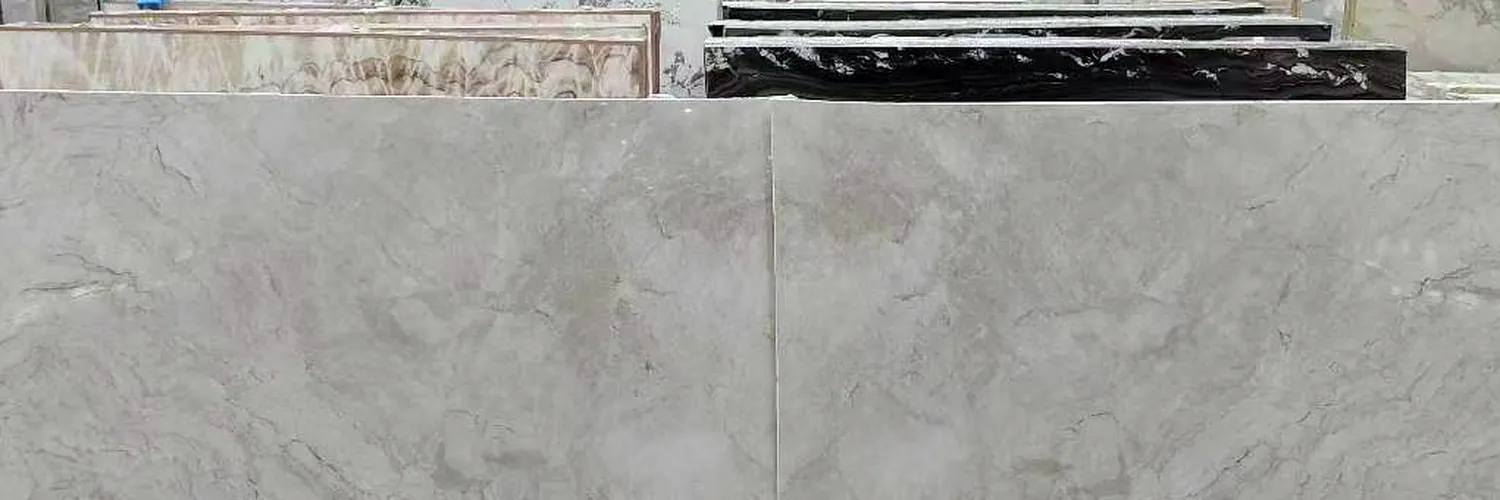
Taj Mahal is a cream-coloured quartzite used for kitchen countertops. It has the calm of a cream marble and the hardness of quartzite. Here is what you need to know.
What it looks like
It is a Brazilian quartzite with a warm cream background, somewhere between ivory and beige, crossed by soft veins in beige, gold and sometimes greyish tones. It has a subtle crystalline sparkle and some translucency at the edges. See real slabs on our Taj Mahal page.
Why it is so popular
- A marble look that is light, elegant and very easy to combine.
- Quartzite hardness: it resists scratches and heat far better than marble.
- Warmth: unlike cold whites, its cream tone works with wood, brass and earthy colours.
Where to use it
- Kitchen countertops and islands — its signature use.
- Bathrooms: vanity tops, basins and cladding.
- Dining and coffee tables.
- Outdoors: garden kitchens, after checking the absorption and frost resistance of the batch.
Polished or leathered
Polished, Taj Mahal shows its crystalline depth to the full. Leathered (textured), it gains a silky feel and hides fingerprints and water spots — very practical in a kitchen. Both are beautiful; leathered is more forgiving day to day. More in our finishes guide.
What it pairs with
- Natural wood cabinetry (oak, walnut).
- Brass or brushed-gold taps.
- Sage green, grey-blue or off-white fronts.
What to check when choosing a slab
- That it is real quartzite: ask for the technical data sheet and do the glass and acid tests on an offcut of the same stone. See our quartzite vs quartz guide.
- The veining: some slabs are calmer, others have more movement. Choose according to the size of your countertop.
- The tone: it varies from block to block (whiter, more golden). If you need several slabs, they should come from the same block.
- Natural fissures resin-filled at the factory are normal in quartzite; what matters is that they are properly treated.
Care
Clean with neutral soap and seal occasionally. It is a very undemanding stone.
Interested? Ask us for photos of the available slabs and a quote: see Taj Mahal · get a quote.
Compare real photographs
Look at the complete material before inspecting details. Lighting, framing and finish affect its appearance; a photograph is not a technical test.
Continue with a related guide.
Are you an interior designer or architect? How we work with design studios · Contractor or fabricator? Trade supply